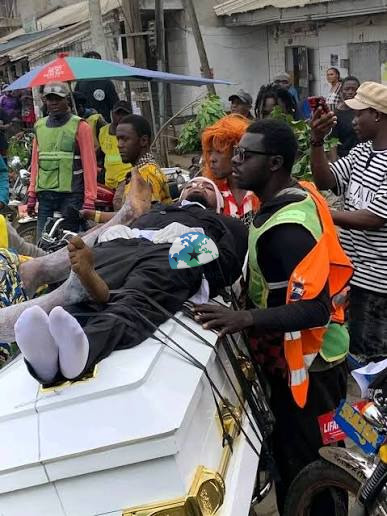
A dramatic and emotionally charged incident in Agona K.T.K has triggered widespread debate after a group of commercial motorbike riders, popularly known as Okada riders, reportedly conducted what they described as final rites for a deceased colleague during a funeral ceremony.…....
A viral video circulating on social media shows the riders gathered around a casket at the funeral grounds. In a moment that stunned many mourners, the group allegedly opened the coffin and performed their own traditional farewell rituals for their late colleague before the final burial took place.
According to accounts from the scene, the riders insisted that the deceased was one of their own and deserved a final send-off conducted by members of their riding community. They described the act as a symbolic expression of unity and respect, highlighting the close-knit bond that often exists among Okada riders who depend on one another for daily survival.
After completing the rituals, the group was seen taking control of the situation and moving the body away from the immediate supervision of the grieving family—an action that reportedly shocked relatives and other attendees present at the funeral.
The incident has since sparked mixed reactions both online and within the community. Some social media users and witnesses praised the riders, describing their actions as a powerful demonstration of loyalty, brotherhood, and solidarity for a fallen member.
However, others strongly condemned the act, arguing that opening a casket and handling the body without clear family consent violates cultural norms and funeral protocols. Critics also suggested that emotions may have overridden proper coordination between the family and the riders.
Community observers and cultural commentators have since weighed in on the controversy, emphasizing the need to balance communal traditions with respect for family authority during burial ceremonies.
As the video continues to circulate widely, the incident has sparked broader discussions about evolving funeral practices, informal worker group identity, and the boundaries between cultural expression and family rights in burial arrangements.