Pakistan has been eager to present itself to the international community as a stabilising and responsible power – a nuclear state with diplomatic reach in capitals of Gulf countries, China, the US, and its neighbour Iran. The remarkable diplomatic ambition, however, is undermined by its own internal realities. Keeping its economic challenges aside for a moment, Pakistan continues to face acute security challenges on its northwest frontier, where Baloch insurgent groups and Islamist outfits have steadily overstretched its security establishment.
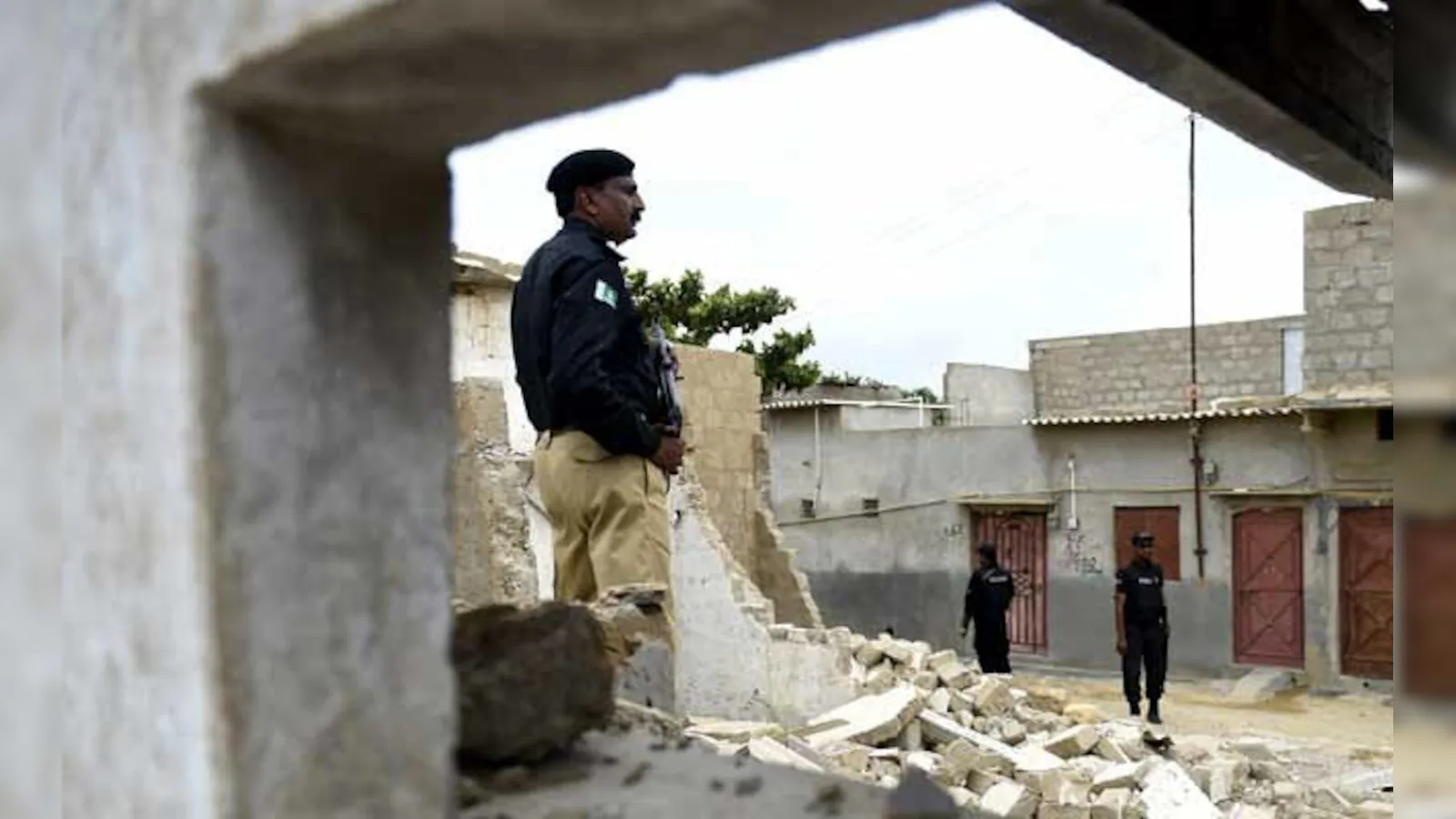
Last week, multiple terror attacks rocked the restive provinces of Balochistan and Khyber Pakhtunkhwa (KP). A vehicle-borne IED, carrying an estimated 1,200-1,500 kilograms of explosives, was detonated at a police post in Fateh Khel, on the outskirts of Bannu district in southern KP. An ambush attack followed the suicide blast, with militants taking weapons and police personnel from the site. At least 21 police officers were killed, and Ittehad-ul-Mujahideen Pakistan, a group with a structural and operational DNA of the Tehreek-e-Taliban Pakistan (TTP), claimed responsibility for the attack.
Advertisement – Scroll to continue
Days after, a bomb concealed in a rickshaw detonated in the main market in Lakki Marwat district, a region along Dera Ismail Khan and Bannu corridor. The blast in a civilian area on May 12 killed at least nine people and wounded 30 others. The violence in Lakki Marwat is not new, with the region becoming a staging ground for TTP activities after the group expanded its operational scope from the traditional strongholds of North and South Waziristan. Another attack was also staged in Bajaur district in the same week, where the Damangi Scouts Headquarters was targeted in a VBIED attack followed by an assault by militants. These attacks demonstrate the militants’ continued ability and intention to penetrate secure compounds while also projecting confidence in conducting multi-stage operations against paramilitary infrastructures.
What Stands Out
A few things stand out in these attacks. The Islamist factions have evidently reverted to high-impact VBIED attacks, with similar attacks witnessed in recent weeks and months at the Fateh Khel check-post near Bannu, the Gondola police training centre in Dera Ismail Khan, the Boys Battalion Headquarters in Tank district, and near Wana Cadet College in South Waziristan. Despite the Pakistani military’s sustained counter-terrorism efforts, the repeated use of suicide vehicle assaults suggests the logistical capability to stage such attacks.
Most importantly, these high-impact attacks inform the TTP’s sustained tactical sophistication and operational resilience, demonstrating its ability to inflict damage on Pakistan’s security apparatus despite years of counterterrorism operations in KP and repeated cross-border airstrikes inside Afghanistan. Far from dismantling the group’s infrastructure, Pakistani military operations have seemingly failed to deter the organisational depth, logistical network, propaganda channels, and operational coordination required to execute attacks and sustain a presence.
The TTP’s bureaucratic architecture makes this structural resilience evident. In December 2025, the outfit announced a new administrative and operational structure for 2026 – establishing two new zones, including a Western Zone covering Balochistan, adding a Kashmir province under administrative control, and reshuffling military zone leadership. The TTP now maintains 37 shadow provinces, many of which imitate KP’s actual district-level governance.
Islamabad has repeatedly targeted militant infrastructure in Afghanistan’s Khost, Paktika, and Kunar provinces, as well as Kabul, while also pressuring the Afghan Taliban leadership. Nevertheless, these attacks indicate that Pakistan’s tough measures have not translated into strategic degradation. The persistence of these attacks further reflects the evolution of TTP’s operational abilities, considering that the Bannu attack was not simply a suicide blast. It involved coordinated arms assault, reconnaissance, and integration of unmanned aerial vehicles (UAVs). These insurgent tactics have been observed across other theaters like Afghanistan and parts of West Asia where militants have combined asymmetric warfare with semi-conventional assault tactics.
The Foreign Policy Trap
The geography of these attacks is equally relevant. The TTP lacks operational reach inside Punjab – Pakistan’s demographic and political heartland, thereby underscoring its inability to destabilise the state at a national level. However, its deep and wide presence in KP allows the insurgency to exhaust security forces, undermine local governance, and erode the already fragile public confidence in the state.
The trajectory of attacks in Pakistan witnessed a dramatic rise in the aftermath of the Taliban’s takeover in Kabul in 2021, with 2025 and 2026 recording the deadliest militant violence in nearly a decade. These internal security challenges are now shaping Pakistan’s foreign policy.
Pakistan’s relationship with the Taliban has deteriorated sharply. Its binary responses, ranging from diplomatic demarches to airstrikes following attacks, have failed to produce deterrence or a negotiated settlement. From being Islamabad’s strategic partners for decades, the Afghan Taliban has become the biggest liability, since the group has willingly or unwillingly refused to curtail its ideological ally, the TTP. At the same time, Pakistan’s security challenges have impeded Chinese and Western investments, especially in Balochistan. The Baloch Liberation Army (BLA) has intensified its operations, and the recent declaration claiming control over the stretches of N-40 Quetta-Taftan highway should be particularly concerning for the country’s economic ambitions. The stated route supports supply chains connected to the Saindak copper-gold project and the Reko Diq mining project.
Reko Diq has been central to Pakistan’s Western investment and long-term resource extraction strategy in recent months. Any sustained insurgent disruption on this route threatens Pakistan’s economic recovery plans and confidence among foreign investors.
What This Means for India
For India, this means Pakistan’s military establishment will increasingly prioritise western border stabilisation over eastern strategic competition. However, Islamabad may continue using externalisation narratives, including accusations against India for allegedly supporting Baloch insurgency and TTP groups. That said, the reality is that Pakistan’s militant crisis today is rooted in decades of jihadist patronage, local grievances, and center-provincial tensions.
Pakistan’s counter-terrorism challenge is more sobering. It is not simply about dismantling militant infrastructure, but confronting a larger ecosystem that enables the cycle of grievances, recruitment, and attacks. Overlapping security challenges with a fragile economy are compelling the state into a paradox – the more unstable it becomes internally, the more urgently it needs to project relevance internationally.
(Aishwaria Sonavane is a research analyst at the Takshashila Institution)
Disclaimer: These are the personal opinions of the author