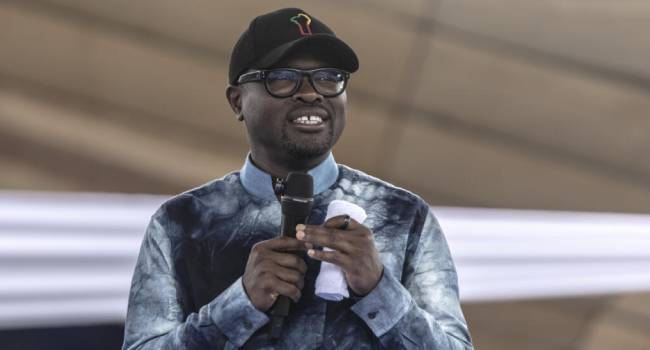
A chieftain of the All Progressives Congress (APC) in Oyo State, Femi Aremu, has dismissed allegations linking the Executive Chairman of the Nigerian Revenue Service (NRS), Dr. Zacch Adedeji, to the outcome of the APC governorship primary in the state, insisting that political relationships and grassroots support — not manipulation or propaganda — shaped the process.
Aremu described recent accusations against Adedeji as politically motivated attacks by individuals allegedly dissatisfied with the outcome of the APC governorship primary. According to him, the allegations that Adedeji used public funds to influence the contest are false, malicious, and unsupported by evidence.
He argued that Adedeji, as a public office holder, possesses the experience and discipline expected of a responsible government official and would not misuse public resources for political purposes.
The APC stalwart also defended the political ambition of Soji Adedeji, younger brother of Zacch Adedeji, saying it would be unfair and undemocratic to deny him the right to contest political office because of his family background. He noted that Soji had been active in politics long before the current governorship race, having contested for the House of Representatives in 2023.
Aremu further rejected claims that Adedeji was responsible for the political setback suffered by former Minister of Power, Chief Adebayo Adelabu, popularly known as “Penkele.”
According to him, Adelabu’s defeat was caused largely by his strained relationship with party loyalists and grassroots members across Oyo State. He stated that politics thrives on loyalty, accessibility, humility, and consistent engagement with party structures, areas where many APC members reportedly felt disappointed with the former minister.
He cited the Ibadan North bye-election as evidence of dissatisfaction within the party, alleging that several members complained about poor coordination and inadequate support during the election process. He added that the election was viewed as an opportunity for Adelabu to demonstrate political leadership and organizational strength but failed to meet expectations.
Aremu maintained that APC stakeholders and influential figures across the state freely chose to support Senator Sharafadeen Alli because of his political relationships, accessibility, and perceived ability to unite the party ahead of future elections.
He also dismissed claims that support for Alli was induced or manipulated, pointing out that several respected political figures openly identified with the senator during the primary process based on personal conviction and political calculations.
According to him, attempts to blame Zacch Adedeji for the outcome of the primary only reflect the frustration of politicians who misread the political mood within the party.
Aremu argued that attendance at political events should not automatically be interpreted as proof of popularity, claiming that entertainment and side attractions often draw crowds to political gatherings.
He urged aggrieved APC members to focus on rebuilding relationships within the party rather than engaging in blame games and spreading allegations without proof.
The APC chieftain stressed that politics is ultimately about people, grassroots engagement, credibility, and trust — not social media hype, propaganda, or personal ego.
He added that no individual possesses the power to singlehandedly determine the outcome of a major party primary, noting that such contests involve stakeholders, political negotiations, alliances, and considerations about electability.
Aremu also referenced the previous Ibadan North election, where a candidate associated with Adelabu’s political camp reportedly lost to the Peoples Democratic Party (PDP), arguing that online popularity does not always translate into grassroots political strength.
He called on APC stakeholders in Oyo State to embrace unity, reconciliation, discipline, and strategic planning ahead of future elections, warning that internal bitterness and public attacks could weaken the party.
According to him, genuine political strength comes from sustained engagement with party members, respect for loyalists, and strong grassroots connections rather than media campaigns or emotional outbursts.
He concluded that democracy allows every qualified Nigerian to pursue political ambition freely and insisted that politicians who suffered setbacks during the APC primary should engage in honest self-reflection rather than looking for scapegoats.