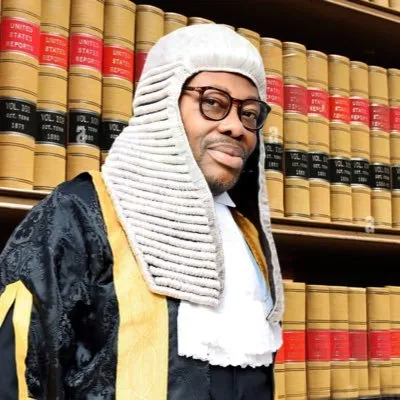
A Senior Advocate of Nigeria, Dr. Monday Ubani, has alleged that the persistent suffering experienced in Nigeria’s rural communities is directly linked to what he described as the diversion and withholding of local government funds by state governments.
Ubani made the assertion during an interview on Frontline, a current affairs programme on Eagle 102.5 FM, Ilese-Ijebu, arguing that the hardship at the grassroots level is not accidental but the outcome of systemic interference with statutory allocations meant for local governments.
According to Ubani, the immediate past chairman of the Nigerian Bar Association Section on Public Interest and Development Law (NBA-SPIDEL), “the suffering experienced in rural communities across Nigeria is not accidental but linked to systemic interference with local government funds.”
The Senior Advocate maintained that local governments are constitutionally entitled to direct funding, but that this principle is being undermined in practice.
He insisted that when funds meant for local governments are withheld or redirected, development at the community level becomes impossible.
Ubani linked this situation to what he called a breakdown in fiscal responsibility between tiers of government.
He said the consequence of this practice is most visible in rural communities, where basic infrastructure remains largely absent.
“If the state governors are releasing the money meant for local governments, Nigeria would be a beautiful country,” he said.
He added that many rural dwellers are forced to migrate to urban centres because governance is not felt at the grassroots.
Ubani stressed that local governments are supposed to be the closest tier of government to the people and therefore critical to development.
He lamented that this closeness has been lost due to what he described as financial strangulation of local councils.
The Senior Advocate further stated that funds allocated to local governments are often retained or controlled at the state level.
According to him, this practice undermines service delivery in critical areas such as healthcare, education, and rural infrastructure.
Ubani said the absence of functional local government autonomy has created a vacuum in grassroots governance.
He maintained that this vacuum is directly responsible for worsening poverty in rural Nigeria.
“What Nigerians require is just good roads and light, especially in the rural areas,” he said, stressing that such basic amenities remain unavailable.
He noted that with proper funding, local governments could deliver these basic needs effectively.
Ubani also criticised what he described as misplaced priorities in governance and infrastructure spending.
He argued that instead of mega projects, emphasis should be placed on rural electrification and road connectivity.
The Senior Advocate said development would be more impactful if states allowed local governments to function independently.
He reiterated that decentralised development remains key to reducing inequality between urban and rural areas.
Ubani also pointed to the broader economic implications of weak local governance structures.
He said Nigeria’s economic hardship is worsened when grassroots development is neglected.
According to him, “there is so much money being allocated, but the local governments are not getting it.”
He argued that proper disbursement of funds would stimulate rural economies and reduce urban migration.
Ubani further alleged that state-level control of local government funds has distorted governance priorities.
He said this distortion has led to dependency and inefficiency at the grassroots level.
The Senior Advocate also tied the issue to broader governance failures in the country.
He insisted that accountability and transparency in fund distribution remain weak across multiple tiers of government.
Ubani maintained that strengthening local government autonomy would significantly improve service delivery.
He said Nigeria’s development challenges are not due to lack of resources but poor management of available funds.
“Nigerians are not lazy,” he said, adding that citizens only need enabling infrastructure to thrive.
He concluded that unless local government funds are properly utilised at the grassroots, national development will remain stunted.
Ubani reaffirmed that addressing fiscal mismanagement at the local government level is essential to reversing rural hardship and achieving balanced national development.