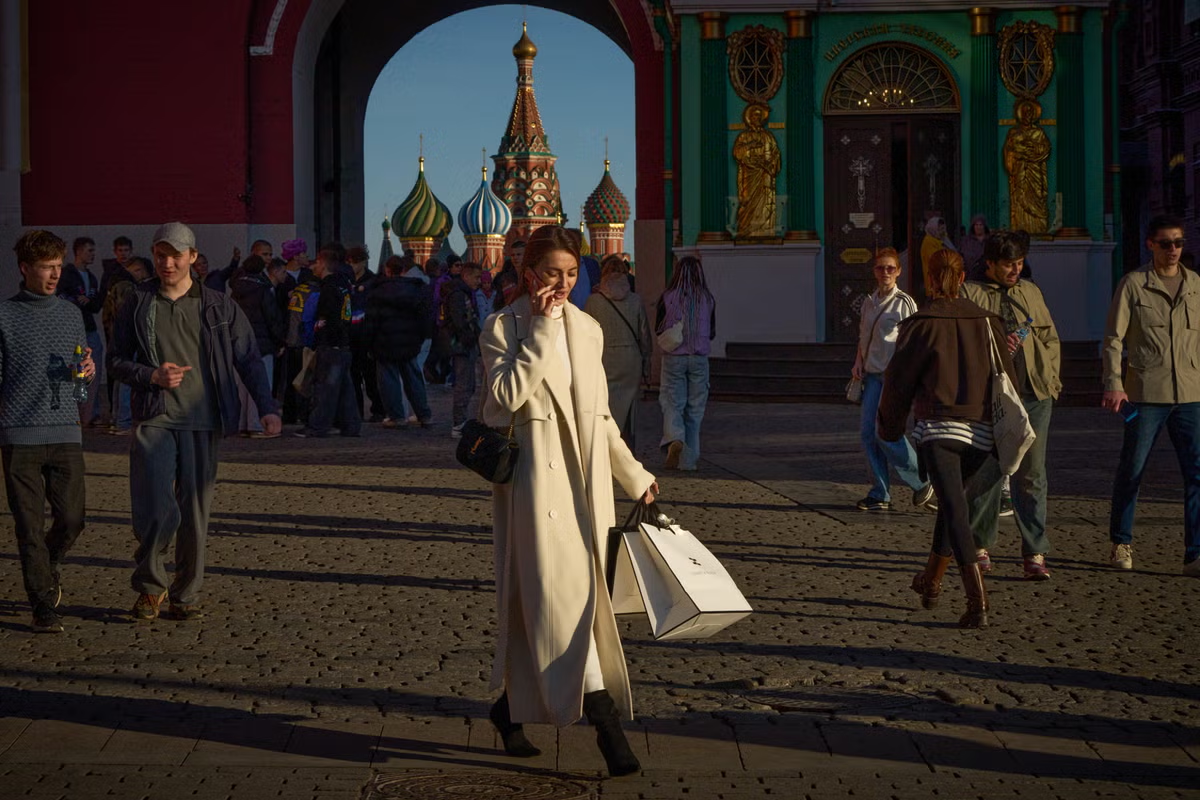
It’s getting harder for officials in the Kremlin to cast the war in Ukraine – now in its fifth year – as something so distant that it doesn’t affect the daily routines of Russian civilians.
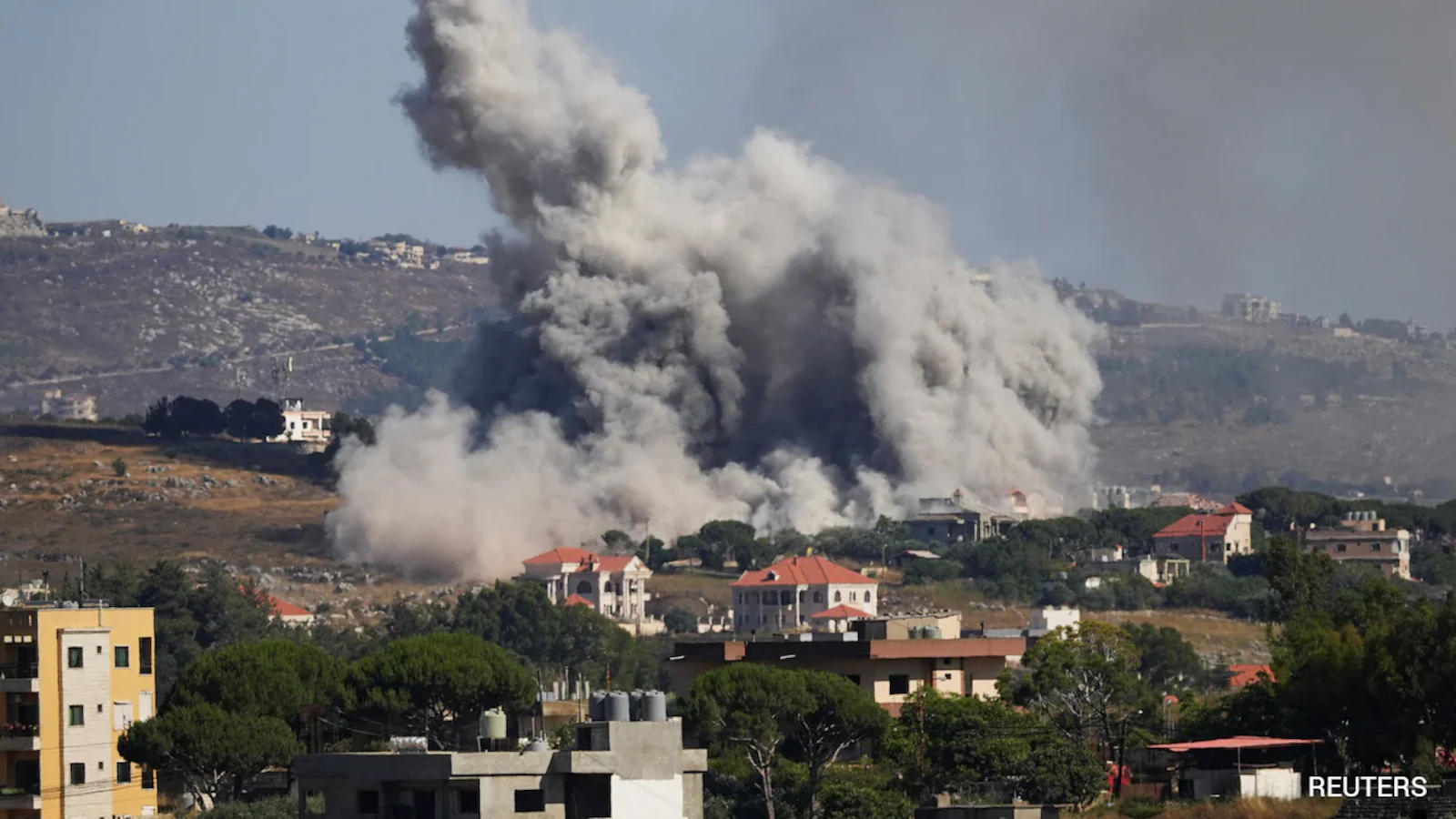
From irritating internet disruptions to this month’s scaled-down Victory Day parade and a massive weekend aerial attack in the Moscow region that killed three people, Russia’s full-scale war no longer seems a distant conflict.
Ukrainian President Volodymyr Zelensky cast the attack in Moscow’s suburbs as a just retribution for the relentless and deadly Russian missile and drone strikes on the capital of Kyiv and other cities last week.
All these assaults have come only days after President Vladimir Putin and US President Donald Trump both suggested that the war in Ukraine was nearing its end.
The Russian Defence Ministry reported on Sunday that its air defenses downed 1,054 Ukrainian drones in the previous 24 hours, one of the biggest tallies reported by the military. Moscow Mayor Sergei Sobyanin reported 81 drones were downed by the capital’s air defenses from late Saturday to early Sunday.
The attacks killed three near the Russian capital, injured 12 others, damaged multiple apartment buildings and destroyed several private homes.
One drone hit the territory of a Moscow refinery but didn’t derail production, Mr Sobyanin said. Another hit an oil tank at a storage facility, causing a blaze that blanketed the area in black smoke.
Several Moscow airports suspended operations, with dozens of flights delayed or diverted. One Ukrainian drone fell on the grounds of the capital’s Sheremetyevo airport but didn’t cause any damage, authorities said.
Ukraine’s ability to pierce Moscow’s dense air defense cover reflected the growth in the number of its drones, along with its enhanced tactics. Kyiv has steadily ramped up its drone raids, focusing on energy facilities and arms factories, but the capital has presented a tougher target.
“The Moscow region is the most heavily saturated with Russian air defense systems,” Mr Zelensky said in a speech to the nation, adding that “our long-range capabilities are significantly changing the situation – and, more broadly, the world’s perception of Russia’s war.”
The weekend attack on Moscow was a justified response to “Russia’s prolongation of the war and attacks on our cities and communities,” Mr Zelensky said.
“We are clearly telling the Russians: Their state must end its war,” he said in a social media post.
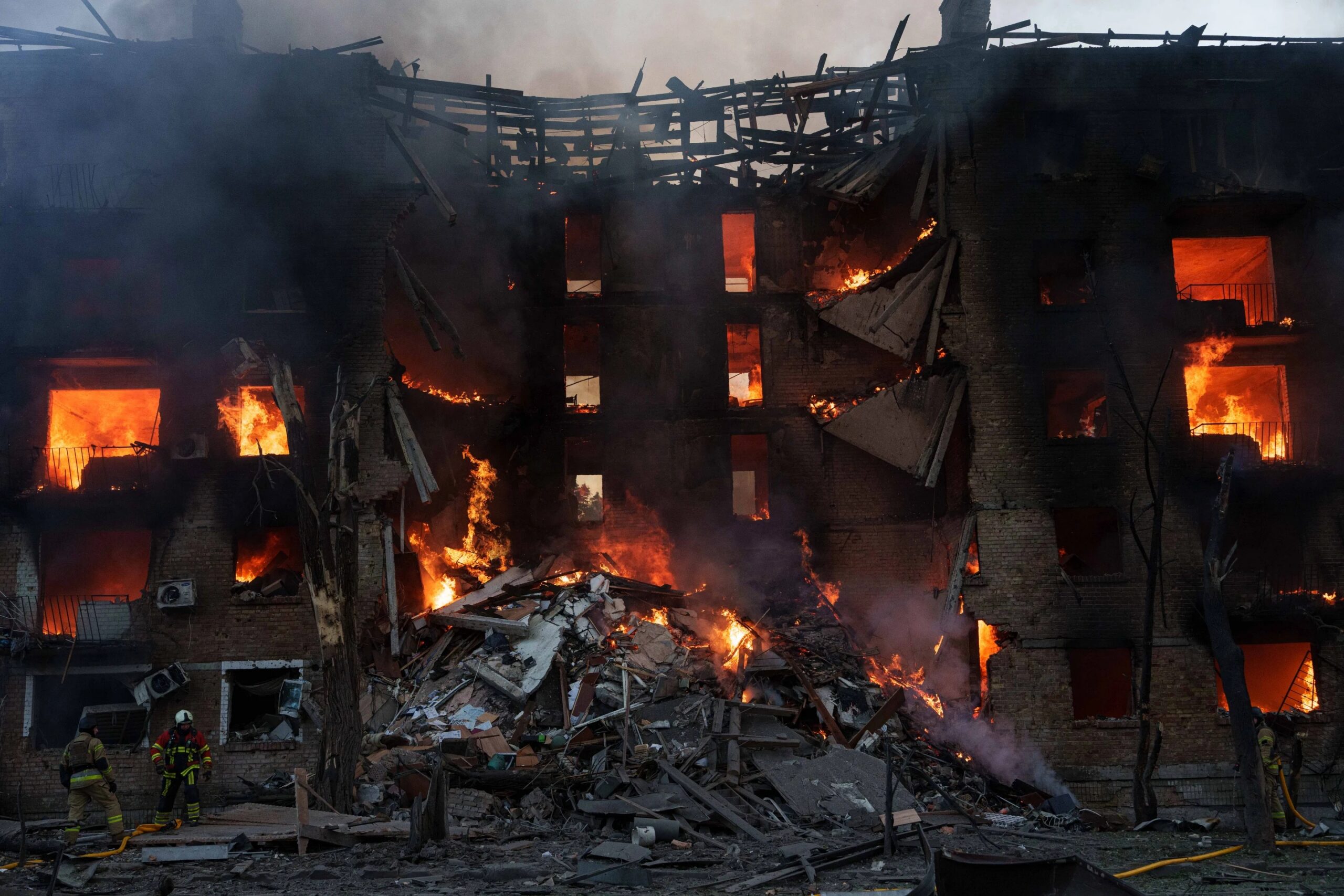
The deadliest attack last week in Ukraine saw 24 people killed as a Russian missile leveled a nine-story apartment building in Kyiv.
The attacks followed a brief US-brokered three-day ceasefire that failed to end the fighting but led to a pause in long-range attacks, allowing Moscow to hold an annual 9 May military parade commemorating the defeat of Nazi Germany in World War II.
Concern over Ukraine’s longer-range drone attacks led Russian authorities to scale down the parade. Unlike in years past, no tanks, missiles or other hardware rumbled through Red Square.
After the parade, Mr Putin said the war in Ukraine was nearing its end, although he didn’t explain that statement or offer any timetable. He has insisted on his maximalist demands for ending the war, including that Ukraine must pull out its troops from the four regions that Moscow has annexed but never fully captured. Kyiv has rejected the demand.
Mr Trump also claimed last week that the end to the war was “getting very close”, even though US efforts to help broker an end to the fighting have failed to make any significant progress and are effectively on hold since the start of the war in Iran.
The Moscow attacks come at a time when tensions are rising in Russia over the growing cost of the war and increasingly restrictive government policies that have dented Putin’s traditionally high popularity.
Some military bloggers and social media influencers who had been loyal to the Kremlin have started openly questioning the government’s policies.
A move by the authorities to restrict cellphone internet and block popular messaging apps has caused massive losses to businesses and disruptions to everyday life for millions of Russians, triggering public outrage.
The government defended its action by citing the need to thwart attacks by Ukrainian drones, some of which rely on mobile internet for targeting. Critics denounce the shutdowns as the latest move by authorities to tighten control over the internet.
The growing frustration over the restrictions led the public to file petitions to the presidential administration and to try to organise protests that were quickly blocked.
As the tensions mount, Mr Putin on Tuesday is starting a two-day visit to China.
State TV stations sought to play down the Moscow attacks, which received only a brief mention on some newscasts. They focused instead on a successful test last week of a new intercontinental ballistic missile that is intended to be a key part of Russia’s nuclear forces.
Several war bloggers said the weekend attack exposed vulnerabilities in air defenses that must be fixed quickly. Some urged the Kremlin to ramp up attacks on Ukraine and target its government.