The new provision effectively means that only members of the current Senate who have completed at least eight consecutive years in the chamber will be eligible to contest for presiding offices after the 2027 general elections.
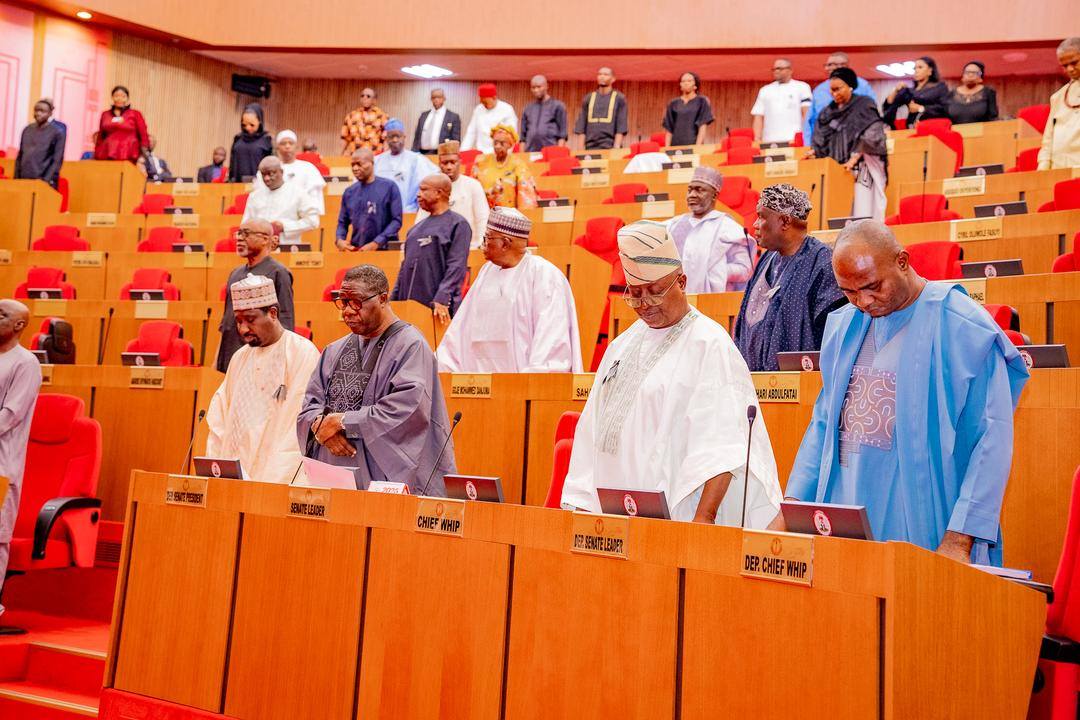
The Senate on Tuesday amended its rules to allow only senators who have spent at least eight years in the chamber to contest for the positions of Senate President and Deputy Senate President.
The amendment further stipulates that such years of service must be two consecutive terms immediately preceding the nomination.
The Senate President, Godswill Akpabio, announced the amendment after a majority of senators adopted it through a voice vote during plenary.
The new provision effectively means that only members of the current Senate who have completed at least eight consecutive years in the chamber will be eligible to contest for presiding offices after the 2027 general elections.
The upper chamber, under Mr Akpabio’s leadership, had attempted a similar amendment in August 2023 but abandoned the process following opposition from some lawmakers.
The latest amendment appears to affect several potential aspirants. There have been speculations that Imo State Governor, Hope Uzodimma, an ally of President Bola Tinubu, is considering a bid for the Senate presidency in 2027 after completing his tenure as governor in May of that year.
Mr Uzodimma previously represented Imo West Senatorial District from 2011 to 2019 before winning the governorship election in 2020. However, under the new rules, he would be ineligible to contest.
Similarly, Edo North Senator, Adams Oshiomhole, who is also reportedly eyeing the position, is affected by the amendment, being a first-term senator.
Before this change, Senate rules allowed any ranking senator to contest for presiding offices. Ranking is a parliamentary term defined as one who has served at least four years.
The revised rule introduces two key conditions: a minimum of eight years in the Senate and that such service must be consecutive and immediately precede the nomination.
The Senate also introduced several additional changes to its rules.
Order 8(1) was amended to require committee meetings to be held from 3:00 p.m. to 6:00 p.m., Monday to Friday, except on the second and fourth Fridays of each month.
Order 8(2) now provides that plenary sessions shall be held on Tuesdays, Wednesdays, and Thursdays from 11:00 a.m. to 3:00 p.m., unless extended by the Senate leader.
The chamber also amended Section 55(11) to allow presiding officers to drink water during plenary, and to permit nominees undergoing screening at the Committee of the Whole to do the same.
On the suspension of lawmakers, Section 66(8) was revised to require a suspended senator to withdraw from plenary as directed by the Senate president, with the duration of the suspension to be determined by the Senate through a resolution.
Regarding committee membership, Section 94(1) was amended to stipulate that committees shall have no fewer than seven and no more than 25 members. It also provides that no senator shall serve on more than seven committees, and that appointments should reflect the six geopolitical zones.
Section 96 was updated to include oversight functions for newly established regional development commissions: South-west, North-central, North-west, South-east, and South-south Development Commissions.
The Senate also created a new Committee on Reparation and Repatriation.
Following the adoption of the amendments, Mr Akpabio directed the Clerk of the Senate, Emmanuel Odo, to update the Senate rules accordingly.