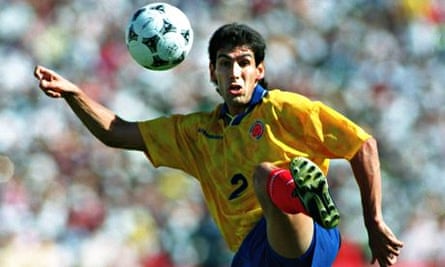
On June 22, 1994, Colombian defender Andres Escobar scored an own goal against the United States at the FIFA World Cup in Los Angeles. Ten days later, he was dead. The incident remains one of the darkest moments in football history, where a sporting mistake crossed into real-world violence.
Colombia had arrived at the 1994 World Cup as one of the most exciting teams in the world. After crushing Argentina 5-0 in qualifying, they were tipped as dark horses for the title. Escobar, 27, was the calm center-back and captain material for Atletico Nacional, known for his composure, sportsmanship, and clean play. He was nicknamed “El Caballero del Futbol” – the Gentleman of Football.
In the group stage match against the USA, Escobar tried to intercept a low cross in the 34th minute. The ball deflected off his leg and into his own net, giving the Americans a 1-0 lead. Colombia eventually lost 2-1, a result that, combined with an earlier loss to Romania, meant their elimination from the tournament.
What happened next shocked the world. On July 2, 1994, Escobar returned to Medellin. In the early hours of the morning, he was shot multiple times outside a restaurant in the El Poblado district. Witnesses reported that the gunman shouted “Goal!” with each shot, referencing the own goal. Escobar died en route to hospital. He was 27.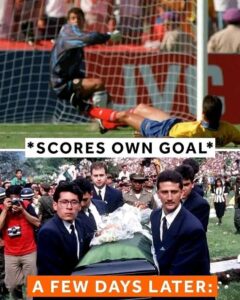
The murder exposed the dangerous overlap between football, gambling, and drug cartels in Colombia at the time. Many Colombian fans had placed heavy bets on the national team. The loss to the USA was a financial disaster for some, and Escobar became the target of their rage. Two men were arrested, and one, Humberto Munoz Castro, was convicted of murder and sentenced to 43 years in prison, later reduced.
Escobar’s death sent shockwaves through football. FIFA, players, and fans across the world condemned the killing. At his funeral, over 120,000 people lined the streets of Medellin. His teammates returned to Colombia wearing black armbands, and his number 2 shirt was retired by the national team.
The tragedy forced a wider conversation about the safety of players and the influence of gambling and organized crime on the sport. In Colombia, it became a symbol of how violence could consume even the most innocent moments of national pride.
Today, Andres Escobar is remembered not for the own goal, but for his character and the warning his death represents. A statue stands outside Atletico Nacional’s stadium, and his story is taught as a cautionary tale: in football, mistakes are part of the game, but they should never cost a life…See More