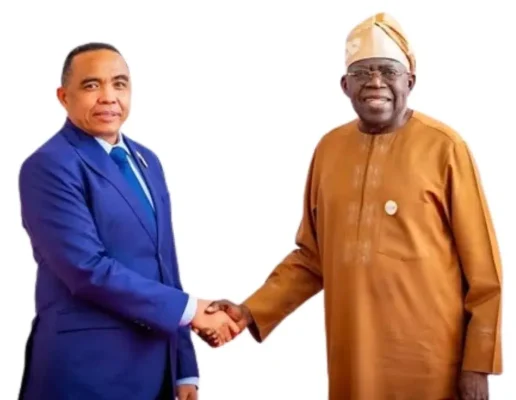
Power is often imagined as the triumph of arrival. In reality, it is the beginning of isolation. The higher leaders rise within the architecture of the state, the fewer people can truly share the burden of their decisions. There comes a moment in the life of every consequential leader when political victory ceases to provide comfort. The cheers fade, the machinery quiets, and power—once pursued with relentless intensity—reveals its loneliest truth: history is watching. This is the difficult threshold upon which the presidency of Bola Ahmed Tinubu now stands.
If earlier parts of this series examined Tinubu as strategist, coalition builder, political engineer and reform-driven president, the present phase demands a deeper inquiry. The question is no longer simply how power was acquired or sustained. It is whether power, once attained, can survive the heavier burden of historical judgment.
This is where leadership changes character.
Politics and governance are often spoken of interchangeably, but they impose different burdens on those who wield authority. Politics rewards movement, persuasion and tactical flexibility. Governance demands consequence. Every major decision creates winners and losers, relief and discomfort, loyalty and resentment. Over time, even the most skilled political structures encounter a reality no coalition can entirely soften: presidents eventually govern under the shadow of history.
That shadow alters everything.
The man who once navigated opposition politics, built alliances across regions and shaped electoral outcomes from the background now occupies the most exposed position in the republic. The transition from political strategist to national custodian is more than constitutional. It is psychological. Power acquired through movement eventually becomes responsibility fixed at the centre.
And the centre can be lonely.
The loneliness of leadership is rarely discussed honestly in democratic societies because politics thrives on spectacle. Crowds create the illusion of shared burden. Yet the higher leadership ascends, the narrower genuine certainty becomes. Advisors may speak. Allies may reassure. Supporters may applaud. But the final weight of national decisions rests with very few people—and history ultimately isolates them further.
This is particularly true in periods of reform and instability.
Leaders governing through prosperity enjoy the comfort of broad consensus. Leaders governing through transition encounter suspicion, impatience and political fatigue. Citizens struggling with inflation, unemployment and declining purchasing power rarely experience policy through theoretical frameworks. They experience it emotionally and materially. Reform therefore becomes not merely an economic process, but a test of social endurance.
This is the difficult climate confronting Tinubu.
The same political intelligence that sustained his rise now confronts a harsher national environment shaped by economic anxiety, institutional distrust and rising public expectation. The coalition-builder must now operate as steward of national consequence. The strategist must now endure the slower and less forgiving judgment of governance.
This distinction matters because history rarely judges leaders by the excitement surrounding their rise. It judges them by what remains after the excitement disappears.
Political popularity and historical significance are not always identical.
Some leaders celebrated in their own time diminish under historical scrutiny. Others resisted or criticised during their tenure later acquire greater historical respect because their difficult decisions produced enduring outcomes. History is often kinder to courage than contemporary politics is willing to be.
The distance between politics and history is therefore wider than democracies initially recognise.
History is slower than applause.
This is why the burden of consequential leadership eventually becomes intensely personal. Leaders begin to confront questions that extend beyond electoral survival:
What will endure after power?
Did sacrifice produce national renewal?
Did governance strengthen institutions or merely consolidate authority?
Was hardship transitional—or permanent?
These questions linger long after campaign slogans fade.
Nigeria complicates this burden even further because the country possesses a deep and often unresolved distrust of reform politics. Citizens have repeatedly been asked to endure national sacrifice under different administrations, yet many believe the outcomes rarely matched the promises. Structural Adjustment Programme policies, inconsistent economic transitions and uneven governance reforms have produced a political culture where suffering is remembered more vividly than explanation.
This historical memory matters.
When citizens distrust institutions, every reform is interpreted through suspicion. Economic pain becomes politically combustible when people believe sacrifice is unevenly distributed or poorly justified. Under such conditions, democratic leadership becomes extraordinarily difficult. Governments are expected to repair structural distortions while simultaneously maintaining political legitimacy among exhausted populations.
This is the paradox of democratic reform.
States often require painful adjustments to avoid deeper collapse, yet democratic societies naturally resist prolonged hardship. Leaders must therefore balance economic necessity with social psychology. Excessive caution prolongs structural weakness. Excessive shock weakens legitimacy. Navigating between these extremes demands not only policy intelligence, but emotional and historical awareness.
This is where Tinubu’s presidency enters its most defining phase.
The earlier stages of his political life rewarded adaptability, negotiation and strategic positioning. The present phase demands something more enduring: the ability to carry national uncertainty without immediate historical vindication. That burden can become isolating because transformational ambitions are rarely fully understood in real time.