Acting Attorney General Todd Blanche won’t commit to denying million-dollar payouts to January 6 rioters who assaulted law enforcement officers and stormed the Capitol after the Department of Justice announced a $1.7 billion fund to compensate Donald Trump’s allies.
Donors to the president’s campaign are also not barred from applying for taxpayer money from the newly created fund open to people who claim to be victims of government “weaponization,” Blanche said Tuesday.
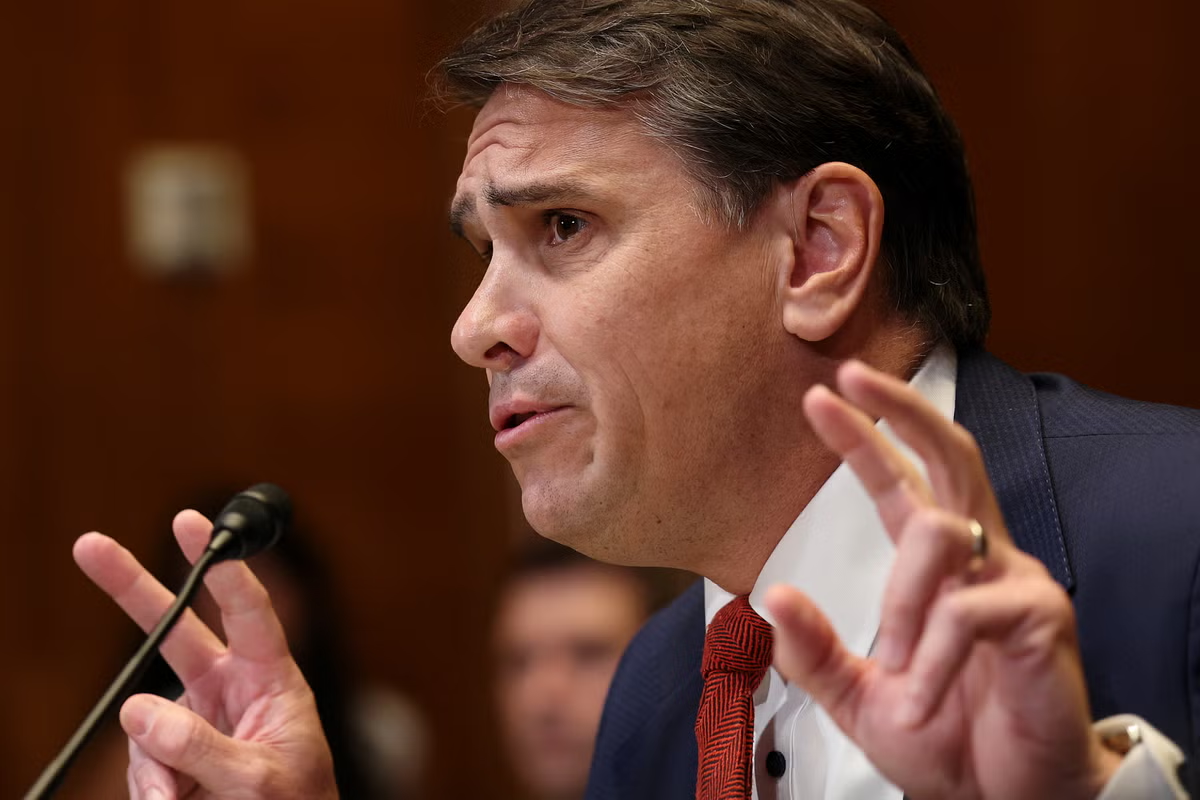
“Anybody in this country is eligible to apply if they believe they were victims,” he told the Senate Appropriations Committee as he seeks to justify a Justice Department budget that slashes funding for domestic violence survivors.
Trump’s donors are also not “excluded from seeking compensation,” but the president and his family won’t be eligible, according to Blanche.
“Anybody can apply. The commissioners will set rules, I’m sure. That’s not for me to set,” he said.
Blanche would not say whether a rioter pardoned by Trump who was later found guilty of five counts related to sex crimes against children would be eligible for a payout.
“You can’t tell us today that this individual would not be eligible for a payout from this fund,” Democratic Sen. Chris Van Hollen told him.
“I find that obscene,” he said.
Blanche, Trump’s former criminal defense attorney, is overseeing the nation’s top law enforcement agency after the president ousted Pam Bondi following her 14 months on the job. The DOJ announced the fund on Monday as part of a settlement after Trump abandoned his $10 billion lawsuit against the IRS.
“The machinery of government should never be weaponized against any American, and it is this department’s intention to make right the wrongs that were previously done while ensuring this never happens again,” Blanche said Monday.
The fund opens a “lawful process for victims of lawfare and weaponization to be heard and seek redress,” he said.
A five-member commission — with members appointed by Blanche — will manage the fund.
Trump told reporters on Monday that who gets paid will be “dependent on a committee” made up of “very talented people, very highly respected people.”
The administration’s announcement offered few details about how the fund would disburse money to eligible victims, or who would even be eligible.
But the list of recipients will remain “confidential,” Blanche told senators Tuesday.
The proposal has alarmed critics and watchdog groups who fear the Trump administration is effectively handing American taxpayers’ dollars to the president’s allies after an unprecedented series of pardons and commutations for his supporters.
Brian Morrissey, the general counsel of the Treasury Department, resigned hours after the fund was announced.
“The record is crystal clear. You are still acting as the president’s personal lawyer,” Van Hollen told Blanche Tuesday. “It’s hard to justify giving you any funds.”
Van Hollen called the fund an “outrageous, unprecedented slush fund you set up.”
“It is true that this is unusual. That is true. But it is not unprecedented,” said Blanche, who compared the funds to an Obama-era compensation fund to end a decades-long class-action lawsuit from Native American farmers who experienced discrimination by the federal government.
Unlike that case, the people who will likely seek and receive taxpayer dollars from the Trump administration’s fund have experienced no such discrimination. And unlike that case, a federal judge will not preside over the latest fund.
Hundreds of people were charged and convicted in connection with the mob’s assault in the halls of Congress on January 6, 2021. All of them have received a pardon from the president on his first day in office.
Last month, the Justice Department moved to toss out remaining cases — and most serious convictions — to finish off what the president started.
Those motions marked the latest efforts in the president’s ongoing attempts to rewrite the history of the 2020 election and downplay the violence that was captured on video and admitted by assailants who tried to stop members of Congress from certifying his loss.
Trump himself was federally indicted for his alleged attempts to overturn election results and his failure to stop the mob, but the cases under special counsel Jack Smith were thrown out after his election in 2024.