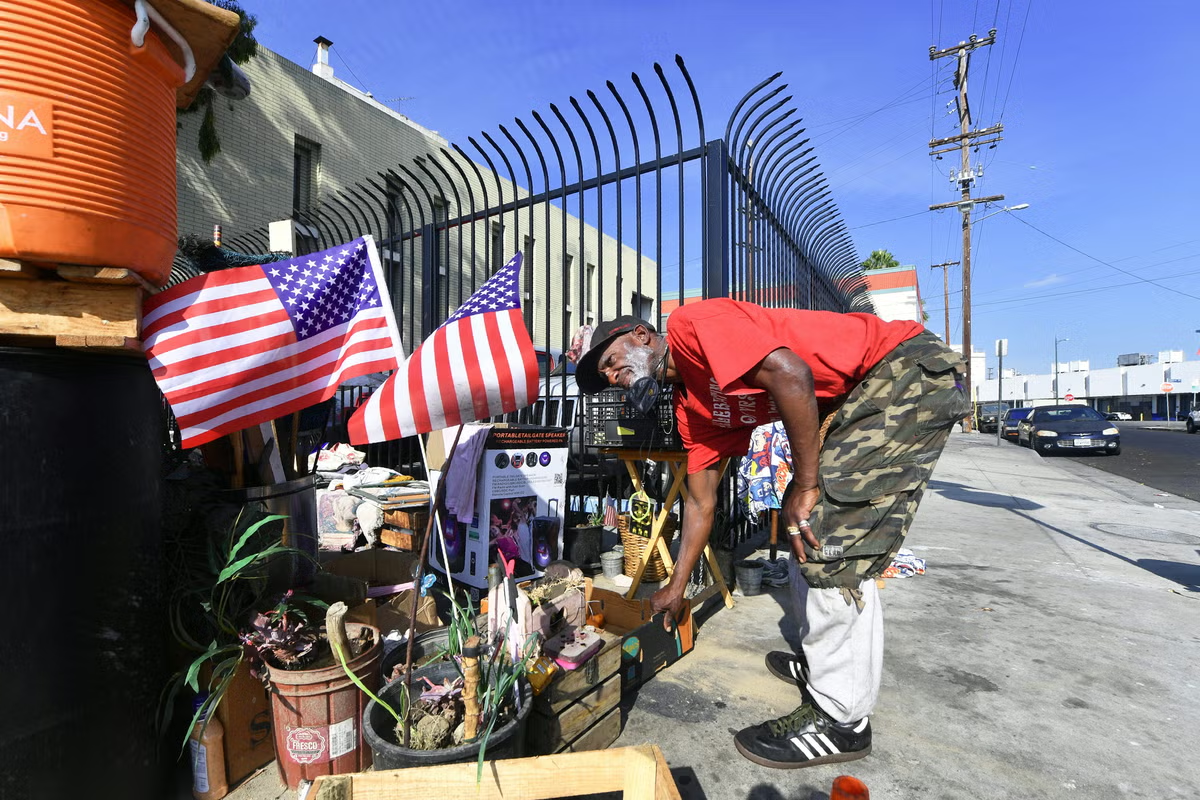
President Donald Trump has sparked bipartisan congressional outrage after not earmarking any money in his $2.2 trillion budget proposal for a promised Los Angeles facility to house 6,000 homeless veterans.
An executive order issued by Trump last year pledged that construction of a new National Center for Warrior Independence on the campus of the West Los Angeles Veterans Affairs Medical Center would be finished by January 1, 2028. The center is on land that was given in 1888, and among pricey homes. There have long been plans to build more housing at the site, but it has run into legal difficulties over the year.
Trump then signed an order to create the facility to house thousands. But the president’s April budget plan for fiscal 2027 allocated zero dollars to build new housing there, and his administration has made officials at the Department of Veterans Affairs and local advocates sign nondisclosure agreements related to the project, National Public Radio reported Thursday.
Trump has never explained the 6,000 figure, which is twice the number of LA’s population of homeless veterans and has prompted speculation his administration plans to bus in people from around the country, according to NPR.
During a contentious House Veterans Affairs Committee hearing on May 13, Chairman Mike Bost (R-Ill.), asked VA officials about the plans for Los Angeles and if they thought they were “above congressional oversight,” according to NPR.
“Transparency should be a priority, not an option,” Bost said. “If agreements, planning decisions or delays are hiding behind NDAs, the committee will demand answers. The American taxpayers and our veterans deserve to know how the land is being used and why progress has been so slow.”
Another Republican, Rep. Derrick Van Orden of Wisconsin, reportedly criticized gaps and inconsistencies in a plan delivered to lawmakers the night before, about eight months behind schedule, saying, “There’s no way in hell you’re gonna come here and say $500 million is a down payment, and you can’t tell me what the actual cost is.”
“We’re not doing this any longer,” he said. “This is corruption, and it’s gonna stop now.”
In a statement to The Independent, a VA spokesperson said, “Liberals in Congress and their staunch allies at the far-left and rightfully defunded NPR stood idly by for years as the West Los Angeles VA campus was mismanaged and California became the homeless capital of the United States. The Trump Administration is cleaning up their mess.”
VA press secretary Quinn Slaven said the department was “hard at work implementing President Trump’s executive order,” including by “reclaiming sections of the campus that had long been irresponsibly leased and licensed to private companies.”
Slaven also said the VA had issued a request for proposals to “immediately establish additional housing units on campus, and subsequent budget requests will include adding thousands more housing units.”
The deadline for responses is June 23, according to a notice published online by the General Services Administration, which oversees the federal government’s real estate and buildings.
During the May 13 hearing, Danielle Runyan, senior counselor to VA Secretary Doug Collins, reportedly blamed the department’s failure to brief lawmakers on “litigation we inherited when this administration took over,” and said the VA would “be happy to provide monthly updates.”
Runyan also testified that housing capacity at the West LA center grew from 955 to 1,377 beds during the first year of Trump’s second term — but none were the result of Trump’s executive order, NPR said.
Earlier this year, the Los Angeles Times reported that veterans who won a federal court order for additional housing at the site were opposed to a VA plan to build 800 tiny, 8-by-8-foot homes there.
Rep. Mark Takano (D-Calif.) said during the May 13 committee hearing that staffing cuts at the VA meant there weren’t enough workers to help the homeless veterans already living at the West LA center, let along the 6,000 envisioned by Trump.
“This concentration of veterans without adequate supportive services jeopardizes tenant safety, sobriety and mental health,” he said. “If we do not act…I fear we will doom this property to become a vast West Side skid row.”
More details here...