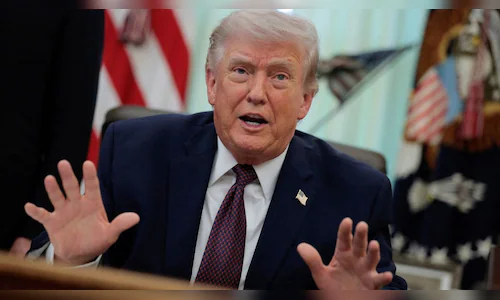
Nalapat said US President Donald Trump had miscalculated both Iran’s internal dynamics and the willingness of the Islamic Revolutionary Guard Corps (IRGC) to sustain a prolonged confrontation.
“Trump has gone too far without a clear endgame,” Nalapat said, adding that the US President appeared uncertain about both “when the war is going to end” and “what this end actually means”.
His remarks come as the United States and Iran continue to exchange threats despite a fragile truce holding for now. Trump has claimed Iran is “tired” and eager for a deal, while also warning Tehran of a “big hit” if it refuses major concessions over its nuclear programme.
US Vice President JD Vance has reinforced Washington’s stance, saying the US remains prepared to resume military operations unless Iran permanently abandons its nuclear ambitions.
Iran, however, has hardened its rhetoric. Iranian Foreign Minister Seyed Abbas Araghchi warned that Tehran had learned from previous hostilities and would respond with “many more surprises” if fighting resumed. The IRGC has also warned that renewed strikes could expand the conflict beyond West Asia.
Nalapat said Iran’s leadership was increasingly convinced that nuclear capability was essential for survival, citing examples such as Muammar Gaddafi and Saddam Hussein, both of whom gave up weapons programmes before eventually being overthrown.
“So Iran is drawing what it sees as the right lesson: build a bomb,” he said.
Nalapat also warned that the conflict could spread far beyond the Middle East if hostilities resumed. “Iran has already made it clear, and the IRGC has already made it clear, that any US base anywhere in the world is a legitimate target in this war,” he said.
Former Indian diplomat Rajiv Dogra said the current crisis was also reshaping global alliances, particularly between Russia and China.
“As far as the Putin-Xi meeting is concerned, and its warmth, that’s not a surprise,” Dogra said. “America has now pushed Russia into China’s arms, and it all started with Ukraine.”
Dogra described Iran as a “godsend opportunity” for both Moscow and Beijing, arguing that the crisis could accelerate the emergence of a stronger strategic alignment between the three countries.
“I would not be surprised if this relationship between Iran, China and Russia keeps developing into a more mature alliance in the times to come,” he said.
The former diplomat also pointed to growing domestic pressure on Trump after the US Senate voted to limit the President’s war powers in relation to Iran. The resolution passed with support from four Republican senators.
“For the moment it seems that Trump is in a bind,” Dogra said. “Iran is not going to bend, and Trump has very few options.”
Nalapat said the Iran issue was also exposing divisions within the Republican Party ahead of the US elections.
Also Read | Iran mocks Trump’s AI war map with ‘galaxy’ video, says any new aggression will be met with stronger response
“Trump has succeeded, frankly, in creating a civil war within the Republican Party,” he said, warning that internal divisions could weaken Republican prospects in November.
Meanwhile, regional diplomacy continues behind the scenes. Iranian media reports suggest Pakistan Interior Minister Mohsin Naqvi is expected to travel to Tehran for talks as Islamabad attempts to mediate between Washington and Tehran. It would mark his second visit to Iran within a week.