The United Kingdom is preparing to send a specialised military ship to the Strait of Hormuz to help detect and clear Iranian mines even as London insists it does not want to become directly involved in the ongoing conflict with Iran.
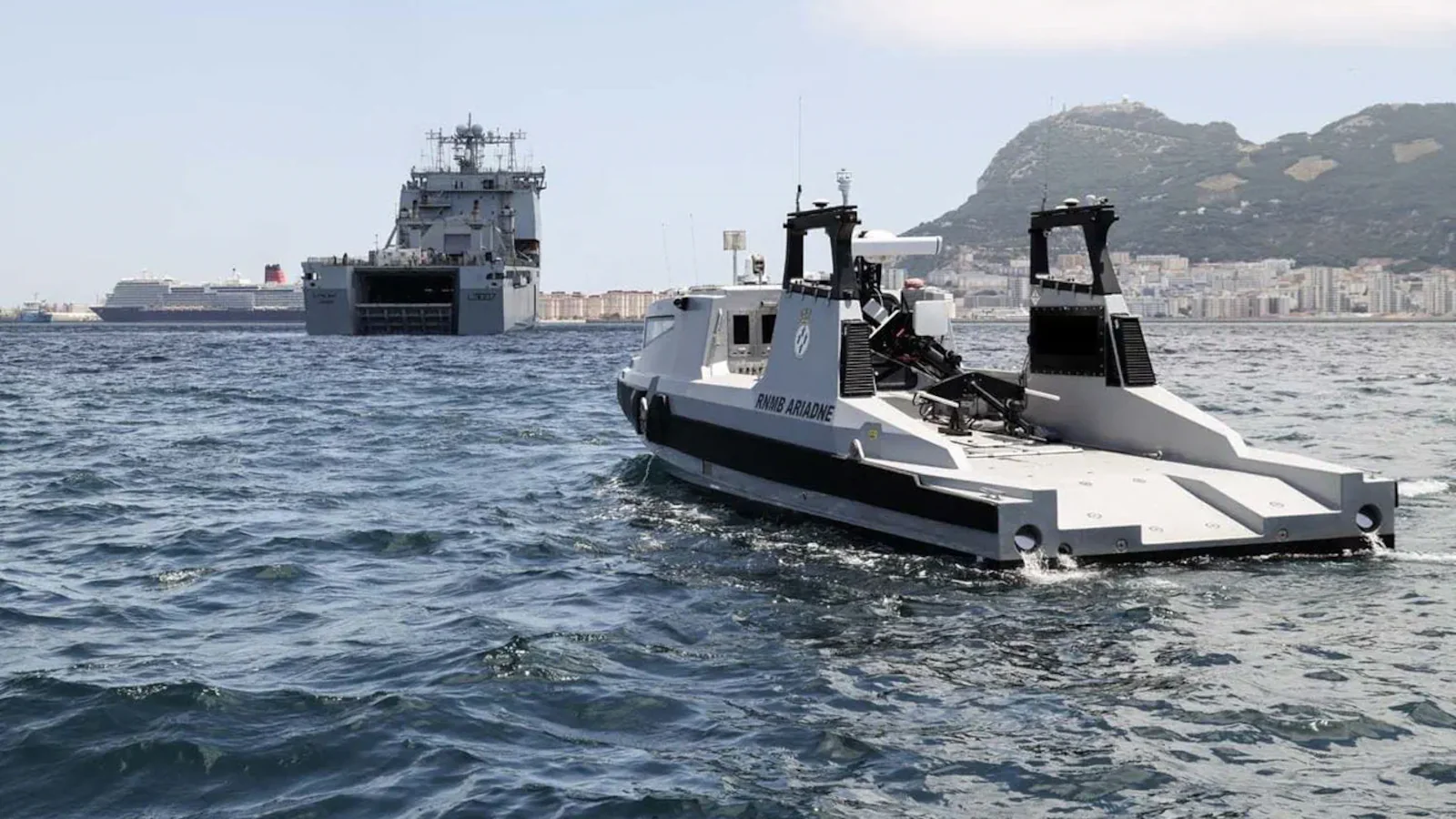
The operation centres around RFA Lyme Bay, a British naval support vessel that has now been repurposed as a floating base for mine-hunting drones and clearance teams. The ship recently departed Gibraltar and is expected to sail through the Suez Canal towards the Persian Gulf in the coming days.
British Armed Forces Minister Al Carns told Newsweek that the UK had already deployed fighter jets and anti-drone systems to countries in the Middle East facing Iranian attacks but stressed that Britain was “not involved in the war in the first place.”
According to the report, the UK and France announced in April that they would jointly lead a “strictly defensive” initiative aimed at protecting merchant ships and clearing explosives from the Strait of Hormuz once a peace agreement is reached between Washington and Tehran.
“We’re now pulling 40 countries together, [and] very specific and sophisticated capabilities, to try to clear those mines and ensure that commercial shipping can flow again and get the economy moving back to normal,” Carns told Newsweek.
The Lyme Bay is carrying several types of unmanned underwater systems designed to locate mines using sonar, sound and magnetic sensors. Some of the explosives are believed to be similar to the Iraqi mine that damaged the USS Tripoli during the Gulf War in 1991. Others can reportedly be triggered simply by a ship’s shadow passing over them.
Sailors aboard the vessel told Newsweek that one underwater drone can scan nearly 25 square miles in around 20 hours, although the same area may need repeated checks to ensure no explosives remain hidden underwater. Officials said the unmanned systems could still clear routes almost twice as fast as traditional mine-clearing ships.
Once a mine is detected, teams can either destroy it remotely or send trained divers to neutralise it manually. But officials said even creating limited safe corridors for commercial ships could take months.
The Strait of Hormuz remains heavily disrupted after Iran tightened control over shipping routes following months of conflict with the US and Israel.
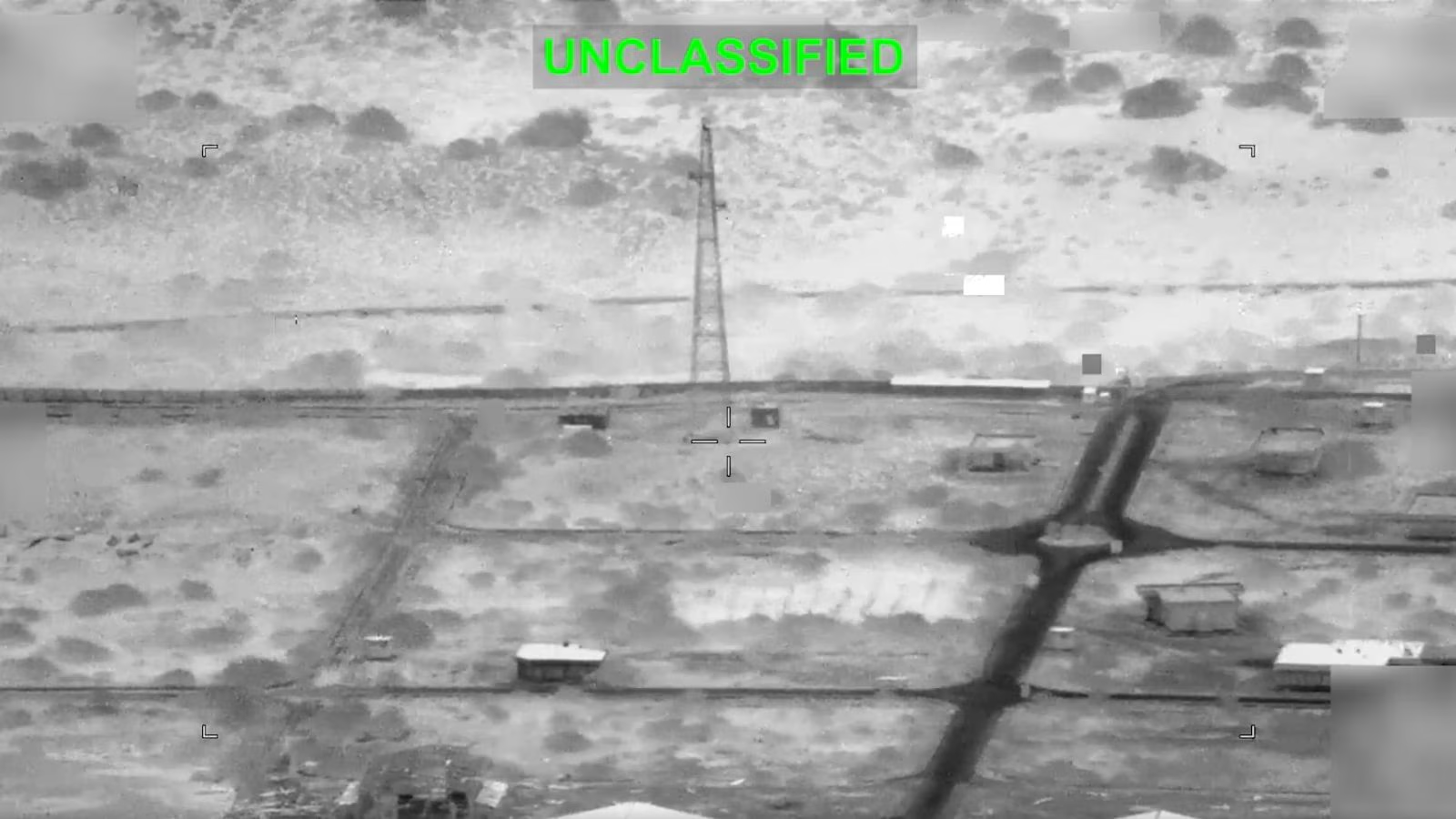
Recently, US military carried out overnight strikes in Iran targeting a site near the Strait of Hormuz that officials said threatened American forces and commercial shipping as tensions simmered despite an ongoing ceasefire and stalled peace talks.