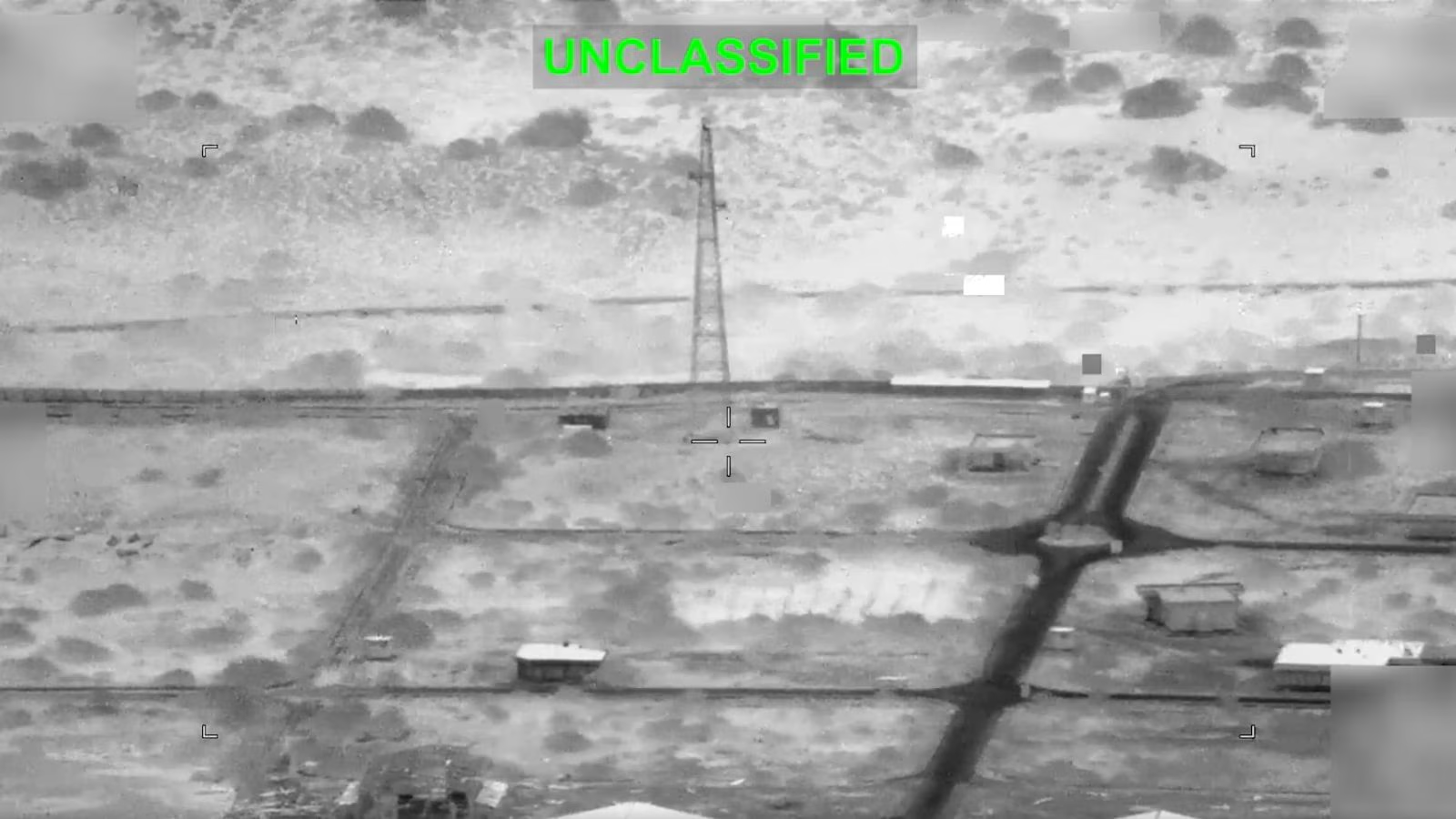
The US and Iran traded strikes in the latest flare-up threatening the Middle East ceasefire. The US military said it intercepted Iranian drones and missiles, then hit radar sites along Iran’s southern coast, marking another exchange between the two sides despite the ceasefire agreement still in place.
According to US Central Command (CENTCOM), four Iranian drones launched towards the Strait of Hormuz were shot down as they posed “an immediate threat to regional maritime traffic”. The US military later struck “coastal surveillance radar sites” in Goruk and on Qeshm Island, saying the action was taken “to defend against further attacks”.

https://t.co/otMGCOAWYY
— U.S. Central Command (@CENTCOM) June 6, 2026
CENTCOM also said Iran fired seven ballistic missiles towards Kuwait and Bahrain. “Initial assessments indicate six were intercepted and a seventh did not reach its intended target,” it said.
What has the US military said?
CENTCOM said its forces acted to protect shipping routes in the Strait of Hormuz, a key global energy corridor. It said the drones were one-way attack systems and described them as a direct threat to maritime movement in the region.
“The attack drones posed an immediate threat to regional maritime traffic,” the command said, adding that strikes on radar sites were meant to prevent further incidents.
The US military also said it had earlier intercepted multiple aerial threats, including missiles and drones targeting areas near the Gulf.
Story continues below this ad
What is Iran’s position and what else has happened?
Iran has not confirmed the missile details cited by the US, but its navy said it fired “warning shots” at US vessels in the Gulf of Oman, accusing them of harassment. CENTCOM denied that account.
Earlier in the week, Iran said it had targeted US-linked positions in the region, while both sides have accused each other of attacking sites and vessels near the Strait of Hormuz.
A recent drone strike on Kuwait’s airport, which killed one person, was blamed on Iran by Kuwaiti authorities, though Tehran denied involvement.
What does this mean for the ceasefire?
The latest exchanges come despite a ceasefire understanding first reached in April and extended multiple times. However, repeated strikes in recent days have raised questions about how long the arrangement can hold.
Story continues below this ad
US President Donald Trump said the situation “seems to be going quite well” but also indicated that talks with Iran remain difficult. “It’s a very hard thing for them,” he said, referring to ongoing negotiations.