Sunday Ehigiator
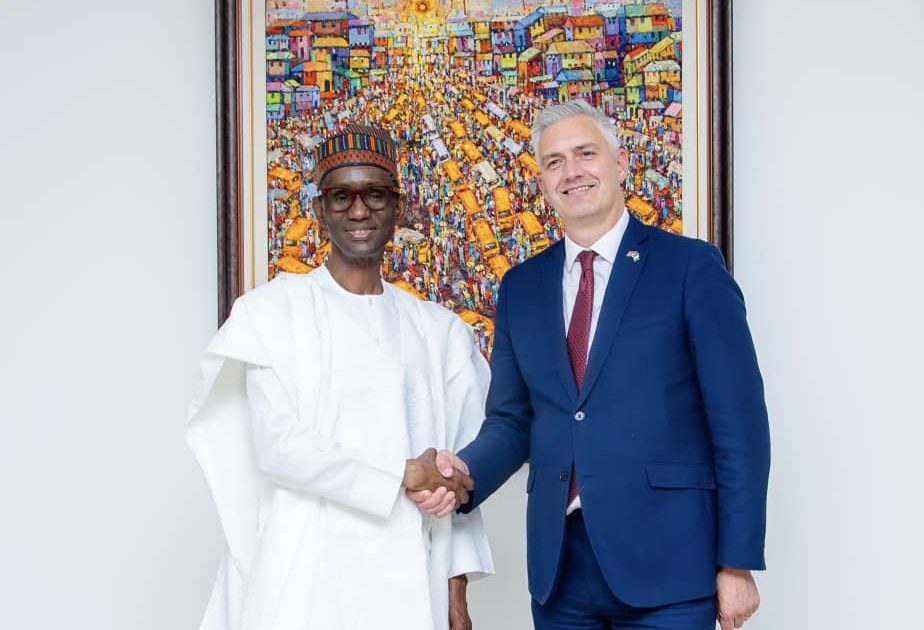
The United Kingdom’s Special Envoy for Freedom of Religion or Belief, David Smith, has concluded a three-day visit to Nigeria aimed at strengthening dialogue and promoting peaceful coexistence among religious communities.
The visit, which ended in Abuja yesterday, marked Nigeria as the first focus country visited under the UK’s Freedom of Religion or Belief (FoRB) strategy.
During the trip, Smith held meetings with senior government officials, religious leaders, civil society organisations and local communities as part of efforts to deepen UK-Nigeria cooperation on religious freedom, peacebuilding and national cohesion.
Among those he met were the National Security Adviser, Nuhu Ribadu, Minister of Information and National Orientation, Mohammed Idris, and Plateau State Governor, Caleb Mutfwang.
The envoy also met with co-chairs of the Nigeria Inter-Religious Council, including Daniel Okoh, President of the Christian Association of Nigeria, and Muhammadu Sa’ad Abubakar III, President-General of the Nigerian Supreme Council for Islamic Affairs.
Speaking at the end of the visit, Smith said he came to Nigeria to better understand how freedom of religion or belief is experienced in everyday life and how it relates to the country’s broader security and cohesion challenges.
“Over the past few days, I have been honoured to meet a wide range of people — from senior government figures and civil society to faith leaders and local communities. I came to listen, learn, and see both how freedom of religion or belief is experienced in everyday life, and how it connects to – and is a core part of addressing – Nigeria’s wider challenges around security and cohesion,” he said.
He described his interactions at the community level as some of the most impactful moments of the trip.
“Visiting Father Emmanuel Unamba’s parish and meeting Christian and Muslim neighbours living side by side was a real reminder that peaceful coexistence is something people build every day through leadership, dialogue, and shared responsibility,” Smith added.
The envoy stressed that progress on religious tolerance and social cohesion must be “Nigerian led,” while reaffirming the UK’s support for peacebuilding initiatives across the country.
“What I take away from this visit is the importance of further progress being Nigerian led, rooted in strong institutions and inclusive dialogue, with FoRB at its heart. The UK will continue to support practical efforts in ensuring greater peace, security and prosperity for all,” he said.
As part of the visit, Smith participated in a roundtable discussion with partners implementing the UK-funded Strengthening Peace and Resilience in Nigeria (SPRiNG) programme, a £38 million conflict and resilience initiative operating mainly in Kaduna, Katsina, Benue and Plateau states.
He also held discussions with the Institute for Peace and Conflict Resolution, the National Human Rights Commission, and civil society groups working on issues related to insecurity and religious freedom.
The visit included tours of the National Mosque and the National Ecumenical Centre in Abuja.
According to the UK envoy, the level of religious coexistence and cohesion observed in some communities in the capital should be replicated across the country through sustained dialogue and collective commitment.
The visit also follows the momentum generated by President Bola Tinubu’s State Visit to the United Kingdom in March 2026, which reinforced the UK-Nigeria Strategic Partnership and featured interfaith engagements attended by the Nigerian leader and King Charles III.