Britain has so far pledged just 5 per cent of the aid it spent tackling the last massive Ebola outbreak on containment efforts for the latest fast-growing crisis.
The UK has pledged £21 million to the current outbreak in eastern Democratic Republic of Congo (DRC) – which has also spread to Uganda – compared to £427 million in 2014-15 responding to the West Africa outbreak. It comes as the UK is cutting billions of pounds from aid spending as the budget falls from 0.5 per cent to 0.3 per cent of Gross National Income (GNI),to fund increased defence spending.
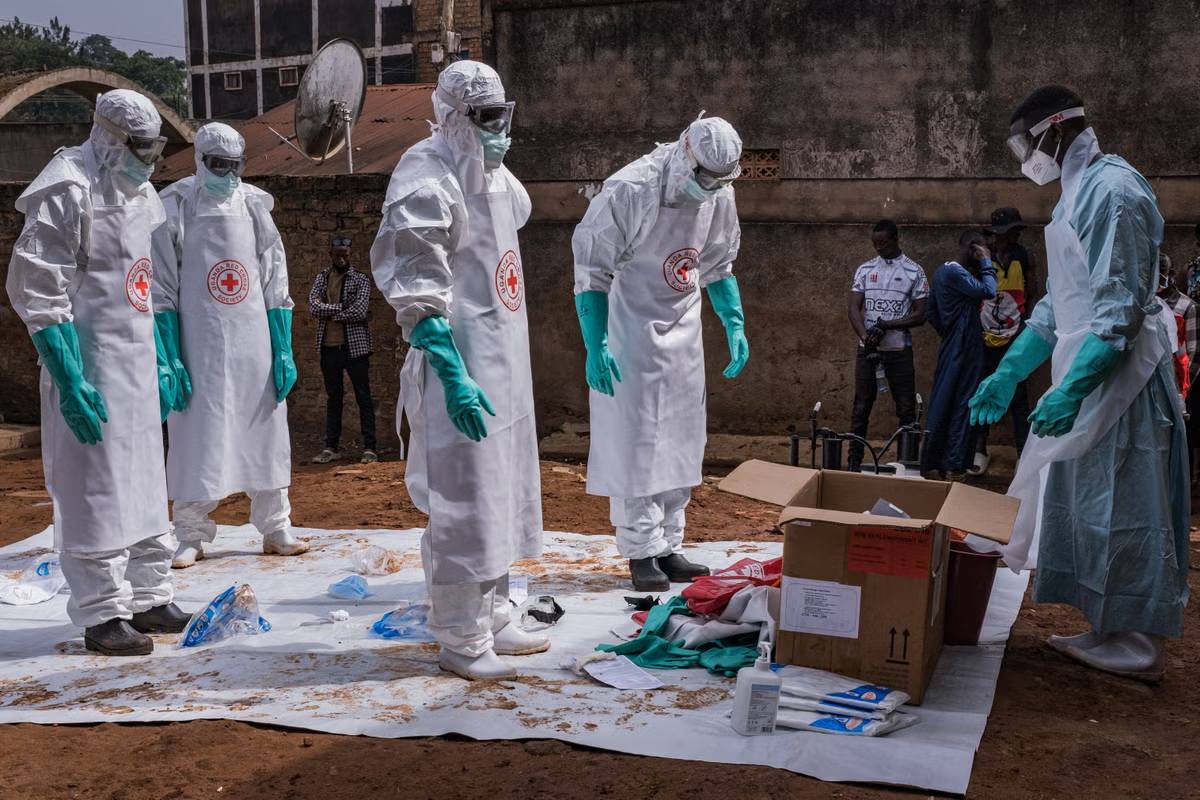
The 2014/15 outbreak, the largest on record, involved more than 20,000 cases and 10,000 deaths across more than a year, while the current crisis involves more than 1,000 confirmed cases and nearly 300 suspected deaths since the outbreak was confirmed almost two weeks ago. However, the World Health Organisation (WHO) and humanitarian organisations have expressed concerns about the disease outpacing response efforts. Health officials have also warned the outbreak of the rare Bundibugyo strain of Ebola – for which there are no approved vaccines or treatments – is spreading through a region already destabilised by active conflict, mass displacement and deepening mistrust of aid workers.
Beccy Cooper, a Labour MP and chair of the All-Party Parliamentary Group on Global Health and Security, said the lessons of the 2014/15 epidemic were being ignored. She said: “Acting early boldly saves lives. Ebola does not respect borders. When the international response is underfunded, you lose the ability to trace contacts, treat the sick and protect frontline health workers. The virus exploits every gap we leave behind. What begins as a containable outbreak in eastern DRC will quickly become something far harder to contain.”
The WHO declared the current outbreak a public health emergency of international concern last week. More than 1,200 suspected and confirmed cases and at least 255 suspected deaths have been reported across three provinces in eastern Congo, where fighting involving Rwanda-backed M23 rebels and other armed groups has continued despite international mediation efforts. Uganda, which has reported seven confirmed cases, closed its border with DRC on Wednesday for at least four weeks.
WHO Director-General Tedros Adhanom Ghebreyesus has called for an immediate ceasefire, warning that violence was hampering efforts to contain the disease. He said: “Eastern DRC now faces a catastrophic collision of disease and conflict. We cannot build community trust or isolate the sick while bombs are falling.”
Aid groups say the response has already been constrained by funding pressures and the wider cuts to aid spending on disease surveillance, in the wake of the UK decision and Donald Trump slashing the US aid budget since returning to the White House. UN refugee agency sites in Uganda’s West Nile region, which borders DRC, are at more than double their capacity.
Greg Ramm, Save the Children’s country director in DRC, was in Liberia in October 2014 when the West Africa crisis was at its peak. He said, by comparison, the current response was being shaped by what had been allocated rather than what was needed. He told The Independent: “As opposed to surging [into the country] all of the people, PPE and other equipment that we needed, the response is more measured – making sure that we only spend what’s been allocated. This outbreak needs a no-regrets approach.”
During the 2014/15 outbreak, Britain deployed military planners, NHS staff and emergency treatment centres as part of a £427 million package focused on Sierra Leone. This time, a Foreign, Commonwealth and Development Office (FCDO) spokesperson said Britain had committed “up to £21 million at this early stage of the response”. The FCDO is believed to still be assessing what a longer-term response could require and that number is expected to rise.
Aid workers say insecurity is hampering almost every aspect of the response. Protesters set fire to patient tents in Ituri province last week and attacks on medical facilities have disrupted surveillance and treatment operations. Without sustained funding, health officials warn, the capacity to trace contacts, treat patients and protect frontline workers will continue to fall short of what the outbreak demands.
Andrew Mitchell, a former secretary of state for International Development, said Britain was right to contribute but warned its capacity to scale up had shrunk. He told The Independent: “The WHO has depleted funds but is rallying round and we must do our best to help. But if the outbreak spreads into countries with which we have close relations, I fear we will not have the means to assist where previously our help, support and expertise would have been immediate.”
An FCDO spokesperson said: “We are working with international partners, including WHO and Africa Centres for Disease Control and Prevention (CDC), to support a coordinated African-led response and strengthen surveillance, containment and preparedness. The UK has already committed up to £21 million at this early stage of the response.”
“The UK remains committed to tackling global health challenges – not only because it is the right thing to do, but because it will help us by supporting global stability, growth, UK jobs, and the NHS.”
“By acting now, we have the best chance of saving lives in DRC and helping tackle the spread across the region and globally.”
This article has been produced as part of The Independent’s Rethinking Global Aid project
More details here...