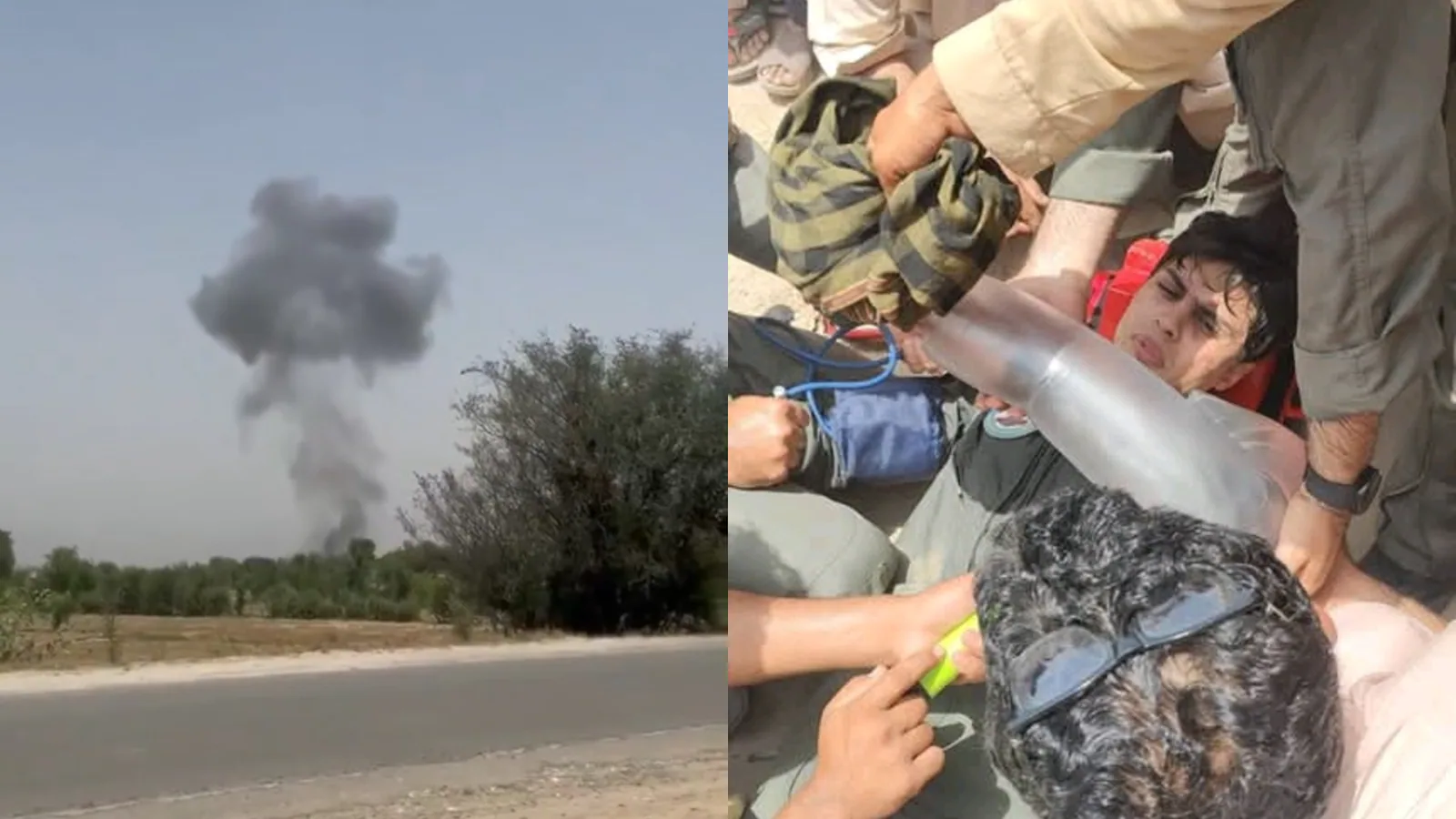
A Pakistan Air Force JF-17 Thunder fighter jet crashed near the Pakistan Aeronautical Complex (PAC) in Kamra during a routine training mission, once again putting the spotlight on the safety record of Chinese-origin fighter aircraft operated by Islamabad.
According to reports, the aircraft went down after suffering a suspected technical malfunction. Both pilots managed to eject before the crash, though they reportedly sustained serious injuries. No civilian casualties were reported.
Videos circulating online showed the fighter jet moments before the crash, followed by pilots descending with parachutes as thick smoke rose from the wreckage. Emergency responders and local residents were also seen rushing to assist the injured pilots near the crash site.
Pakistan Air Force JF-17 Jet Crashes, 7th Crash Of Chinese-Made Fighter Reported pic.twitter.com/qBVER2QLKS
— NDTV WORLD (@NDTVWORLD) May 20, 2026
Renewed Questions Over Chinese-Made Jets
The latest incident is reportedly the seventh crash involving Chinese-origin fighter aircraft in Pakistan in recent years, fuelling renewed scrutiny over the reliability and maintenance of the country’s increasingly China-dependent air fleet.
The JF-17 Thunder is jointly produced by the Pakistan Aeronautical Complex (PAC) and China’s Chengdu Aircraft Corporation (CAC) and forms a key part of the Pakistan Air Force’s combat fleet. Developed as a lightweight, single-engine multi-role fighter aircraft, the jet was designed to replace several ageing aircraft in Pakistan’s inventory.
The US Army Training and Doctrine Command, headquartered at Fort Eustis in Virginia, describes the aircraft as the “JF-17 Thunder Pakistani Multirole Combat” jet jointly developed by PAC and CAC in China.
It states that the aircraft was designed for multiple operational roles, including “interception, ground attack, anti-ship, and aerial reconnaissance”.
The latest crash has prompted fresh debate over operational safety standards, maintenance protocols, and the long-term reliability of Chinese-built defence platforms that now form the backbone of Pakistan’s aerial combat capability.