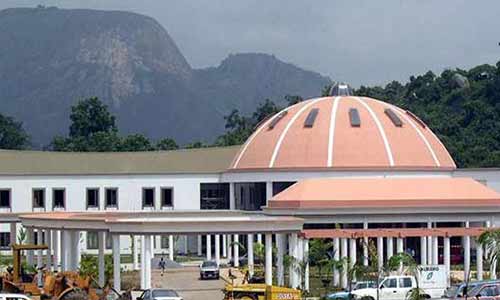
The Presidential Villa, Abuja, is set to disconnect completely from the national electricity grid and operate on an independent solar power system, as authorities move to reduce what officials have described as an unsustainable annual energy bill of about ₦47 billion.
The planned transition at Aso Rock, the seat of Nigeria’s government, follows the completion of a solar mini-grid project approved under President Bola Tinubu’s administration.
The project, titled “Solarisation of the Villa with Solar Mini Grid,” received ₦10 billion in the 2025 budget, while an additional ₦7 billion was allocated in the 2026 budget, bringing the total funding to about ₦17 billion.
State House Permanent Secretary, Temitope Fashedemi, had earlier informed lawmakers that the solar installation at the Villa was completed towards the end of 2025 and had been undergoing technical evaluation ahead of a full transition.
“The solar installation at the Villa was completed toward the end of 2025 and has remained under technical evaluation. We are hopeful that by March we will be able to effect a full cutover,” Fashedemi said.
Officials said the move is aimed at cutting energy costs and ensuring more reliable electricity supply for the presidential complex, which has historically depended on a combination of power from the national grid and diesel-powered generators.
The Director-General of the Energy Commission of Nigeria, Mustapha Abdullahi, said the Villa’s current energy expenses had become difficult to sustain.
“It is unsustainable for the Aso Rock Villa to continue to pay about ₦47 billion yearly in power bills,” Abdullahi said.
He added that the solar project was approved to reduce costs and diversify the energy sources serving the seat of government.
Large sections of the presidential complex, including open areas and car parks, have already been fitted with solar panels. The panels are supported by battery storage systems designed to provide uninterrupted electricity to the Villa.
Officials said backup generators would still remain available, but reliance on diesel-powered generation is expected to reduce significantly once the solar system becomes fully operational.
The move comes amid Nigeria’s long-running electricity crisis, marked by inadequate generation, weak transmission, poor distribution, frequent grid collapses and persistent outages across the country.
Despite years of reforms in the power sector, households, businesses and public institutions continue to rely heavily on generators and other alternative sources of electricity.
The Aso Villa solar project has attracted mixed reactions. Supporters see it as a practical investment in renewable energy, energy security and cost reduction for a critical national facility.
However, critics argue that the decision by the country’s seat of power to disconnect from the national grid sends a troubling signal about the state of Nigeria’s electricity network.
Princewill Okorie of the Electricity Consumer Protection Advocacy Centre said the decision suggested that government itself may have lost confidence in the national grid.
The project is also being presented as part of the Tinubu administration’s broader push for renewable energy and energy diversification.
However, the development comes at a time when millions of Nigerians still face unreliable electricity supply, rising energy costs and increasing dependence on generators, solar systems and inverters for daily power needs.
The Presidency has not yet indicated whether similar solar-powered systems will be extended to other federal government institutions.