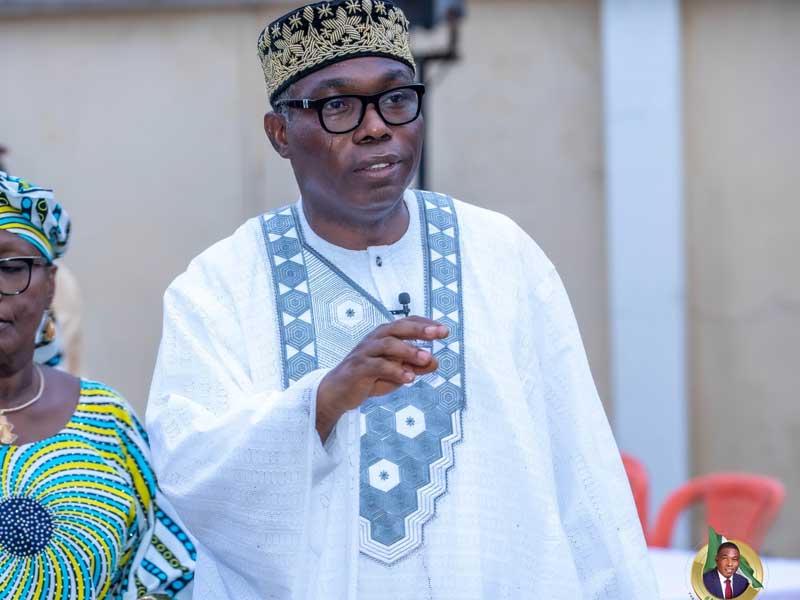
Presidential hopeful and chieftain of the Social Democratic Party (SDP), Prince Adewole Adebayo, has dismissed the growing debate around proposals for a single six-year presidential tenure as a distraction from Nigeria’s deeper governance and democratic challenges
He insisted that electoral credibility, economic competence and security reform should dominate national discourse ahead of 2027.
Speaking on a television programme, Adebayo argued that the country’s real challenge is not the length of time elected officials remain in office but whether elections genuinely reflect the will of voters.
According to him, Nigeria must confront what he described as the persistent problem of electoral credibility and ensure that citizens regain confidence in democratic processes.
“The issue is not whether leaders spend four years or six years in office. The issue is whether the system works and whether voters actually decide who governs,” he said.
Referencing the approach to June 12 commemorations, Adebayo called for what he termed the final defeat of electoral manipulation, stressing that political competition should revolve around ideas and competence rather than internal party disputes or identity politics.
Addressing questions surrounding internal developments within the SDP and speculation over rival tendencies within the party, Adebayo downplayed concerns and maintained that the party remained focused on presenting an alternative national vision.
He said his mission was to provide Nigerians with what he called a constitutional and policy-based alternative built around economic recovery, security reforms and social welfare.
Adebayo argued that public attention during previous elections had shifted away from policy debates towards identity considerations, a trend he said prevented voters from scrutinising the implications of government proposals.
On his party’s electoral prospects, the SDP leader rejected suggestions that the party remains politically marginal, insisting that growing public dissatisfaction has increased demand for alternatives.
According to him, the country’s current political culture rewards money politics and weakens issue-based campaigns, while parties with stricter internal discipline often face disadvantages.
He maintained that his party rejects vote-buying, ethnic mobilisation and religious appeals, describing ethical politics as the foundation for sustainable governance.
“Our belief is that good politics is the only gateway to good governance, and good governance remains the only lasting solution to Nigeria’s problems,” he said.
On the economy, Adebayo renewed his criticism of fuel subsidy removal, arguing that government policy failed to account for wider economic consequences.
While clarifying that he would not simply restore the former subsidy regime, he said the decision to remove it was executed without addressing structural issues in domestic refining capacity and transportation.
He proposed a phased approach centred on rehabilitating Nigeria’s refineries, expanding mass transit systems and reducing dependence on petrol among low-income earners.
According to him, fuel pricing has broad implications because it affects production costs, inflation and household welfare simultaneously.
Turning to security, Adebayo delivered some of his strongest criticisms yet of government handling of insecurity, arguing that Nigeria possesses sufficient institutional capacity to defeat criminal groups if intelligence and law enforcement are properly coordinated.
He blamed recurring kidnappings and insecurity on weak implementation, poor prioritisation and what he described as an over-centralised security structure.
He insisted that criminal groups should not be negotiated with and rejected any possibility of accommodating armed actors.
“There is no terrorist or kidnapper capable of overwhelming the Nigerian state. The issue is whether government chooses to act,” he said.
Adebayo also advocated reforms to policing, calling for greater operational independence for law enforcement institutions and reduced political interference.
He argued that security professionals should be allowed to operate based on intelligence and constitutional responsibilities rather than political directives.
Responding to suggestions that opposition politicians often underestimate the realities of governance, Adebayo defended policy debate as a necessary component of leadership.
“Talk is not cheap,” he said. “Senseless talk is cheap. Serious policy requires thinking, data and understanding how government works.”
With political conversations around 2027 beginning to gather momentum, Adebayo said his campaign would continue to focus on constitutional governance, economic restructuring, electoral integrity and public safety as the central questions confronting Nigeria.