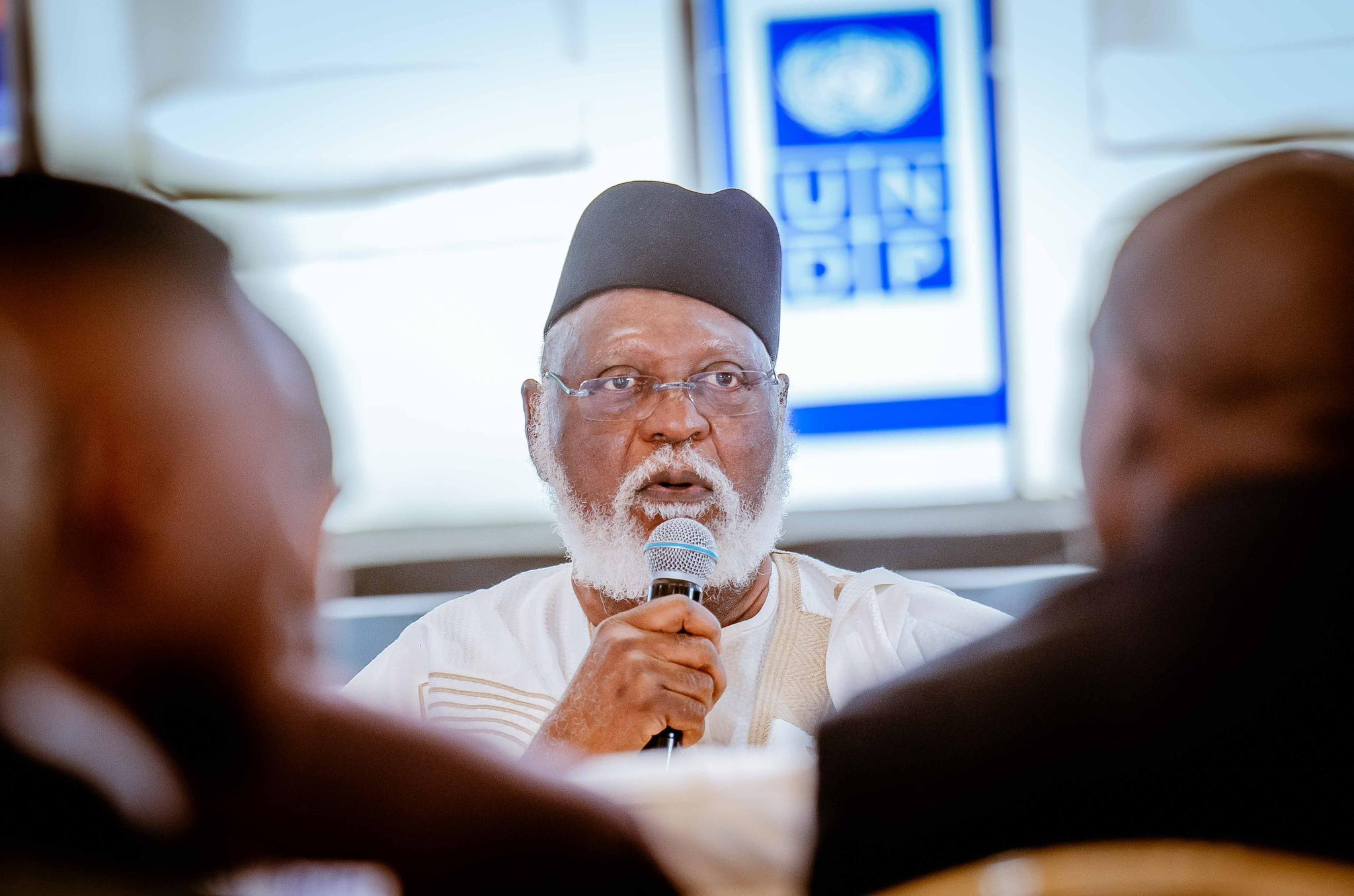
The former head of state, whose administration promulgated the Constitution, urged the government to amend or remove such provisions through democratic processes to ensure they align with democratic principles.
A former Nigerian Head of State, Abdulsalami Abubakar, has called for the removal of military decrees incorporated into Nigeria’s Constitution to strengthen the country’s democracy.
Abdulsalami, a retired army general, whose administration promulgated the 1999 Constitution, acknowledged claims that some military decrees were embedded in the document. He, however, urged the government to amend or remove such provisions through democratic processes to ensure they align with democratic principles.
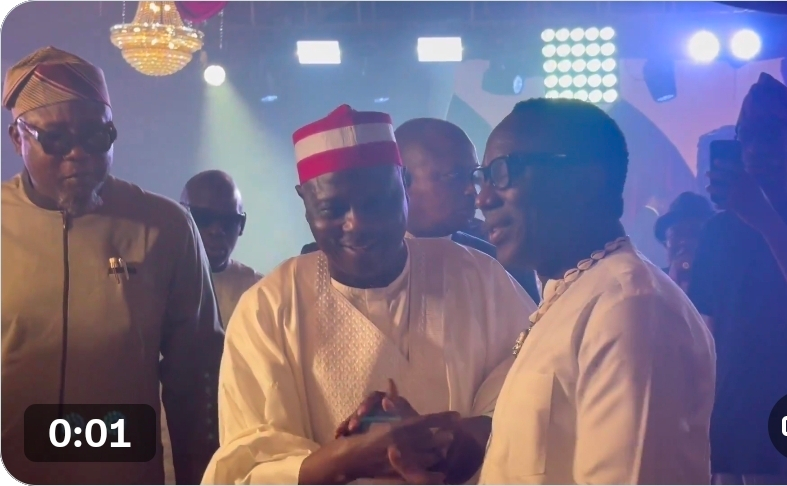
The former head of state made the call in his autobiography, “Call of Duty,” launched last Saturday in Abuja.
“Democracy is always in motion. Every day, new laws are made to reflect the needs of the people. If the argument is that it is a “military” constitution because it was promulgated with military decrees, we are now in a democracy and whatever changes need to be made should be made democratically and in line with laid-down procedures. There’s no perfect constitution in the world,” he said.
Abdulsalami became Nigeria’s Head of State in June 1998 after the death of Sani Abacha, who had ruled the country from 1993 until his death in 1998.
Less than a year after assuming office, Abdulsalami successfully supervised a transition programme that culminated in the handover of power to former President Olusegun Obasanjo on 29 May 1999. The transition ushered in Nigeria’s current democratic dispensation, which has been uninterrupted for more than two decades.
After his retirement from public office, Abdulsalami transitioned into an esteemed elder statesman and diplomat, serving in various mediation and peace-building roles across Africa, including assignments for the Economic Community of West African States.
He currently chairs Nigeria’s National Peace Committee, which facilitates peace accords among political actors during election periods and promotes peaceful conduct before, during and after elections.
Some Nigerians have criticised some provisions of the 1999 Constitution, which has been in use since the country’s return to democratic rule that year. The criticisms came in the light of the rapid technological, social, and political developments in Nigeria.
Since 1999, the National Assembly has altered the document five times, though some items proposed for amendment were defeated at the state legislatures
Huge sums have also been expended for the exercise with the federal legislature budgeting separately for it.
The Constitution is currently undergoing another review at the National Assembly. The Constitution Review Committee chaired by the Deputy Senate President, Barau Jibrin, had pledged to complete the exercise before the end of 2026.
Some of the provisions critics have constantly claimed to have been “smuggled” into the constitution are the Land Use Act, which vests control of land in state governors, and the establishment of the National Youth Service Corps (NYSC), which mandates a one-year national service for graduates of tertiary institutions below the age of 30.
In his autobiography, Abdulsalami argued that those criticising these provisions had failed to make a convincing case against them.
“I would not consider this as a disaster that should invalidate the other provisions of the constitution. People are only trying to force issues. There are several criticisms that are completely misplaced, such as the argument it was not subjected to any referendum.
“Historically, Nigerian Constitution, including the ones celebrated as the “best” by critics, were never subjected to any referendum. This argument is only applied to discredit the 1999 constitution. It is all the more obvious when some of the people who participated in producing the 1979 constitution join the chorus of those attacking the 1999 constitution,” he stated.
Mr Abdulsalami, however, agreed that the Constitution requires amendments to better reflect the aspirations of Nigerians.
“I admit that there are adjustments to be made to the 1999 constitution to make it more up-to-date and reflective of the yearnings of Nigerians. I do not have any problems with that. A constitution is a living document. It is subject to amendments, alterations and updates,” the former Nigerian leader said.
The 1999 Constitution drew heavily from the 1979 Constitution and the draft 1995 Constitution. Abdulsalami, who was then head of state, signed Decree No. 24 of 1999 to promulgate the Constitution on 5 May 1999, although it did not come into effect until 29 May.
The Constitution retained the presidential system practised during the Second Republic and preserved Nigeria’s federal structure, with powers divided between the federal and state governments through the Exclusive and Concurrent Legislative Lists.
In his autobiography, Abdulsalami acknowledged that some critics regard the Constitution as a military document because it was produced during military rule and was promulgated by decree.
He rejected that characterisation, insisting that the document was prepared by a Constitutional Drafting Committee (CDC), not by the military.
“However, I would say some facts are deliberately mixed up to attack the credibility and validity of the 1999 constitution. It is false to say the military wrote it. The 1979 constitution and the draft 1995 constitution, both of which the 1999 constitution borrowed from, were not written by the military, even if they were produced under military rule.
“They were written by some of the best brains the country had to offer. I need to put this on record because there are many Nigerians who are not aware of the history and keep repeating this distortion,” he added.
Abdulsalami stated that while he would have preferred a completely new constitution at the time, the circumstances surrounding Nigeria’s transition to civilian rule did not permit that option.
“I would say most of the criticisms are unfair and ill-conceived. As I have already explained, the circumstances of Nigeria did not leave us with many options in producing a new constitution. Moreover, the logistics financial requirements to set up another constitutional conference were additional constraints,” he said.
More details here...