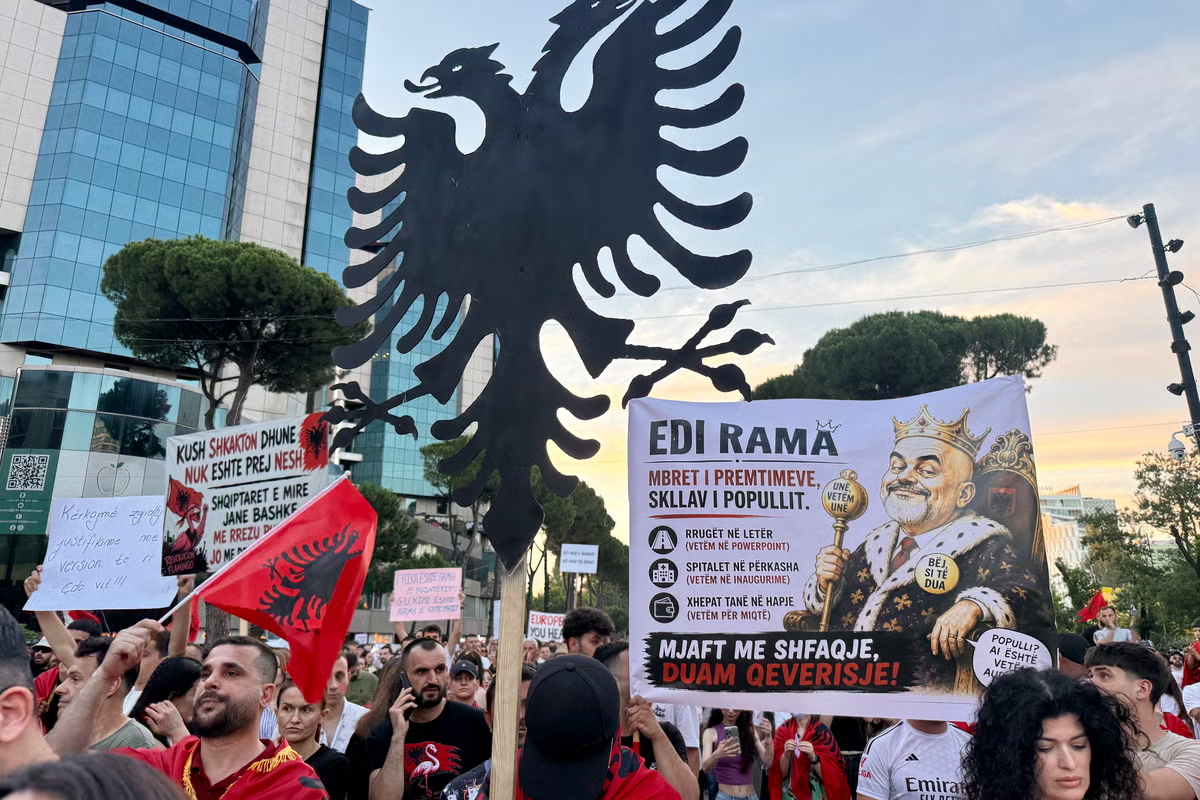
On the streets of Tirana on Monday night, the most frequently repeated chant among protestors is “Rama në burg, Berisha në burg”. Translated, this is a call for both the Albanian prime minister Edi Rama and the main opposition leader Sali Berisha to be sent to prison.
As protests roll into the 16th consecutive day in the capital, the “flamingo revolution” shows no sign of abating with thousands of demonstrators filling the streets. Banners and placards insist that “Albania is not for sale”, denounce corruption in government, and ask: “Europe are you listening?”
Demonstrations that began as environmental protests against the development of a luxury resort spear-headed by Donald Trump’s daughter Ivanka and her husband Jared Kushner are now swellings into a demand for a complete change of government.
On Monday night, protestors gather in Skanderbeg Square in the centre of the Albanian capital and march down Dëshmorët e Kombit Boulevard to the offices of the prime minister, where they call for Mr Rama to resign.
The impetus for this defiance came at the start of June, when Ivanka Trump spoke on a podcast about her desire to develop a luxury resort on Sazan Island.
Her husband Jared Kushner has previously revealed plans for a $5bn luxury resort and real estate development on the Zvërnec Peninsula. Both are protected areas, home to more than 200 bird species – including the flamingo that has been adopted as the symbol of the protests – as well as 70 endangered species, such as the Mediterranean monk seal and loggerhead sea turtle.
Environmental organisations say development has already started without proper permits or an environmental impact assessment, with bulldozers being brought onto the site and barbed wire fencing erected.
These have since been removed, but demonstrators point to a lack of transparency surrounding the projects, which they say is a mark of Mr Rama’s government.
Redi Muçi, member of parliament for the left-wing Lëvizja Bashkë (Movement Together) party says that although the protests started by addressing specific concerns about tourism development on protected land, they have now swelled into an outpouring of grievances against the Albanian government.
He adds: “It’s not just about the environment, it’s become about more than that. It’s to do with the whole system.”
Video on social media from the end of May showed a local protester being violently dragged from the site in Zvërnec by a security guard from a private company, speaking outrage that spread internationally. Demonstrations which started outside the Albanian coastal city of Vlorë have now spread to Tirana.
“I think that’s what basically sparked a lot of this anger,” says Aleksandër Trajçe, executive director of the Protection and Preservation of Natural Environment in Albania (PPNEA). “It was like a release valve for everything that was going wrong in the country for many years.
“People in the streets are there driven by the land and nature, but also by the many other problems that exist in the country. You have really bad healthcare, you have a really bad education system and you have a prime minister that is worrying so much about the fancy houses of very rich people.”
The chants in the streets of Tirana also call for the resignation of Sali Berisha, the leader of the main opposition Democratic Party, who served as prime minister from 2005 to 2014.
Protestors say the country’s problems are not limited to one political party, but are the result of a corrupt system that has run the country since the fall of communism 35 years ago.
Despite the size and intensity of the protests, demonstrations have remained largely peaceful, with families, elderly people and young children taking part. In a family area on the Dëshmorët e Kombit Boulevard, an art space has been set up where children draw pictures of flamingoes and Albanian flags with coloured pencils.
Arlind Qori, leader of Lëvizja Bashkë, says Albanians were taking to the streets in such vast numbers that he believes it will be impossible for the government to ignore them.
“For ordinary people, enough is enough,” he continues. “There’s a lot of discontent, especially [among] young people who are feeling economically and socially disenfranchised. They are not listened to. They don’t see any kind of economic opportunities. They understand that the educational system doesn’t work anymore.
He adds: “Every normal prime minister in every normally democratic country would have left already. [Edi Rama] is using everything to cling to power, but I think his time is up. He should resign.”
More details here...