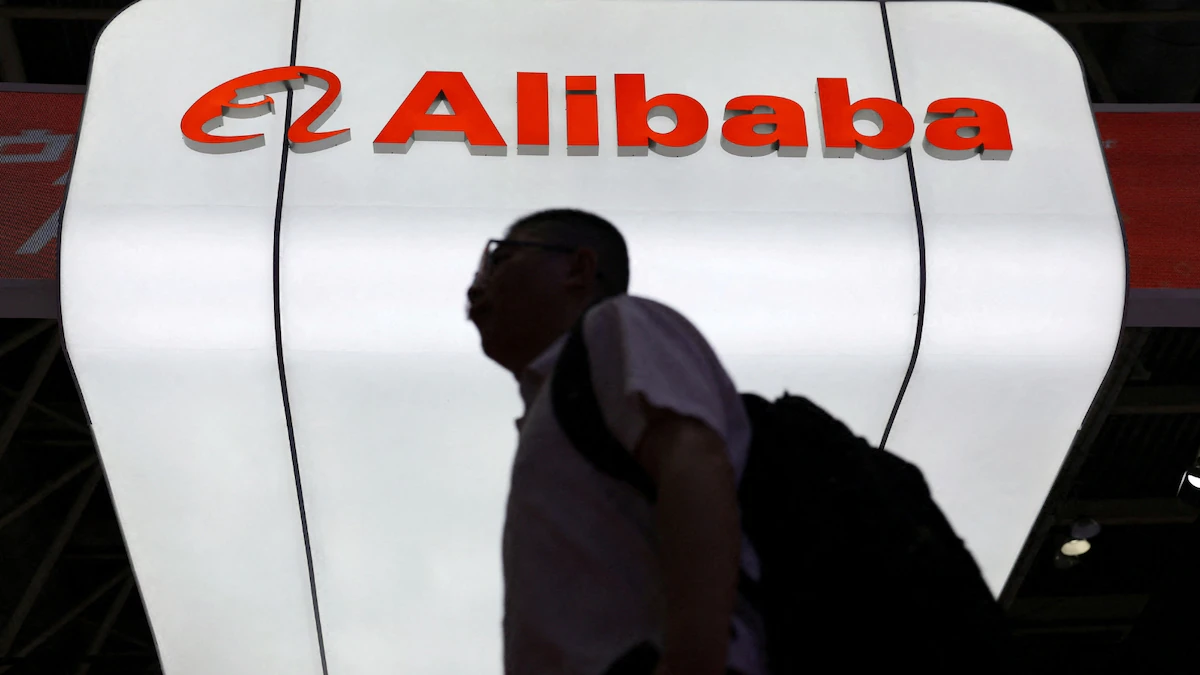
The AI startup in a letter addressed to several US senators and White House officials, claimed that operators linked to Alibaba’s Qwen AI lab targeted Claude’s most prominent features, including software engineering and agentic reasoning.
Anthropic, a public benefit corporation, restricted the use of its products in China as part of broader US national security concerns. The decision was aimed at preventing the misuse of its products in potential military operations or surveillance.
The letter said that the campaign involved over 28.8 million exchanges with Claude through the months between April to June using almost 25,000 fraud accounts, according to Bloomberg. The effort was compared to earlier Chinese campaigns that the company had addressed in a blog post earlier this year.
Alibaba’s shares fell as much as 4.8% in Hong Kong on Thursday, June 25, after the news broke.
Anthropic accused Alibaba and similar Chinese tech labs of engaging in adversarial distillation, a practice by which these companies can use results from US models to develop their own homegrown chatbots that would rival the former at a lower cost. This practice was negatively viewed by the company who urged the US government to put checks on the practice citing a lack of safety guardrails.
The letter said that the “illicit” distillation attacks were carried out systematically at an industrial scale. Anthropic claimed that American AI technology was being repackaged and sold as frontier lab products without having to pump out the large amounts of money required in research and development to train US models.
Anthropic’s letter represents the latest effort by leading US AI companies to restrict certain forms of model distillation. Although distillation is generally accepted for building smaller or less sophisticated models, major AI labs prohibit its use for reproducing the capabilities of premium models without authorisation, as doing so violates their terms of service.
Anthropic, together with its peers Google and OpenAI have agreed to share updates about distillation that violates their terms of service. Chinese AI startups DeepSeek and Minimax were accused of using the practice to develop their own models.
The US Senate, addressing industry concerns, has planned to blacklist or sanction any Chinese firm that was found to have illegally accessed American AI technology to develop rival products, in an amendment planned to be introduced by Tennessee Republican Bill Hagerty and New Jersey Democrat Andy Kim to a must-pass defence delegation, according to Bloomberg.
It remained uncertain whether the amendment would secure enough backing to be included in the final defence bill. A similar bipartisan proposal in the House of Representatives, sponsored by Michigan Republican Bill Huizenga and Democrat Sydney Kamlager-Dove, was being considered for incorporation into the annual defence legislation.
These initiatives build on actions taken by the Trump administration earlier. In April, Michael Kratsios, director of the White House Office of Science and Technology Policy, issued a memorandum stating that the US would work to curb efforts by Chinese firms to misuse outputs from American AI models. The memo distinguished such activities from legitimate research, citing their large-scale nature and dependence on thousands of proxy accounts.
According to Anthropic, the alleged Alibaba operation occurred after the memo was released, despite the administration’s warnings. The company argued that failing to address such practices could allow China to narrow the AI gap with the US, creating potential national security risks.
The allegations against Alibaba came amid increasing scrutiny of the company in Washington. Earlier this month, the US Department of Defence added Alibaba to a blacklist of companies it claimed to have ties with the Chinese military, a development referenced in Anthropic’s letter. Alibaba has denied any connection to the Chinese armed forces and recently filed a lawsuit seeking removal from the list.
For Anthropic, the rise of cheaper Chinese competitors that could attract customers through imitation products is a major concern as the company prepares for an initial public offering. Private investors currently value the company at $965 billion. US officials indicated that unauthorised model distillation costs Silicon Valley AI labs earn billions of dollars each year as per Bloomberg.
In its letter, Anthropic called on Washington to clarify antitrust rules so American companies can more easily share information about distillation-related activities. The company also reaffirmed its support for export restrictions on advanced AI chips and urged authorities to impose penalties on organisations that use distillation to extract knowledge for developing competing models.
However, Anthropic’s requests for stronger government intervention against what it considers unfair competition from Chinese companies may face resistance within the White House.
The company is currently involved in a separate dispute with the Trump administration, which recently imposed export controls on Anthropic’s two most advanced AI models over security concerns.
Anthropic suspended access to its Fable 5 and Mythos 5 models after it was restricted for all foreign nationals earlier this month.
Despite meetings between Anthropic’s senior technical leaders and White House officials last week, little progress had been made toward resolving the disagreement or restoring access to the company’s Fable 5 and Mythos 5 systems.
Also Read: Japan’s 20-year bond demand weakens amid worries over inflation and policies