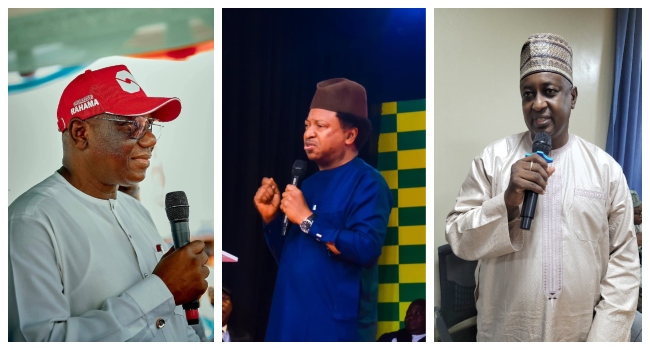
Former Secretary to the Government of the Federation (SGF), Babachir Lawal, has described the 2017 controversy that led to his removal from office as a political setup
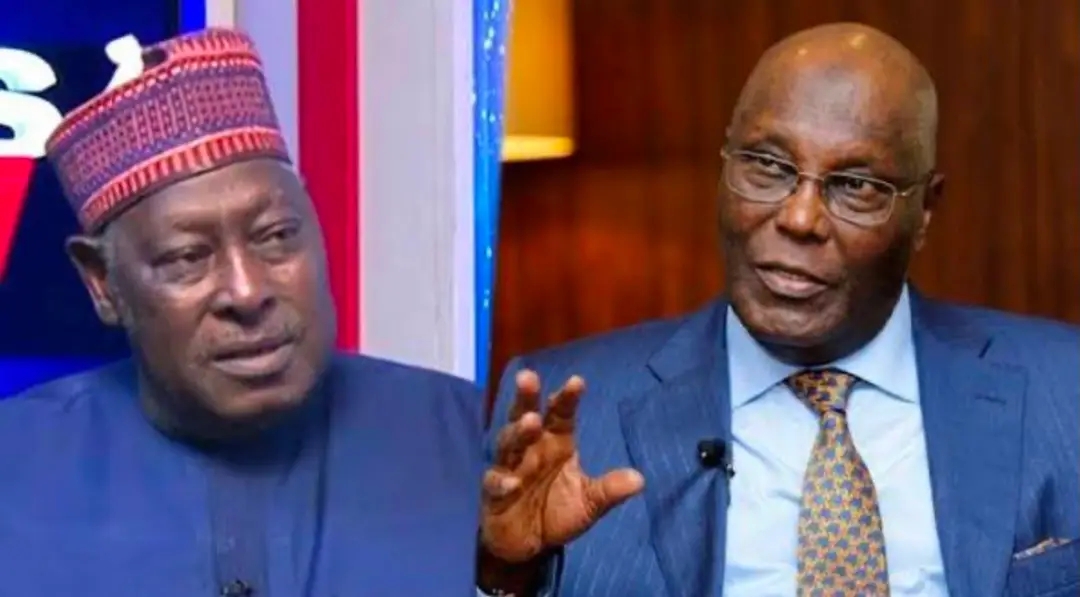
Former Secretary to the Government of the Federation (SGF), Babachir Lawal, has described the 2017 controversy that led to his removal from office as a political setup, while renewing his criticism of African Democratic Congress (ADC) presidential candidate Atiku Abubakar.
In a detailed Facebook post responding to backlash over his resignation from the ADC, Mr Lawal defended the controversial contract at the centre of the scandal. He reiterated his position that supporting Atiku would hand President Bola Tinubu an easy path to a second term.
The latest statement builds on his earlier explanation for exiting the ADC, which PREMIUM TIMES previously reported.
Mr Lawal alleged that the controversy was orchestrated by political actors uncomfortable with his close relationship with former President Muhammadu Buhari, which he said dated back to 1971, and his background as a Christian from the Kilba ethnic group.
He claimed some politicians feared Mr Buhari was grooming him for higher office and therefore engineered his removal from the influential SGF position.
According to Mr Lawal, a high-powered delegation had protested his appointment on ethnic and religious grounds, but Mr Buhari rejected the objections.
He further alleged that some northern senators, working with allies in the executive and the media, coordinated efforts to remove him from office.
“I find this amusing because it was clearly a setup to get me out of the office,” he wrote.
Mr Lawal also claimed that Mr Buhari dismissed an interim Senate report recommending his removal on the advice of the Attorney General because it lacked substance and denied him a fair hearing.
However, he alleged that pressure from then-Vice President Yemi Osinbajo led to further investigations into the matter.
The 2017 controversy involved contracts awarded under the Presidential Initiative on the North-East (PINE), an agency supervised by the Office of the SGF.
The Senate accused Mr Lawal of violating public service rules after a company linked to him benefited from a contract under the initiative, raising conflict-of-interest concerns. Mr Buhari subsequently suspended and later removed him from office.
In 2019, the Economic and Financial Crimes Commission (EFCC) arraigned Mr Lawal and others on charges of alleged fraud and the diversion of public funds connected to contracts awarded under PINE.
However, in November 2022, Justice Charles Agbaza of the High Court of the Federal Capital Territory, Abuja, discharged and acquitted Mr Lawal and his co-defendants after upholding a no-case submission.
The judge ruled that the prosecution failed to establish a prima facie case or link the defendants to the alleged offences.
The EFCC had presented 11 witnesses during the trial. Following the ruling, the anti-graft agency announced plans to appeal the judgement.
Referring to the case in his latest statement, Mr Lawal said the witnesses called by the prosecution did not implicate him in wrongdoing and that the court’s decision vindicated his position.
“In the end, I was discharged and acquitted along with the other accused on a no-case submission,” he wrote.
Mr Lawal also disputed the popular description of the controversy as a “grass-cutting scandal.”
According to him, the contract involved clearing invasive Typha grass that was obstructing sections of the Komadugu-Yobe river system, a major waterway supporting farming, fishing, and livestock activities in northern Nigeria.
He said the project covered more than 320 kilometres of waterways and included the reconstruction of 500 hectares of irrigated farmland, the provision of fishing equipment and boats, and the provision of daily employment for more than 1,000 displaced persons and refugees over four months.
The former SGF said the consultancy contract linked to his former company, Rholavision Engineering Limited, was worth N7.2 million and formed part of a larger project reportedly valued at about N540 million.
He maintained that the project was fully executed, certified by government auditors and resulted in no loss of public funds.
“So no money was lost by the government, no bribe was given, and no money was laundered,” he wrote.
The Komadugu-Yobe Basin has attracted interventions from organisations including the World Bank, the African Development Bank, and the Lake Chad Basin Commission due to longstanding environmental challenges affecting agriculture, fishing, and pastoral livelihoods in the region.
Mr Lawal renewed his criticism of Atiku, whom he has repeatedly opposed since the ADC presidential primary.
Defending his use of the term “Kachalla” to describe the former vice president, he questioned Atiku’s response to insecurity and banditry in parts of northern Nigeria.
Mr Lawal further argued that an Atiku presidency could be perceived by some supporters as a “Fulani presidency”. He urged the ADC to consider replacing him with another candidate before the next general election.
Supporting Atiku, he argued, would ultimately strengthen President Tinubu’s re-election prospects in 2027.
In previous responses to Mr Lawal’s criticism, representatives of the Atiku Media Office rejected his allegations and defended both the conduct of the ADC presidential primary and the former vice president’s record on national issues.