The latest strikes between the US and Iran represent a new limbo period where both sides are neither obeying a ceasefire nor fully fighting, experts have warned, as each side carries out symbolic strikes aimed at pressuring their opponent into making concessions.
Tehran and Washington’s latest escalation is “carefully choreographed” and part of a “diplomatic dance” between Tehran and Washington, analysts say. But the longer it goes on, the higher the risk it could develop into a new round of conflict.
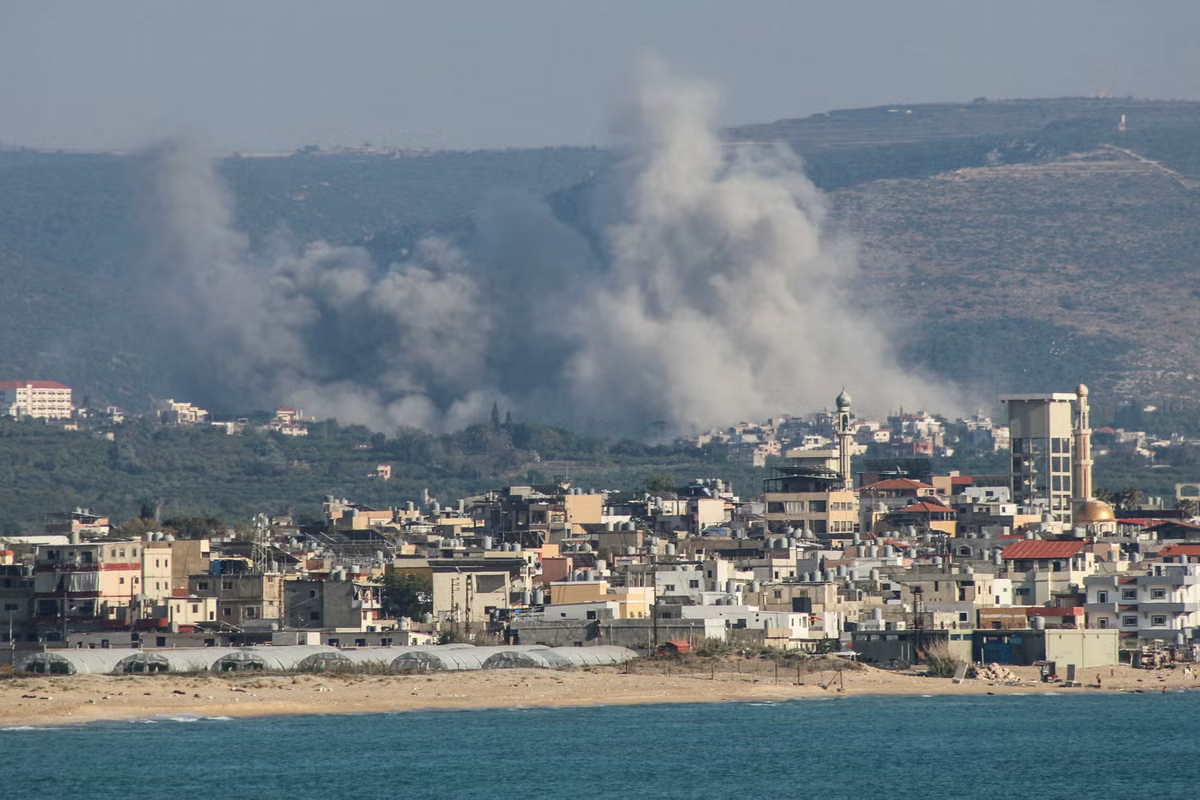
The US fired 49 Tomahawk missiles at Iran on Wednesday as both sides traded strikes for the second day in a row. Iran launched strikes targeting 18 US airbases in the Gulf region, forcing the Kuwaiti government to temporarily shut its airspace and Bahrain to sound air sirens.
Experts say Tehran and Washington are striking targets deemed to be less escalatory, with both sides keen to avoid a descent into full-scale war. But in the absence of a negotiated peace deal, Trump has been forced to deny this is the start to an endless conflict.
“We may be moving into a third phase of the conflict, following the hot war and the ceasefire,” says Basil Germond, professor of International Security at the University of Lancaster, noting that the “momentum has clearly passed” for an imminent peace deal.
Dr Neil Quilliam, an associate fellow of the Middle East and North Africa Programme at Chatham House, says the latest escalation is “part of a diplomatic dance”.
“The escalation is carefully choreographed and as each side seeks to pressure the other into making concessions and edge towards a deal,” Dr Quilliam adds.
But while both sides may want to avoid a full resumption of hostilities, mistakes can happen. Dr Quilliam says the downing of a US helicopter by Iranian forces near the Strait of Hormuz – the incident which prompted the latest escalation – was likely one of those.
Trump has repeatedly sought to portray his war in Iran as a quick, efficient operation; mindful of the quagmire that America found itself in Vietnam, Iraq and Afghanistan.
Asked about his presidential campaign promise not to engage in any wars during a second term as president, Trump falsely claimed to NBC on Sunday: “First of all, I didn’t guarantee no war. So when you say I promised – I didn’t promise anything.
“I don’t like these endless wars. This is not an endless war,” he added.
But experts claim the reality of the latest escalation suggests this is exactly the direction Washington and Tehran may be headed for.
A new phase of warfare could be characterised by “limited, carefully calibrated attacks by both sides aimed at containing escalation”, Prof Germond says.
“How long this phase will last depends on Tehran’s capacity to withstand economic hardship and the US’s willingness to tolerate negative impacts on the global financial system and economy.”
“The gap between the US and Iran is still large, so we can expect this period to go on for some time,” Dr Quilliam adds.
In their efforts to avoid a more damaging escalation, Iranian and US forces have been striking “lesser” targets which aren’t as likely to provoke a full-blown response from their opponent, analysts suggest.
The US is focussing on technical targets, while Tehran is striking well–defended US bases.
“In other words, the strikes are largely symbolic and they allow leaders in both countries to claim that they are playing hard.”
Dr Andreas Krieg, a senior lecturer at KCL, says the two sides are choosing targets that “punish and signal, but still leave space for the other side to step back”.
“These are serious targets, but they are not the most escalatory targets available. The fact that both sides have generally stayed below that level suggests they still understand the difference between coercive signalling and strategic rupture.”
He added: “That distinction matters. There is a quietly understood difference between a lesser target and a truly escalatory one.”
The longer strikes at this level continue, however, the greater the risk that a full-scale conflict could erupt.
On Tuesday, a US Apache helicopter crashed hours after hostilities in the region had escalated with Iran and Israel, exchanging their first direct strikes in two months. Trump said Iran was responsible for shooting it down, and said the US ”must, of necessity, respond to this attack.”
But some believe the downing of the aircraft was a mistake, with no apparent strategic benefit to Iran for shooting it down.
Such mistakes are likely to continue as a low-level conflict drags on, experts say, and the response they incur may prompt a vicious cycle potentially ending in a descent into full-scale combat.