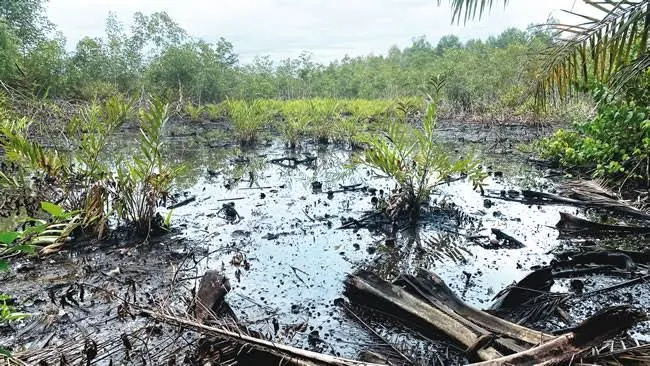
Recent criticisms of the Niger Delta Development Commission (NDDC) over the oil spill in Bille Kingdom have generated considerable public debate. While concerns about environmental degradation and the welfare of affected communities are valid and deserve attention, it is important that public discourse on the matter is guided by facts, a clear understanding of institutional responsibilities, and the realities of environmental remediation in the Niger Delta.
Bille Kingdom, like many communities in the Niger Delta, has faced the devastating consequences of oil spills over the years. These incidents have impacted livelihoods, fishing activities, farmlands, and the overall ecosystem upon which residents depend. Understandably, community members and stakeholders expect swift interventions from government agencies and development institutions.
However, attributing sole responsibility for responding to oil spills to the NDDC overlooks the specific mandates assigned to various agencies within Nigeria’s environmental and petroleum sectors.
The NDDC was established primarily as an interventionist agency tasked with facilitating sustainable development in the Niger Delta through infrastructure projects, social programmes, economic empowerment initiatives, and regional development planning. While environmental sustainability forms part of its developmental agenda, the direct containment, investigation, and cleanup of oil spills are responsibilities that largely fall under regulatory agencies and oil operators, in accordance with existing laws and environmental regulations.
This distinction is crucial. Oil spill response typically involves technical assessments, environmental impact studies, joint investigation visits, remediation procedures, and regulatory approvals. These processes are often coordinated by specialised environmental agencies in collaboration with oil companies operating in the affected areas. The NDDC’s involvement is generally complementary, focusing on long-term development interventions, community support programmes, and, where applicable, environmental restoration initiatives.
Furthermore, it is important to recognise that the NDDC has invested significant resources over the years in projects aimed at improving the quality of life in the Niger Delta communities. Across the region, the Commission has undertaken road construction, educational support programmes, healthcare initiatives, skills acquisition schemes, and various environmental projects designed to address the developmental deficits that have historically plagued oil-producing communities.
Critics are right to demand accountability and effective action whenever environmental disasters occur. Public institutions must remain responsive to citizens’ concerns, and affected communities deserve transparency in efforts to address ecological damage. Nevertheless, constructive criticism should be based on an accurate understanding of each institution’s statutory role.
Holding the NDDC responsible for functions outside its primary mandate risks diverting attention from those entities legally obligated to prevent, manage, and remediate oil spills.
Rather than assigning blame without a full appreciation of institutional responsibilities, stakeholders should encourage greater collaboration among oil companies, environmental regulators, state and federal authorities, community leaders, and development agencies, including the NDDC. Such collaboration offers the most practical pathway toward lasting environmental restoration and sustainable development in Bille Kingdom and the wider Niger Delta.
The people of Bille Kingdom deserve solutions, not confusion over mandates. As discussions continue, it is essential that all parties focus on facts, accountability, and coordinated action that delivers meaningful relief and long-term environmental recovery for affected communities.
Martins Ogolo
Public Affairs Analyst
[email protected]