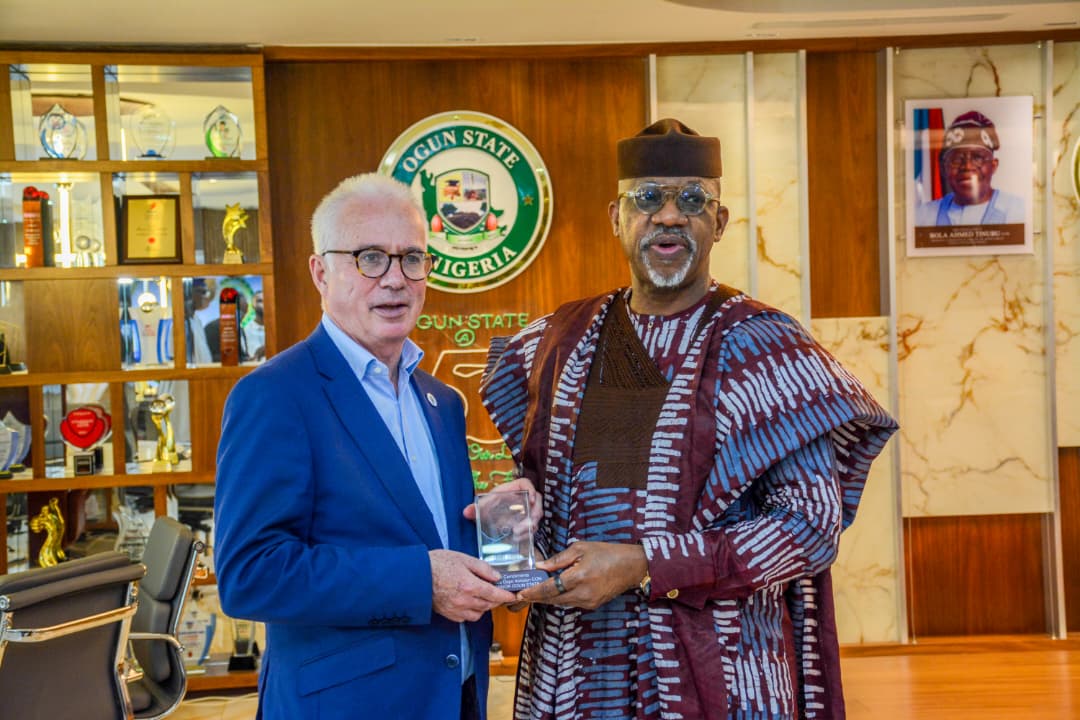
By Kayode Akinmade
When Governor Dapo Abiodun commissioned the new Pharma-Grade Warehouse of the Ogun State Drugs and Health Commodities Management Agency last week, the event represented far more than the unveiling of another public facility. It underscored the steady transformation of Ogun State’s healthcare system—one increasingly attracting recognition from independent institutions, including the World Bank and the Nigeria Governors’ Forum (NGF).
At the commissioning, Governor Abiodun described the warehouse as a critical component of his administration’s strategy to strengthen healthcare delivery through efficient storage and distribution of essential medicines. He disclosed that more than 30,000 residents living with HIV currently receive free antiretroviral therapy, counselling, and support services across health facilities in the state, while investments in tuberculosis and malaria control continue to expand.
The Governor noted that the facility, regarded as the largest and best-equipped pharmaceutical warehouse of its kind in Nigeria, will serve all 20 local government areas, ensuring a more reliable supply chain for critical health commodities.
Building a Stronger Health Workforce
Infrastructure alone does not deliver healthcare; skilled personnel do. Recognising this, the Abiodun administration has pursued an aggressive workforce expansion programme alongside its investment in physical infrastructure.
In 2023, the Ogun State Hospitals Management Board confirmed the appointment of 321 health workers recruited over a two-year period to strengthen staffing across secondary healthcare facilities. The recruits included 174 senior staff and 147 junior staff members who successfully completed probation and performance evaluations.
The recruitment drive has since expanded through partnerships with development agencies. Under the World Bank-supported IMPACT Project, the state recruited more than 400 community health workers across all 20 local government areas to address staffing shortages at the primary healthcare level—the first point of contact for most residents.
The Ministry of Health and the Hospitals Management Board have also continued recruiting doctors, pharmacists, dentists, physiotherapists, laboratory scientists, nurses, radiographers, HIV/AIDS specialists, and ambulance personnel to support the growing network of health facilities and emergency services.
According to the Commissioner for Health, Dr. Tomi Coker, continuous recruitment and training of healthcare professionals remain central to the administration’s strategy of delivering efficient, patient-centred care, particularly at the primary healthcare level.
Health as a Pillar of Economic Growth
The healthcare transformation is unfolding alongside broader economic gains recorded by the state.
Ogun’s Gross Domestic Product (GDP) grew from approximately ₦2.9 trillion in 2019 to about ₦7.3 trillion in 2024, while Internally Generated Revenue (IGR) increased from ₦50.6 billion in 2020 to nearly ₦192 billion in 2024. The state is targeting ₦250 billion in IGR in 2025.
Reflecting these priorities, the 2025 Budget of Hope and Prosperity allocated substantial capital expenditure to infrastructure, education, and healthcare.
Government officials argue that these developments are interconnected. More than 1,700 kilometres of roads constructed or rehabilitated since 2019 have improved access to healthcare facilities, particularly in rural communities, while also facilitating emergency response services.
At the same time, industrial growth through initiatives such as the Ogun-Guangdong Free Trade Zone, the Remo Economic Industrial Cluster, and investments facilitated by OGUNINVEST has expanded the state’s revenue base. According to official figures, over $2 billion in investments and more than 40,000 jobs have been generated through these initiatives, providing resources that support healthcare infrastructure, personnel recruitment, and service delivery.
The Ogun State Health Insurance Scheme further complements these efforts by offering premium exemptions for pregnant women, children under five, and residents above 70 years of age, while maintaining affordable premiums for enrolled workers.
Independent Validation of Reforms
Perhaps the most significant aspect of Ogun’s healthcare story is the level of external validation it has received.
In December 2025, Ogun State won $400,000 at the third edition of the Primary Health Care Leadership Challenge Award organised by the Nigeria Governors’ Forum, emerging as the first runner-up in the South-West for the second consecutive year. The award assesses measurable indicators such as innovation, accountability, political commitment, and improvements in maternal, newborn, and child health outcomes.