Ritual killings and occult fraud are symptoms of a deeper national disorder, argues
K. BOLANLE ATI-JOHN
There are crimes that shock a nation. There are others that reveal it. The recurring reports of ritual killings, body-part harvesting, occult fraud, fake spiritual prescriptions, blood-money practices, and the growing mythology of supernatural wealth in Nigeria belong to the second category. They are not merely criminal incidents. They are symptoms of a deeper national disorder.
The ritualist is not an isolated monster living outside society. He is one of the darkest products of a society that has separated wealth from work, success from scrutiny, spirituality from ethics, and power from accountability. He thrives where institutions are weak, where poverty humiliates, where sudden wealth is worshipped, where fear is monetised, and where too many people have stopped asking the most basic moral question: how did he get the money?
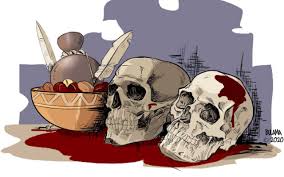
Nigeria must treat ritual killing as a crime. But if we stop there, we will misunderstand the problem. Ritual killing is the visible tip of a broader criminal spiritual economy. Within that economy are killers, recruiters, lurers, body-part traders, occult consultants, fraudulent herbalists, rogue clerics, marabouts, fake prophets, criminal shrine operators, desperate clients, political patrons, cultists, cybercriminals and silent beneficiaries. The victim may be killed by one hand, but the moral machinery that made the killing possible is often larger than the person holding the knife.
This is why the subject must be discussed without hysteria, but also without cowardice.
Not every traditional practitioner is a criminal. Not every marabout is evil. Not every herbalist, alfa, diviner, prophet, priest or spiritual healer is part of this darkness. Nigeria’s traditional and religious landscapes contain sincere practitioners who serve communities, heal wounds, preserve culture and offer moral guidance. To criminalise tradition itself would be unjust, ignorant and dangerous.
But it would be equally dishonest to deny that a criminal class hides under the cover of spirituality. These are the merchants of fear who promise wealth without labour, protection without righteousness, political victory without service, business success without discipline, sexual control without consent, and revenge without justice. They prey on greed, desperation, ambition, insecurity and ignorance. They tell the vulnerable and the wicked that destiny can be stolen, enemies can be destroyed, wealth can be forced, and another person’s life can become an ingredient.
This is not spirituality. It is organised moral corruption.
The most disturbing aspect of the ritualist phenomenon is not only the cruelty of the act. It is the belief system behind it. Somewhere in the imagination of the perpetrator, a human being has ceased to be sacred. A child becomes a tool. A woman becomes a sacrifice. A stranger becomes material. A body becomes a commodity. Blood becomes currency.
No nation can survive for long when such thinking finds social oxygen.
The oxygen is everywhere. It is in the celebration of unexplained wealth. It is in the family that rejoices when a son suddenly becomes rich but refuses to ask what enterprise produced the money. It is in the community that confers titles on men whose income no one can explain. It is in the religious institution that accepts donations without moral inquiry. And it is in the politician who embraces thugs, cultists and spiritual fixers during elections. It is in the entertainment culture that glamourises flamboyance without provenance. It is in the social-media economy that turns fraudsters into celebrities and noise-makers into models of success.
We have made wealth too sacred and life too cheap.
That is the heart of the crisis.
The Nigerian ritualist is not only an ancient figure. He is modern. He carries a smartphone. He uses dating apps. He watches videos on social media. He may be involved in cybercrime. He may wear designer clothes and speak the language of hustle. He may be educated enough to use technology but morally damaged enough to believe that charms, blood, potions and body parts can assist fraud.
This is the “Yahoo Plus” mutation: the meeting point between digital criminality and occult imagination. It reveals a frightening truth. Modern tools do not automatically produce modern minds. A young person may operate a laptop, manipulate online identities, move money through digital platforms, and still be trapped in profound moral darkness. Technology has not displaced superstition; in some cases, it has given superstition new channels of operation.
The result is a generation of criminals who understand connectivity but not conscience.
There is also a political dimension that Nigeria often whispers about but rarely confronts with seriousness. Across the country, many citizens believe that some people seek occult protection, secret oaths, ritual fortification, sacrificial advantage or spiritual manipulation in pursuit of power. Some of these allegations may be exaggerated. Some may be rumours. Some may be political weapons. But the persistence of the belief is itself significant. It tells us that many Nigerians no longer see power as morally innocent. They suspect that beneath the language of public service lies a darker hunger for domination.
A country where people believe leadership is sustained by blood, charms, secret oaths or hidden terror has a crisis of public trust.
This is not merely a cultural issue. It is a governance issue. It is a security issue. It is a national-development issue. Where citizens believe that power is occultic, wealth is suspicious, justice is uncertain and success is often fraudulent, trust collapses. And when trust collapses, the nation becomes expensive to govern, difficult to secure and almost impossible to mobilise for shared sacrifice.
The ritualist economy also feeds on vulnerability. Its victims are often children, young women, students, domestic workers, the poor, the elderly, street children, migrants, persons with disabilities and others whose disappearance may not immediately command attention. This is one of the most damning aspects of the problem. The ritualist does not usually prey on the powerful. He preys on those society has already failed to protect.
A child disappears. A young woman is lured. A domestic worker goes missing. A stranger is suspected. A poor family cries to a police station and is told to wait. By the time the state awakens, a body may have been found, mutilated beyond recognition. This is not only murder. It is the final failure of a protection system that should have acted earlier.
A serious state must treat missing persons as a national security concern, not as a private family misfortune. Such a system requires immediate reporting protocols, digital case tracking, inter-state alerts, forensic support, cyber-tracing where online contact is suspected, and escalation rules for vulnerable victims. Every report involving suspicious luring, occult threats, abduction, trafficking, body mutilation or organ harvesting should enter a specialised investigative architecture. Nigeria needs better databases, forensic capacity, inter-state coordination, cyber-tracing, hotel and short-let intelligence, community reporting channels, and stronger prosecution. The police cannot fight a networked crime with fragmented methods.
But law enforcement must also be disciplined. Fear of ritualists must not become a licence for mob justice. Nigeria has seen too many cases where suspicion becomes accusation, accusation becomes violence, and violence becomes public execution. A traveller, a mentally unstable person, a stranger, a poor man carrying unusual items, or a misunderstood individual can be branded a ritualist and killed by a mob. That too is evil. The answer to ritual killing is not mob killing. A society cannot defend human dignity by destroying it.
Justice must be firm, but it must be lawful.
The state must also distinguish between lawful spiritual practice and criminal conspiracy. The Constitution protects religion and cultural practice. It does not protect murder, fraud, trafficking, coercion or human sacrifice. A shrine is not an embassy outside Nigerian law. A clerical garment is not immunity. A title is not purification. A person who prescribes, finances, facilitates, conceals or performs violence in the name of ritual power must be treated as a criminal conspirator.
Nigeria also needs moral leadership from religious and traditional institutions. They cannot simply condemn ritual killing after each tragedy. They must discipline the culture that makes it plausible. Churches, mosques, traditional councils, community associations and spiritual bodies must stop honouring suspicious wealth. They must refuse blood money, reject dubious donations, and recover the courage to teach that not all prosperity is blessing.
Some money is theft. Some money is corruption. Some money is fraud. Some money is exploitation. Some money is blood.
When sacred institutions accept questionable wealth because it builds halls, sponsors events, funds campaigns or attracts influence, they launder more than money. They launder moral decay.
Families must also recover their authority. Too many parents have become spectators before the sudden wealth of their children. Too many relatives prefer enjoyment to truth. Too many communities treat moral questioning as jealousy. A young man with no visible work begins to spend heavily and the family says, “God has done it.” But God is not the author of evil. Love must not become blindness. Pride must not silence conscience.
The home is the first school of accountability. If families stop asking questions, the nation will inherit criminals dressed as success stories.
The media and entertainment industries have responsibilities too. They cannot keep feeding young people a diet of instant wealth, gangster glamour, occult mystique and fraudulent heroism, and then pretend surprise when the weak-minded imitate the message. Art should be free, but freedom does not absolve influence. A culture that repeatedly presents wealth without work as the highest proof of arrival should not be shocked when some people pursue arrival without morality.
The deeper repair Nigeria needs is the restoration of a moral economy. Wealth must be reconnected to work. Success must be reconnected to service. Power must be reconnected to accountability. Spirituality must be reconnected to ethics. Human life must again be placed above ambition.
This is not nostalgia. It is national survival.
No economy can flourish where trust is absent. No democracy can mature where power is suspected of hidden violence. No family can remain healthy where suspicious wealth is celebrated. No youth culture can be safe where fraud is admired. No religious landscape can remain sacred where fear is sold as power. No state can command loyalty if it cannot protect the vulnerable from predators.
Nigeria must therefore respond at five levels.
First, law enforcement: build specialised investigative capacity for ritual killing, organ harvesting, occult-linked violence, trafficking and cyber-enabled luring.
Second, legislation and prosecution: strengthen laws against the solicitation, facilitation, financing and concealment of ritual violence while protecting lawful traditional and religious practice.
Third, community intelligence: involve traditional rulers, landlords, schools, hotels, transport unions, religious bodies, markets and local vigilante structures in early warning without encouraging mob action.
Fourth, youth formation: teach the dignity of labour, the danger of fraudulent wealth, online safety, moral courage and the sacredness of life from schools to campuses to religious platforms.
Fifth, social accountability: make unexplained wealth morally questionable again. Not through envy. Not through gossip. But through the disciplined return of a simple civic standard: wealth must have provenance.
At the centre of this crisis is a spiritual question, but not in the narrow sense. It is the question of what Nigeria worships. If we worship money, we will sacrifice people. If we worship power, we will excuse cruelty. If we worship fame, we will reward fraud. If we worship comfort, we will ignore blood. But if we honour life, conscience, work, justice and truth, we can begin to rebuild.
Ritual killing is the extreme expression of a national illness. The illness is the belief that a human being can be used. Used for money. Used for power. Used for protection. Used for ambition. Used for sacrifice.
That belief must be crushed by law, culture, faith, family and statecraft.
The ritualist must be arrested. The marabout who prescribes blood must be prosecuted. The occultist who demands body parts must be exposed. The client who pays for evil must be punished. The community that protects them must be confronted. The institutions that celebrate suspicious wealth must repent. The state that fails to protect the vulnerable must reform.
Nigeria does not merely need to catch ritualists. It must stop producing the conditions that make ritualists possible.
No wealth is worth a human life. No power is worth innocent blood. No spiritual claim can sanctify murder. No society can survive when it celebrates money and buries conscience.
Blood money is not prosperity. It is judgment.
Rear Admiral Ati-John (rtd) fdc⁺ is a Distinguished Fellow of the National Defence College, Abuja, and writes from Lagos