
China’s Huajiang Grand Canyon Bridge, the world’s highest bridge, is drawing tourists while improving transport and expanding 5G internet access for remote communities in Guizhou province.
2 Min Read
 1 / 6
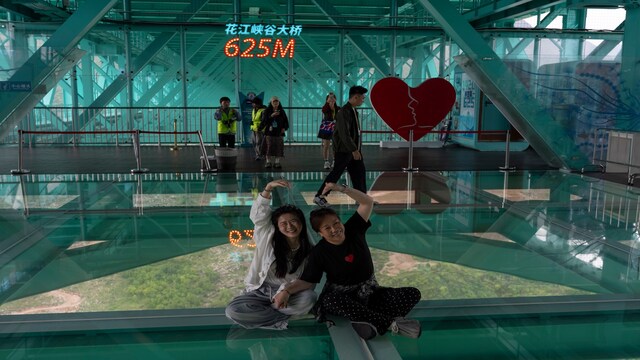
1 / 6Tourist Draw: China’s highest bridge in the southwestern province of Guizhou is attracting tourists eager to take selfies and share images on social media. For local residents, however, the structure serves a more practical role. It connects communities to a highway network, reducing journeys that once took hours to only minutes and highlighting wider investment reaching this remote region.
 2 / 6
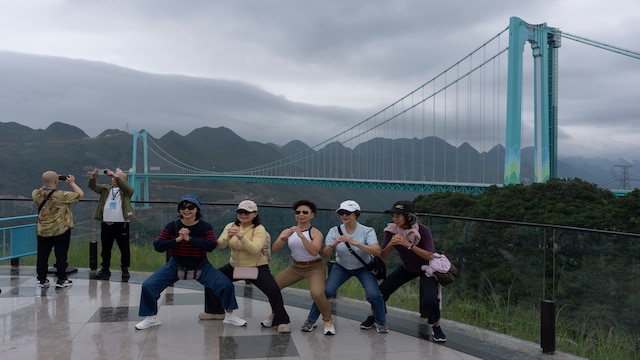
2 / 6Record Crossing: The Huajiang Grand Canyon Bridge stands 625 meters (2,050 feet) above the river below and is regarded as the world’s highest bridge. The suspension bridge extends 2,890 meters (9,482 feet) in length and includes a main span measuring 1,420 meters (4,660 feet). Its scale has made it a notable landmark in the mountainous area.
 3 / 6
3 / 6Visitor Surge: Since opening in September 2025, the bridge has drawn thousands of visitors to the surrounding region. According to an AP report, the increase in tourism has encouraged companies to invest in high-speed 5G network infrastructure. New economic activity has followed, with businesses including stores, restaurants and homestays opening to serve travellers arriving to see the bridge.
 4 / 6
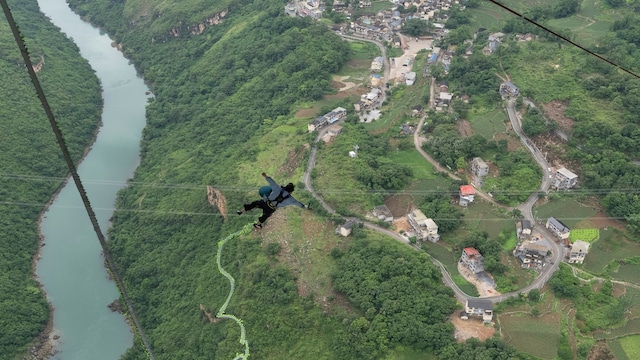
4 / 6Media Visit: The Associated Press recently joined a media tour of the area to observe changes linked to the bridge and related development projects. The visit highlighted how transportation upgrades are being accompanied by expanded internet infrastructure. Together, these investments are reshaping access, mobility and economic opportunities for communities that had long remained relatively isolated.
 5 / 6
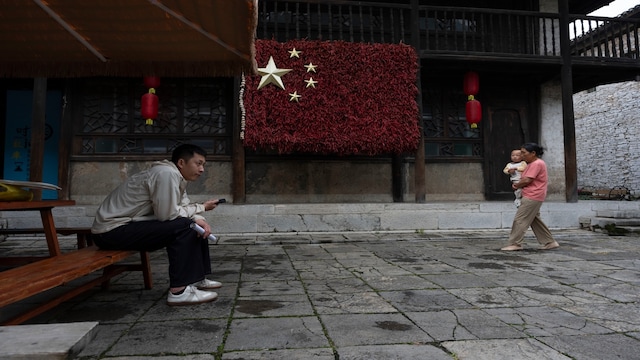
5 / 6Digital Reach: As China continues expanding transportation and internet networks in remote regions, nearby communities are benefiting from broader internet coverage. One example is Tianlong Tunpu, an ancient town located more than 100 kilometres (60 miles) from the bridge. The settlement has a history spanning more than 600 years and is now connected to wider digital networks.
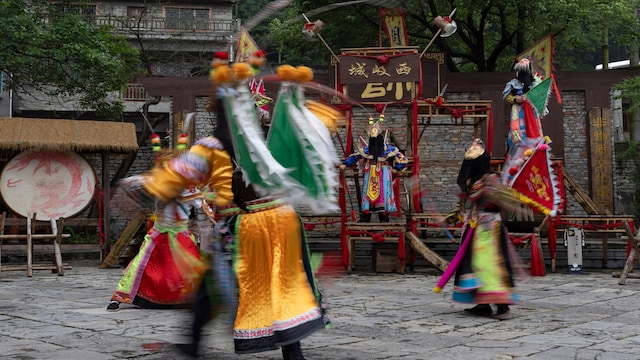 6 / 6
6 / 6Heritage Promotion: Tianlong Tunpu was originally established as a military outpost during the Ming Dynasty. The town is known for Dixi operas featuring military-themed stories, distinctive wooden masks and a performance style unlike other forms of Chinese opera. Residents say visitor numbers are increasing, partly because social media helps them promote the community to a broader audience.