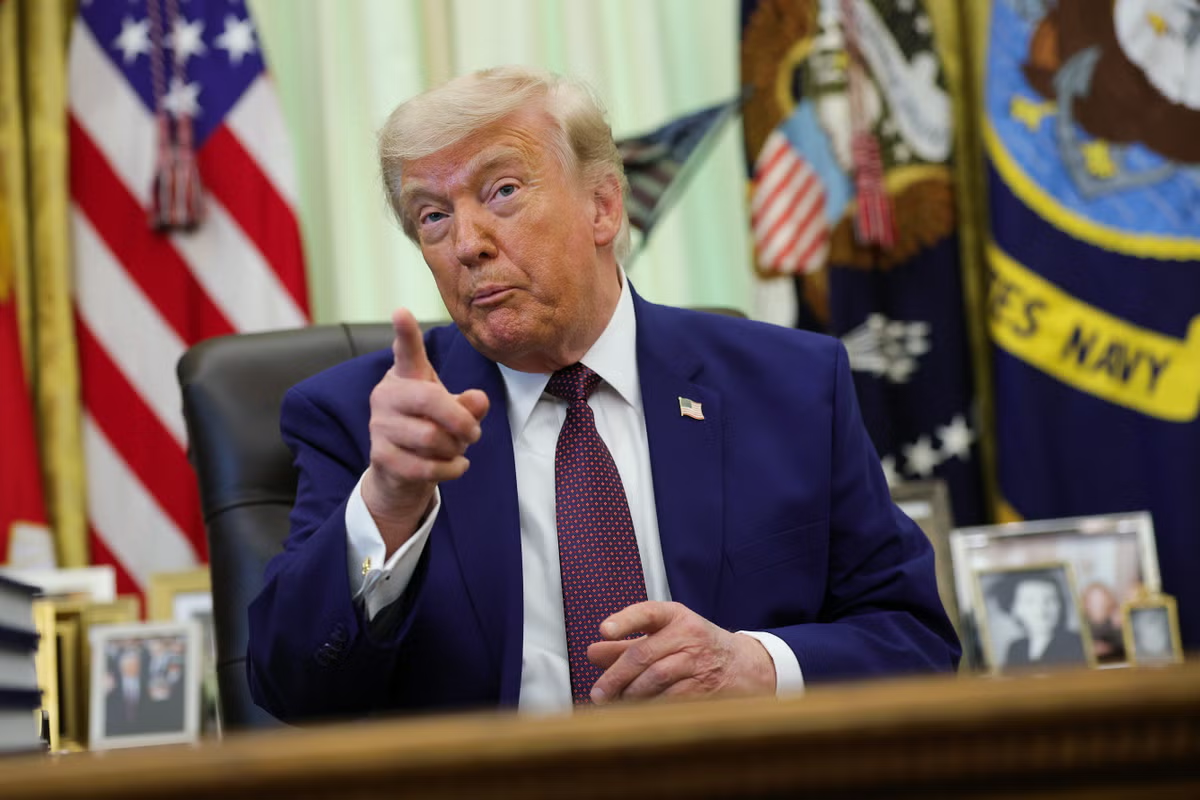
A federal judge in Boston has halted the implementation of an executive order issued by Donald Trump that aimed to tighten regulations on mail-in voting. The ruling prevents the order from taking effect ahead of the crucial November elections that will determine control of Congress.
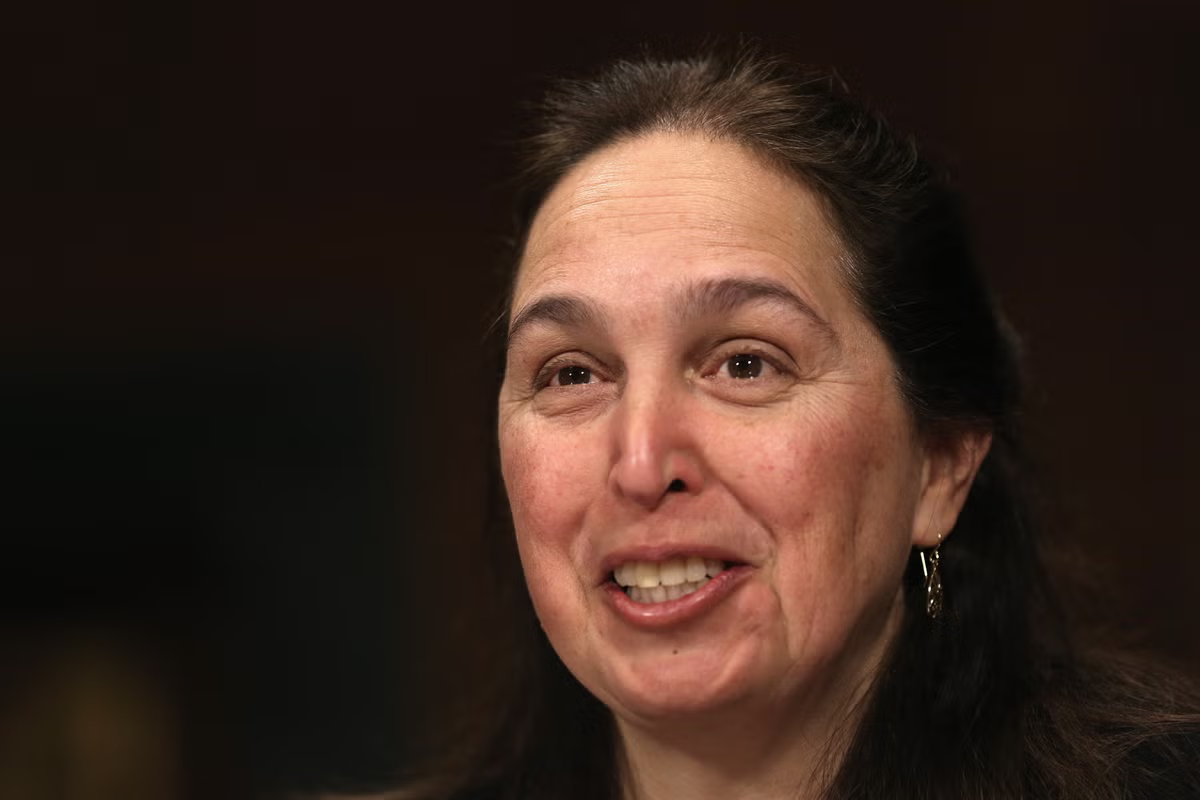
District Judge Indira Talwani sided with several Democratic-led states, who contended that the Republican president was attempting to unlawfully meddle with the states’ administration of federal elections.
Trump signed the order on March 31, following years of advocating for stricter mail-in voting rules and promoting the false claim that his 2020 election defeat was the result of widespread voter fraud. Under the U.S. Constitution, states are responsible for administering federal elections.
The executive order directed the Department of Homeland Security to compile and transmit to states a list of confirmed citizens eligible to vote, derived from citizenship and naturalization records and other federal databases.
It also mandated that the Postal Service deliver ballots exclusively to voters on each state’s approved mail-in ballot list, a directive that the USPS recently proposed to implement through new rules.
Furthermore, the order instructed the U.S. Department of Justice to prioritize investigations and prosecutions of state and local election officials who issue federal ballots to individuals deemed “not eligible” to vote.
Voting rights groups, alongside 23 states and the District of Columbia, sued the administration, arguing Trump’s order was unconstitutional and that he lacked legal authority to assert presidential power over election administration.
The states alleged that allowing the order to proceed would force them to hastily overhaul their election systems before November, potentially causing chaos and disenfranchising eligible voters.
Judge Talwani, an appointee of Democratic President Barack Obama, issued her ruling after a different jurist, Trump-appointed U.S. District Judge Carl Nichols in Washington, D.C., declined to issue a preliminary injunction in a related lawsuit challenging Trump’s order.
Nichols had found the Democrats’ request premature as the order had yet to be implemented; that decision is currently under appeal.