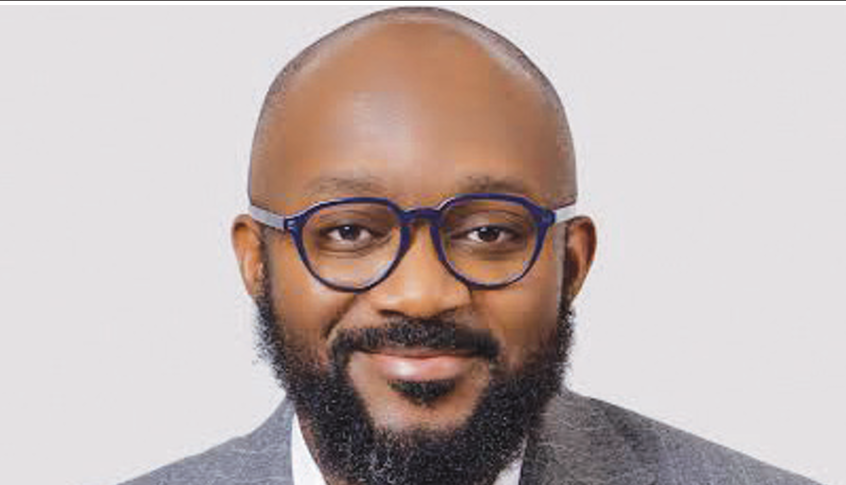
Again, Nigerians are preparing to go to the polls early next year to elect candidates into various offices, at National and State levels. But, given the outcomes of the recently concluded primaries in the various political parties and the litigation likely to follow, the perception is that the polity is less than ready for free and fair elections, come 2027. With a chaotic opposition and fears of implosion by the various parties, some are of the opinion that 2027 elections will neither be free, fair nor contention free. The Executive Director of Yiaga Africa, Samson Itodo, a civic organisation dedicated to promoting democracy across Africa, had a lot to say in this engaging interview with Onikepo Braithwaite and Jude Igbanoi last weekend, about the whole electoral process, pointing out its weaknesses, some of the positive electoral reforms that have been made so far, and what more must be done to make the process credible thereby earning the trust of the people
Yiaga Africa promotes democratic governance and civic engagement, and you were deeply involved in the ‘Not Too Young To Run’ campaign and in voter education. What steps must be taken to bring Nigerians to the realisation that they become their own worst enemies when they sell their votes, particularly to clearly unsuitable candidates, and what are you doing in this regard?
You have framed it correctly: a citizen who sells a vote is mortgaging four years of accountability for a single transaction. But, I am careful not to reduce vote-buying to a moral failing on the part of poor people. It is, first, a symptom of poverty, of broken trust in government, and of a transactional political culture in which parties treat citizens as customers to be settled, rather than constituents to be served. So, our strategy attacks both the symptom and the system.
At Yiaga Africa, our entry point is to reframe the vote in citizens’ own minds. We tell people, in plain terms, that the few thousand Naira offered at the polling unit, is the price the politician puts on your silence for the next four years. It means you can’t demand for roads, schools, security, jobs, healthcare, and accountable leadership. That argument lands, and the data supports the optimism. In our recent National Voter Intentions Survey, 76% of Nigerians say they believe their vote can influence the outcome. That latent conviction is the raw material we work with. Through our voter-education programming and election observation under Watching The Vote, we deter and document inducement at the polls, and we are investing heavily in the incoming Generation Z cohort, who are registering to vote and are far less willing to be bought. The Electoral Act 2026 also now provides stiffer penalties for vote trading, and both the buyer and the seller are culpable, but enforcement must follow the law for it to mean anything. Civic education changes the demand side; prosecution must discipline the supply side.
There has been so much apprehension over the 2027 general elections. What are your topmost concerns?
My concerns cluster around four things. The first, is insecurity and its effect on access, the risk that the Nigerians who want to vote will be unable to do so safely. The second, is the credibility of the legal framework, specifically, the ambiguity left in the Electoral Act 2026 around results transmission, which I will return to. The third, is the quality of candidate emergence: if the primaries are captured by money and imposition, the general election simply ratifies a flawed outcome of the primaries. And the fourth, is the trust deficit, only 45% of Nigerians currently express confidence in INEC’s ability to deliver a credible election, with the deepest scepticism in the South-East and South-South.
Layered over all of this, is the compressed timetable. INEC has moved the Presidential and National Assembly elections to 16th January, 2027, and the Governorship and State Assembly polls to 6th February, 2027. That earlier calendar is welcome for finishing disputes before inauguration, but it places enormous operational pressure on the Commission. And, I would add a fifth, newer concern: voter disillusionment. If citizens begin to believe elections are predetermined or meaningless, democracy loses its most important foundation: public trust.
The just-concluded primaries show that the perennial issue of lack of credibility and internal democracy persists across parties. How can these challenges be overcome? And, what effect has the deletion of indirect primaries had on the emergence of candidates?
This is the heart of the matter, because you cannot harvest a credible general election from rigged primaries. The credibility crisis at the polls begins in the party secretariat. Internal democracy is weak in Nigeria, because most of our parties are not membership institutions with ideology and rules; they are vehicles built around money and personalities. When there is no legitimate, rules-based way to choose candidates, the process defaults to the highest bidder.
Let me be clear that, the abolition of indirect primaries was sound in principle. The delegate system was the wholesale marketplace where candidacies were purchased, a few hundred delegates were far cheaper to capture than an entire membership. By restricting nomination to direct primaries or consensus, the law widens the franchise inside the party and dilutes the power of money.
But, I will not dress up what Nigerians actually witnessed in the just-concluded primaries. They were shambolic, and they betrayed both the letter and the spirit of the reform. Accreditation that never properly functioned; results disputed in the open by the very officials who organised them; aspirants resigning in protest or decamping over naked impositions; and contests that were settled not at the ballot but in courtrooms and, astonishingly, on the desk of the President. When the outcome of a party primary becomes a matter for presidential intervention, that is not internal democracy it is godfatherism with extra steps.
And, then there is the arithmetic, which frankly insults the intelligence of Nigerians. We were asked to believe that a member-only primary, a closed exercise restricted to card-carrying members produced more votes than the same candidate secured in the 2023 general election, an open national contest involving more than 90 million registered voters. Numbers do not grow geometrically, out of thin air. Vote totals that balloon like that, are not evidence of mobilisation; they are evidence of phantom registers and manufactured tallies. This is the rot of geometric, abracadabra counting, and it must be condemned without equivocation.
So, my verdict is blunt: the reform was right, but it was implemented in bad faith. A direct primary conducted without a verified membership register does not abolish fraud, it simply relocates it from the delegate marketplace to the counting sheet.
Two safeguards are now non-negotiable. First, the digital membership register that parties must submit to INEC, must be authentic and independently auditable; a primary anchored to a phantom list is theatre, not democracy. Second, consensus must mean the documented written consent of all cleared aspirants, not imposition wearing a borrowed word. And, INEC, which is statutorily mandated to monitor these primaries, must find the courage to state plainly when what it observed was not a credible process, and to apply the consequences the Act provides.
How do you read the intra-party squabbling, with new factions springing up in various parties almost daily?
It is a symptom of the same disease: parties without internal democracy, and credible mechanisms to resolve disputes. When there is no legitimate, predictable process for settling who leads or who is nominated, every aggrieved member runs to court, and every faction claims to be the authentic party. The result is that candidate selection migrates from the membership to the Judiciary, which is destructive for democracy.
Healthy parties absorb disagreement through credible internal processes; weak ones export their disputes to the courts and tear themselves apart in public. The cure is institutional, not cosmetic. It requires real internal democracy, functioning dispute-resolution organs, and transparency in party financing, so that control of the party is not simply a function of who funds it.
Scrutiny of the amended Electoral Act 2026 reveals gaps – electronic transmission and Form EC8A, over-voting checks, the counting of improperly marked ballots at returning officers’ discretion, grounds of petition, and more. What do you see as the most critical gaps, and what specific amendments would you recommend?
Let me be fair to the Act, before I am critical of it. It made real progress: it gives the IReV portal statutory recognition for the first time, it imposes a personal, mandatory duty on the presiding officer to transmit the Form EC8A, and it criminalises any officer who wilfully frustrates that transmission. These are not small gains.
The most critical gap, is the proviso that allows a fallback to manual collation in the event of ‘communication failure’. The flaw is not the existence of a fallback, but the absence of any clear standard for who determines that a failure has occurred, by what test, and how it must be documented. That discretion is exactly the loophole that produced the collation crisis of 2023. My first recommendation, therefore, is to tighten that section, so that real-time electronic transmission is the binding legal record, and ‘communication failure’ is narrowly defined, independently verifiable, time-bound, and documented at the polling unit.
Beyond transmission, three other fixes matter. INEC’s power to review election results declared under duress or violation of the electoral law, should not be limited to reports submitted by INEC officials only. It should extend to accredited party agents, election observers and citizens. The discretion currently left to returning officers over improperly marked ballots should be replaced with a clear statutory rule, because discretion at the point of counting is an invitation to manipulation. And, the framework for election petitions like the grounds and the timelines must be calibrated to deliver finality before inauguration, without shutting out legitimate complaints.
Some criticise the courts for interfering in parties’ internal affairs, others say the jurisprudence is unclear. Given the Supreme Court judgement in Sule Lamido v PDP, would you say the opposition has been obliterated, or has it self-destructed?
The jurisprudence is genuinely unsettled, and the Supreme Court itself acknowledged as much by splitting in that case. The majority’s distinction is sound in principle: how a party chooses its leaders or its methods is its internal affair, but the denial of a member’s right to participate, in breach of the party’s own constitution, crosses into territory the courts can and should examine. The difficulty is the absence of a coherent, predictable test. That uncertainty leaves lower courts guessing and rewards forum-shopping, where litigants hunt for the ‘friendliest jurisdiction’. The Apex Court would do democracy a service, by laying down clear guidance that lower courts can follow.
On your sharper question, I would say self-destruction far more than obliteration. In a democracy, ruling parties are kept accountable by a credible opposition. But, opposition parties must earn public confidence by demonstrating internal discipline, ideological clarity, and capacity to govern. Self-destruction begins when parties abandon organisation and substitute strategy with litigation, factionalism, and personality politics. No court compelled the PDP to deny Lamido a nomination form, or to run parallel conventions, or to defy subsisting orders. Those were political choices. And, let me be candid about why this troubles us at Yiaga Africa even though we are strictly non-partisan: a fragmented, weakened opposition is bad for everyone, because competition is what disciplines those in power, and gives citizens a real choice. A drift toward one-party dominance lowers the stakes for accountability, and that should worry democrats across the spectrum..
Your National Voter Intentions Survey found that over 40% of respondents cited fear of violence as an obstacle to voting. Where are the likely flashpoints, and what insecurity-related risks are Yiaga monitoring, particularly for the off-cycle Ekiti and Osun elections in June and August 2026?
The precise figure is 42%, and it sits beside an equally striking finding: 77% of Nigerians say they intend to vote. That juxtaposition, high democratic aspiration alongside high security apprehension, defines our current environment. The challenge for 2027 is ensuring that the 77% who want to vote, can actually do so safely.
In terms of geography, the flashpoints we monitor fall into recognisable clusters: the North-West, where banditry has uprooted communities across Zamfara, Katsina, Sokoto and parts of Kaduna and Niger; the North-East, where insurgency persists in Borno, Yobe and Adamawa; the North-Central belt, with its communal and farmer-herder conflicts in Benue, Plateau, Southern Kaduna and Niger; and pockets of the South-East, where election-day security and enforced sit-at-homes can suppress turnout. Importantly, our survey shows the North recording the highest willingness to vote even as it faces the gravest insecurity, which is exactly why ensuring access to voting in that area is so consequential.
Ekiti and Osun present a different risk profile. These are not insurgency theatres; the threats are vote-buying, political thuggery, ballot-box snatching, voter intimidation around known flashpoint local governments, and the weaponisation of incumbency and State resources. For both elections, Yiaga Africa will deploy its Watching The Vote methodology for long-term and election-day observation, involving a statistically grounded parallel tabulation to independently verify the announced results. Additionally, we shall be deploying the second version of our Election Results Analysis Dashboard (ERAD) to independently audit the performance of the INEC Electoral Results Viewing Portal (IReV), and assess the integrity of results uploaded on the portal. Observation does not stop violence by itself, but credible, real-time documentation raises the cost of manipulation, and gives citizens an independent reference point.
How will insecurity affect the elections – beyond voter participation, polling-unit accessibility and logistics – especially where insurgency and terrorism are highest? Can elections in those areas be free and fair, and what can be done in advance?
Insecurity contaminates every link in the chain. It depresses voter participation, it closes or relocates polling units, it endangers the officials and observers we need on the ground, it disrupts the movement of materials, and ultimately it casts a shadow over the legitimacy of the results declared in affected areas. I will be honest: in the worst-affected local governments with displaced populations, suspended units, and a coerced atmosphere, the phrase ‘free and fair’ is genuinely strained. Elections conducted in active conflict zones carry an integrity discount, and we should be candid about that, rather than pretend otherwise.
We need a serious, security-and-elections framework working through the Inter-agency Consultative Committee on Election Security, that maps and mitigates risks local government by local government well before polling day, rather than on the day. That means early, transparent decisions on voting arrangements for displaced persons; protection that prioritises voters and officials, not only VIPs; clear contingency rules for suspended or relocated units, so that decisions are not improvised under pressure; and, above all, security agencies that act with neutrality and restraint. The objective is to shrink the no-go map deliberately and in good time, and to be transparent with citizens about where credible voting is and is not possible.
What is your assessment of public confidence in INEC and the Judiciary going into 2027, given Nigeria’s well-known bazaar of pre- and post-election litigation?
Confidence is fragile, and unevenly distributed. Our data puts confidence in INEC at 45%, not a collapse, but well short of where it must be, with the sharpest distrust concentrated in the South-East and South-South. For the Judiciary, the strain comes precisely from the bazaar you describe: when elections are effectively decided in courtrooms rather than at polling units, and when outcomes feel unpredictable, public faith in both the ballot and the Bench erodes together.
Trust of this kind is earned, not announced. INEC will rebuild it, only by demonstrating transparent, consistent results management, and by closing the gap between its written rules and its field practice. The Judiciary will rebuild it by developing coherent, predictable electoral jurisprudence, and by resisting the role of a default electoral college. The off-cycle elections this year are an early opportunity, for both institutions to show citizens something better.
How prepared do you think INEC is, technically and logistically, for the elections, bearing in mind how close the Ekiti and Osun polls are?
The off-cycle elections are a stress test and, frankly, a credibility down-payment on 2027. Technically, the open questions are the reliability of the BVAS, and how the IReV portal performs under the new legal regime. Logistically, with Ekiti in June and Osun in August, and a compressed national calendar behind them, my concerns are timely funding, which the Act now requires to be released no later than six months before a general election; the recruitment and training of ad-hoc personnel; and the procurement and distribution of sensitive materials.
Readiness, though, is not merely a matter of hardware and money. It is whether INEC can execute consistently across thousands of units, communicate transparently when things go wrong, and apply its own rules uniformly. Ekiti and Osun will tell us a great deal, about whether the Commission is ready for the far larger and more complex contests of 2027.
Kindly give us a few suggestions on what to do to improve the electoral process in Nigeria.
Let me offer a prioritised list. First, close the legal loopholes, make real-time electronic transmission the binding record and strip out the discretionary ambiguity around ‘communication failure’.
Second, strengthen INEC’s independence through a transparent process for appointing Commissioners and Resident Electoral Commissioners, and guarantee its funding on time.
Third, make internal party democracy real: enforce authentic membership registers and credible primaries, and insist that consensus means consent, not imposition.
Fourth, hold electoral offenders accountable. We have long argued for a dedicated Electoral Offences Commission to prosecute electoral crimes, including vote-buying, which are currently committed with near-total impunity.
Fifth, invest continuously in civic and voter education, with particular attention to the Generation Z voters now entering the register. Sixth, build a serious, neutral election-security architecture.
I will end by saying, Nigeria urgently needs a deeper national conversation about the future of its electoral process. When politics has no red lines, when impunity becomes institutionalised, when political actors continue to capture institutions like INEC, and when more voters choose to stay away from the polls, the warning signs are clear: with time, citizens may lose faith in elections as a credible pathway to change. That is a dangerous place, for any democracy to be.
The political class must rethink its attitude to politics, power, and governance. Elections cannot continue to be treated as a battlefield for conquest, rather than a process for expressing the will of the people. If political actors do not change course, they may destroy the very democratic system that gives them legitimacy.
Thank you Mr Itodo.