Two major international human rights organisations have issued urgent condemnations of Pakistan’s escalating crackdown in Pakistan-occupied Jammu and Kashmir (PoK), warning that the designation of a peaceful grassroots movement as a terrorist organisation, combined with a lethal military response to civilian protests, represents a grave and accelerating deterioration of fundamental rights in the region.
Amnesty International and the International Human Rights Foundation (IHRF) both issued emergency statements on Tuesday, calling for immediate de-escalation, independent investigations into civilian killings, and the unconditional lifting of a ban imposed on the Jammu and Kashmir Joint Awami Action Committee (JKJAAC) – a civil society body that has led protests over political rights and economic grievances in PoK for several years.
What the Rights Bodies Are Saying
Amnesty International’s Deputy Regional Director for South Asia, Isabelle Lassee, minced no words in her assessment of Islamabad’s actions. “Branding a grassroots organization as ‘terrorist’ on vague grounds, while simultaneously cutting the region off from the outside world, raises serious concerns regarding the Pakistani authorities’ conduct and their disregard for human rights,” she said. “The proscription of JKJAAC under anti-terror laws is disproportionate, unlawful and a violation of the right to freedom of association.”
Lassee further stated that the alarming escalation of violence, including the deaths of protesters, “raises serious questions,” and demanded that authorities conduct an independent inquiry into what she described as the alleged extrajudicial killing of JKJAAC activist Shahzeb Habib, as well as the deaths of protesters in Rawalakot.
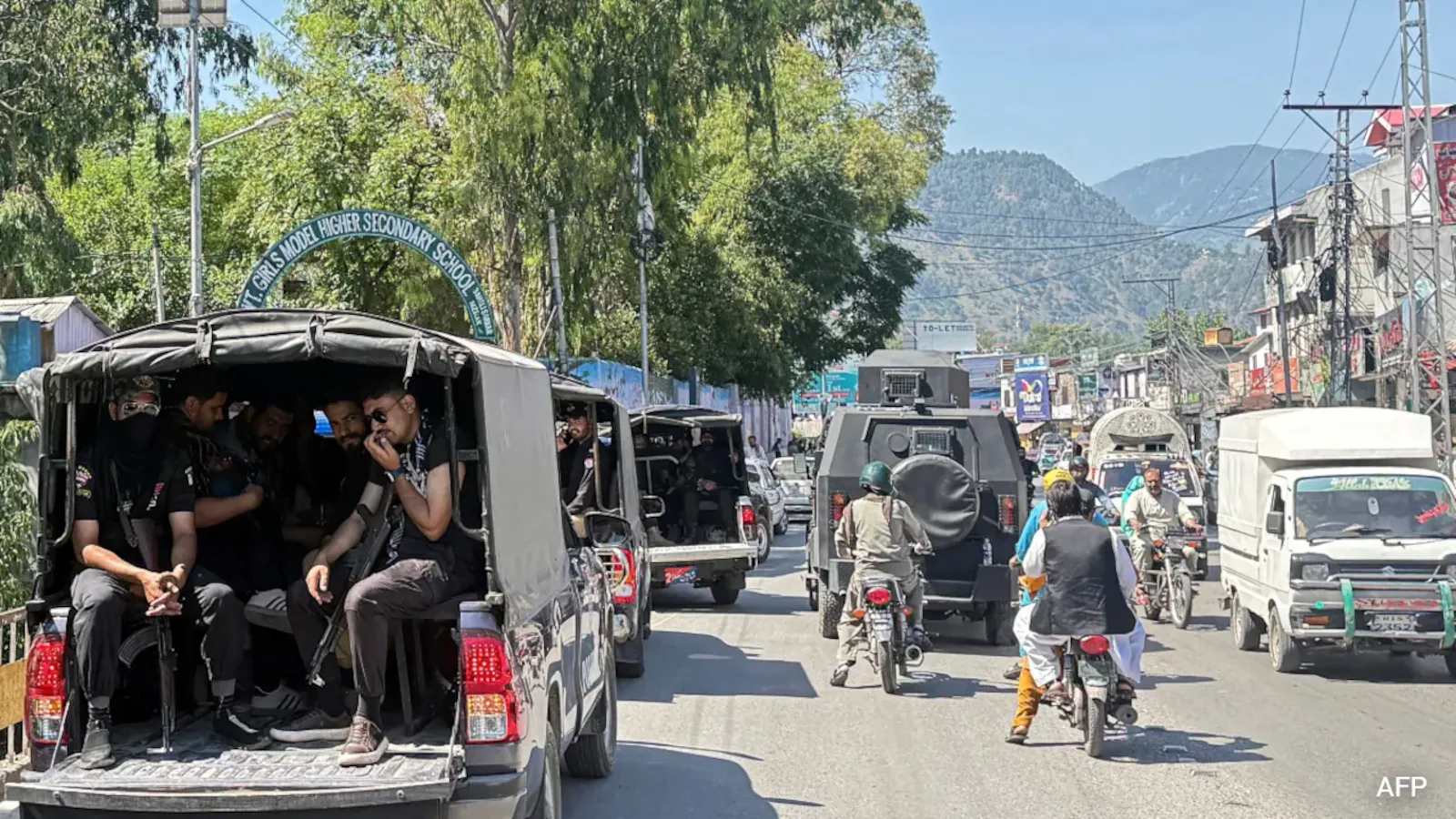
The IHRF went further, warning that Pakistan’s actions – including the suspension of internet and mobile networks, the deployment of federal paramilitary troops, and travel restrictions barring outsiders from entering the region – have “effectively sealed Pakistan-administered Jammu and Kashmir, severely impeding the flow of information and reports of abuses.” The foundation described the crackdown as “a grave deterioration of human rights in the region.”
Both organisations have called on Pakistani authorities to strictly adhere to international standards on the use of force, stipulating that force must only be used as a last resort and in line with the principles of necessity and proportionality.
JKJAAC and Their Demands
The JKJAAC is a civilian-led grassroots movement that has over recent years become the most prominent organised voice for the rights of PoK’s population. The committee has agitated over chronic electricity shortages, the rising cost of essential commodities, and the absence of genuine political representation for local residents – grievances rooted in decades of what critics describe as direct administrative and military control by Islamabad over the nominally self-governing territory.
The immediate flashpoint for the current crisis was the collapse of negotiations between the JKJAAC and the Pakistani government in late May 2026. Talks fell apart over the committee’s demand to abolish 12 seats in PoK’s legislative assembly reserved for refugees from Jammu and Kashmir who migrated to Pakistan after 1947. The JKJAAC argued this provision is an outdated instrument weaponised by Islamabad-backed political parties to manipulate the regional government’s formation, effectively disenfranchising local residents. When no agreement was reached, the committee announced a region-wide strike for June 9.
The Crackdown: Timeline of Escalation
On June 5, rather than resume dialogue, Pakistani authorities designated the JKJAAC a “proscribed organisation” under the Azad Jammu and Kashmir Anti-Terrorism Act, 2014. On the same day, all internet and mobile network services in PoK were suspended until at least June 12. An advisory ordered all outsiders, including tourists, to leave immediately, with entry barred through June 20. Federal paramilitary troops were deployed across the territory.
That same night, JKJAAC activist Shahzeb Habib was shot by police while travelling in a vehicle with a fellow committee member. Rights groups note there is no evidence he posed any imminent threat to officers. He later died from his wounds. Amnesty International has characterised his killing as an alleged extrajudicial execution.
On June 6, journalist Sohrab Barkat was arrested under Pakistan’s Prevention of Electronic Crimes Act for allegedly promoting the JKJAAC on his YouTube channel. He remains in custody. On June 7, police raided and sealed the JKJAAC’s central office in Muzaffarabad, and over 100 members and leaders were arrested across June 6 and 7.
When crowds gathered outside the Combined Military Hospital in Rawalakot on June 7 – where Shahzeb’s body had been taken for post-mortem – security forces clashed with protesters. At least eight protesters and four police officers were killed; 50 protesters and 23 officers were reported injured. By June 8 and 9, the IHRF reported that the overall civilian death toll had risen to more than 25, including at least one woman.
Rights Groups: This Is a Pattern, Not an Aberration
Critically, both Amnesty International and the IHRF situate the current violence within a documented and recurring cycle of state repression in PoK. In May 2024, Amnesty recorded the unlawful use of tear gas and live ammunition against the JKJAAC’s Kashmir Long March, in which three protesters and one police officer were killed. In October 2025, at least nine people died – six protesters and three police officers – during fresh demonstrations, with hundreds more injured.
“The recurring pattern of crackdowns on JKJAAC protests, including deadly violence in May 2024 and October 2025, shows that without prompt corrective action, the authorities risk further loss of life and a complete erosion of fundamental rights in the region,” the IHRF warned.
Key Demands from Rights Organisations
Both bodies have issued a clear set of demands to Pakistani authorities. They are calling for an independent, transparent inquiry into the killing of Shahzeb Habib and all civilian deaths during the protests; the immediate lifting of the ban on the JKJAAC; restoration of internet and mobile services; an end to mass arbitrary arrests; and the release of journalist Sohrab Barkat.
They have also raised urgent concerns about the political context. On June 5 – the same day it branded JKJAAC a terrorist organisation – the Pakistani government announced regional elections in PoK for July 27, 2026. The IHRF explicitly called on authorities to “facilitate peaceful assemblies ahead of the announced regional elections,” warning that holding a vote while the territory’s leading civil movement is outlawed, its leaders jailed, and communications blacked out would be incompatible with Pakistan’s international human rights obligations.
Amnesty International’s Lassee was equally direct: “Pakistani authorities must take immediate steps to de-escalate the situation. Ahead of the upcoming regional elections, it is imperative that Pakistan facilitates peaceful assemblies and does not restrict the right to freedom of association. This should start by lifting the unlawful ban on JKJAAC.”