The European Union is facing a backlash for hosting members of the Taliban for an unprecedented and highly secretive technical meeting in Brussels this week, with MEPs saying the talks violated EU values.
Members of at least 15 EU states sat down on Tuesday with a delegation of five Taliban officials, led by the spokesperson for the Taliban’s ministry of foreign affairs Abdul Qahar Balkhi, to discuss diplomatic services and the deportation of Afghans back to Afghanistan.
The venue and the details of the meeting were not shared by Belgium, which cited security concerns.
This is the first time the EU has engaged with the Taliban and hosted their members in Brussels since the hardline Islamist group seized power in Kabul in August 2021. The meeting has alarmed many EU lawmakers, Afghan refugees in exile in Europe and human rights activists.
The Taliban, on the other hand, boasted that the visit was “historic”. Mr Balkhi said the talks focussed on “trust-building measures” between the bloc and the Taliban, the group’s diplomatic presence and a “dignified return process”. The Taliban officials, unnamed aside from Mr Balkhi, held both multilateral and bilateral meetings with representatives of EU member states.
He did not clarify if the Taliban will be establishing a diplomatic presence in Brussels as a result of this meeting. The Independent has reached out to Mr Balkhi for a comment.
The Belgian government said it approved one-day visas for five individuals in the Taliban delegation after security assessments found no evidence that they posed a threat.
They were only permitted to enter Belgium and not the wider Schengen area. The meeting was held in an undisclosed location in the Belgian capital, where both the EU and Nato are headquartered.
The EU Commission co-chaired the meeting with Sweden, with an agenda focussed on easing the process to deport criminals and those deemed security threats to Afghanistan.
EU spokesperson Markus Lammert had earlier told The Independent that the talks did not equate to the EU recognising the Taliban regime as the official government of Afghanistan.
Belgian foreign minister Maxime Prévot said the country had complied with an EU request to grant the Taliban delegates visas.
“Making a meeting possible in the framework of our host-state policy does not amount to recognition, does not amount to legitimacy, and does not constitute an invitation by the Belgian government,” Prévot said in a statement.
The EU’s engagement with the Taliban has been heavily criticised in the context of the group’s far-reaching restrictions on the freedoms of girls and women.
Fereshta Abbasi, a researcher on Afghanistan at Human Rights Watch, said the meeting undermines the EU’s human rights obligations and could lead to desperate Afghans being sent back to be persecuted by the Taliban.
“Any engagement with the Taliban needs to prioritise protecting human rights and accountability – not deporting people to danger there,” Ms Abbasi said.
“EU countries are undermining their credibility by condemning Taliban abuses and pursuing accountability on one hand, while cooperating with the Taliban to forcibly return Afghans on the other,” she said.
Hannah Neumann, a lawmaker from Germany who has denounced the visit and issued an open call for the EU not to grant the Taliban any political legitimacy, said the summit had sent a signal of openness to the group.
“There is no such thing as technical talks with the Taliban,” she wrote in a post on X after the meeting in the Belgian capital ended. “Every invitation, every visa and every official meeting sends a political signal.”
“The Taliban would present a visit to Brussels as evidence that Europe is normalising relations, despite the complete absence of progress on the conditions established by the EU itself,” she said.
She added: “Granting political access to representatives of the Islamist-terrorist Taliban regime without any meaningful progress on these issues risks undermining the credibility of these commitments both in Afghanistan and globally.”
Human rights groups have said the red carpet visit in Brussels will result in sending Afghans back to a place that has only become more dangerous in the time passed.
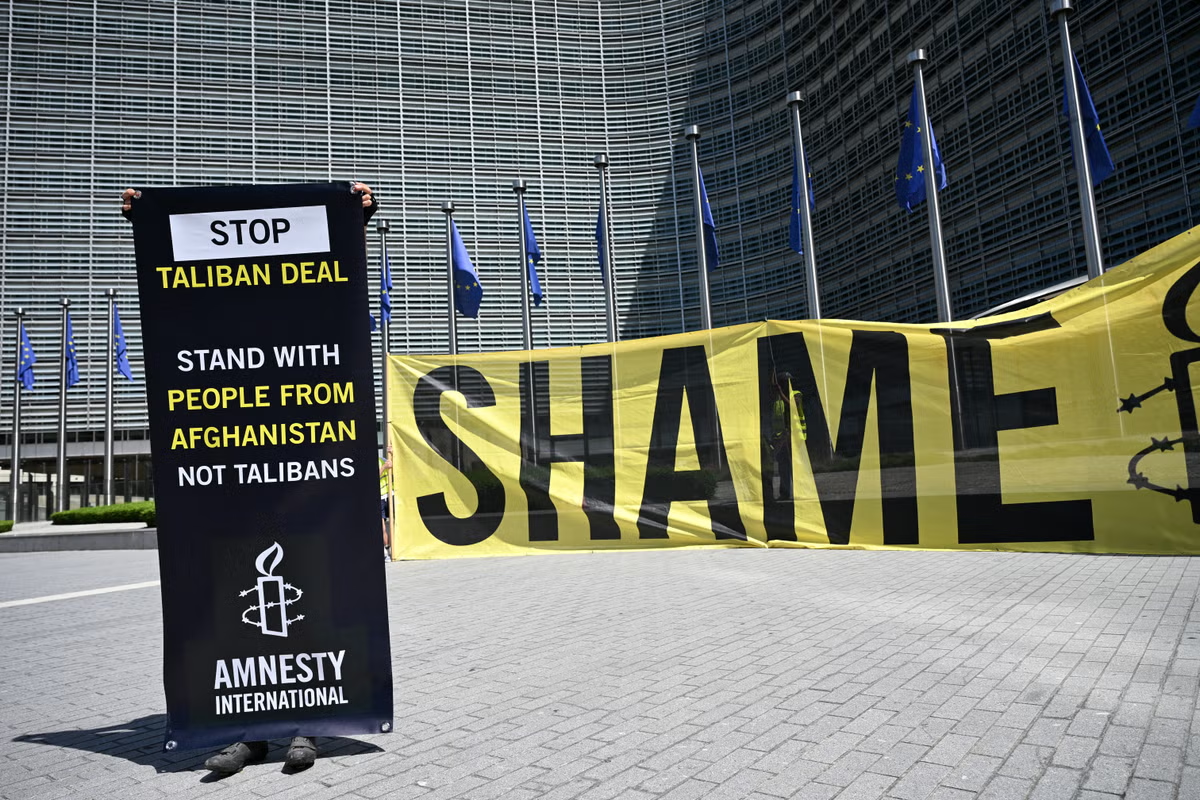
Eve Geddie, director of Amnesty International’s European institutions office, said: “The desperate scenes of people – including EU staff – fleeing Afghanistan are a recent memory. It is unconscionable that the EU would now try and deport people to Afghanistan, which has only become more dangerous in the meantime.”