A pair of sweeping decisions from the Supreme Court will allow Donald Trump’s administration to end humanitarian protections for tens of thousands of immigrants and indefinitely block people seeking asylum from entering the country.
Thursday’s rulings from the high court’s conservative majority could upend asylum law and open the door for the Trump administration to forcibly remove more than one million people from the country who are already here legally.
The 6-3 decisions, both written by conservative Justice Samuel Alito, are expected to have devastating consequences for immigrants and their families who seek asylum at the border as well as tens of thousands of people who live and work in the U.S. under Temporary Protected Status.
The court will let the government block asylum seekers from entering the U.S. if officials believe ports of entry are too overwhelmed to hear their cases.
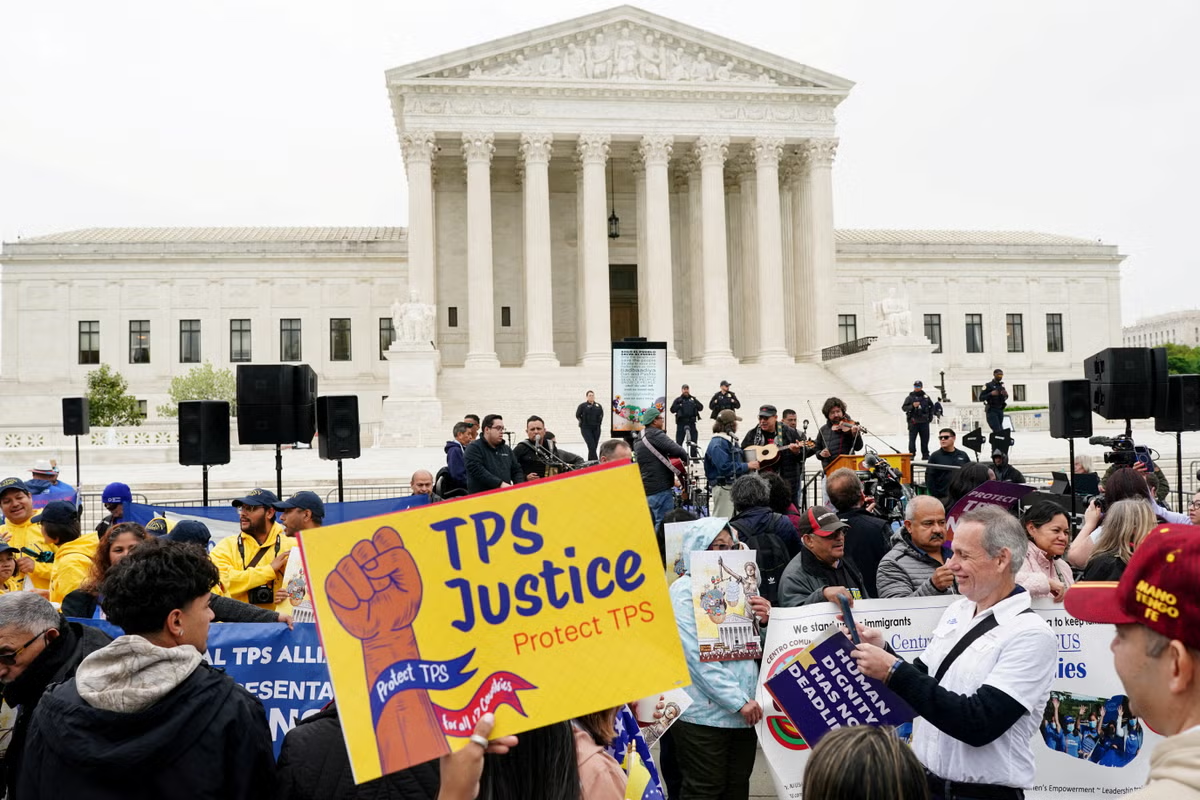
In another decision, the Department of Homeland Security will be allowed to end Temporary Protected Status for Haiti and Syria, upending the lives of nearly 350,000 people who legally live in the U.S. under the long-running humanitarian policy.
During Trump’s first term, immigration officials could stop people seeking asylum from crossing while indefinitely declining to process their claims — stranding thousands of people on the other side of the border after fleeing violence, persecution and political volatility in their home countries.
The Immigration and Nationality Act allows an “alien who is physically present in the United States or who arrives in the United States” to apply for asylum. Those applicants are then referred for an interview to determine whether they have a credible fear of persecution to qualify for those protections.
But the high court’s conservative majority determined that an immigrant only “arrives” in the U.S. after they cross the border, and immigration law governing asylum “neither entitles an alien standing in Mexico to apply for asylum nor requires an immigration officer to inspect him,” according to Alito.
”Blessing” that now-defunct policy gives Trump permission to “slam the door shut on all who are fleeing persecution, despite the detailed inspection and asylum system that Congress enacted and commands,” according to liberal Justice Sonia Sotomayor.
“More people will die. More people will attempt to cross the border illegally, and some will make it while others will not,” she wrote in her dissent.
“More people will be forced to walk along the U.S.-Mexico border in dangerous conditions, trying to find a port that will inspect them,” she added. “More people will turn back and be subjected to violence because of something they cannot or should not have to change about themselves, such as their race, religion, nationality, or political opinion.”
People seeking asylum must be physically present in the U.S., and asylum can be granted to those who meet the international law definition of a “refugee,” under international human rights accords.
The government’s so-called “turnback” policy violates international law — and can be death sentence for vulnerable immigrants, according to advocates.
“For decades, the United States has allowed individuals and families who are fleeing persecution, torture, and death to ask for protection at U.S. borders and exercise their legal right to seek asylum,” according to Erika Pinheiro, executive director of Al Otro Lado, which challenged the administration’s policy.
“This decision has destroyed the United States’ position as a global leader in promoting the rights of refugees and threatens to serve as a dangerous justification for other countries that unlawfully prevent refugees from crossing borders in search of safety,” she added. “In a world of increasing conflict and climate disaster, this hardening of borders to keep out the most vulnerable is sure to result in many more lives lost.”
A case that challenged Homeland Security’s attempt to throw out TPS for Haiti and Syria — two nations rocked by instability and humanitarian crises — followed a wave of lawsuits from immigrants’ rights groups on behalf of thousands of people who had been granted permission to live in the U.S. after fleeing disasters in their home countries.
Thursday’s decision could fuel the administration’s efforts to strip TPS designations that protect roughly 1.3 million immigrants from a dozen other countries, continuing the president’s threats against legal immigration despite promising to target “the worst of the worst.”
Congress created the TPS program in 1990 to provide temporary immigration protections for people fleeing war, natural disasters and “extraordinary and temporary” conditions in their home countries. Beneficiaries are allowed to apply for renewable work permits and gain protection against deportation.
A 2010 earthquake in Haiti killed more than 200,000 people. The TPS designation was first opened then and has been extended several times in the years that followed.
Federal courts last year blocked the government from ending TPS after judges determined the administration had illegally and arbitrarily revoked protections on baseless, pretextual grounds fueled by “racial animus” and an anti-immigrant agenda.
Lawyers and judges pointed to “derogatory” statements from former Homeland Security Secretary Kristi Noem and Trump, who baselessly claimed Haitian immigrants in Springfield, Ohio, were “eating people’s pets” and labeled Haiti a “s*** hole country.”
Justice Alito, however, said that “none of the cited statements by either the President or the Secretary was overtly racial, and in substance all expressed policy views that could rest on race-neutral justifications.”
“This is a cruel and dangerous decision for countless families, workers, and entire communities,” according to Ama Frimpong, chief of services at CASA, an immigration advocacy group that challenged the Trump administration.
“It is a betrayal to the millions of Americans who believe that people who have built their lives in the U.S. because they cannot safely return to their home countries deserve to be treated with dignity and respect,” Frimpong added.
Dahlia Doe, a Syrian TPS holder and the lead plaintiff in the case before the court, said in a statement that the decision is a “devastating blow” to their families.