For months, the city of El Obeid in Sudan has lived with a sense of suspended time. Roads in and out have narrowed under siege-like conditions while the sound of artillery has drawn closer, and the fear of what comes next has settled over hundreds of thousands of civilians.
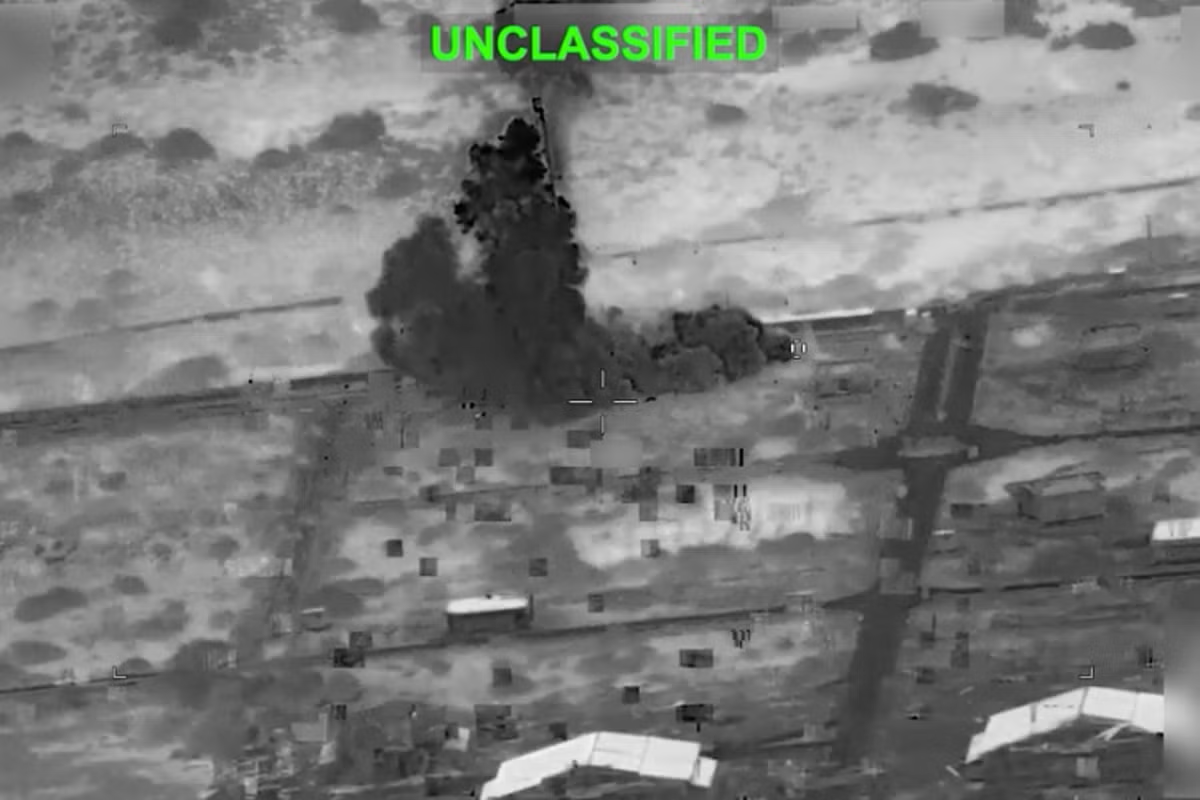
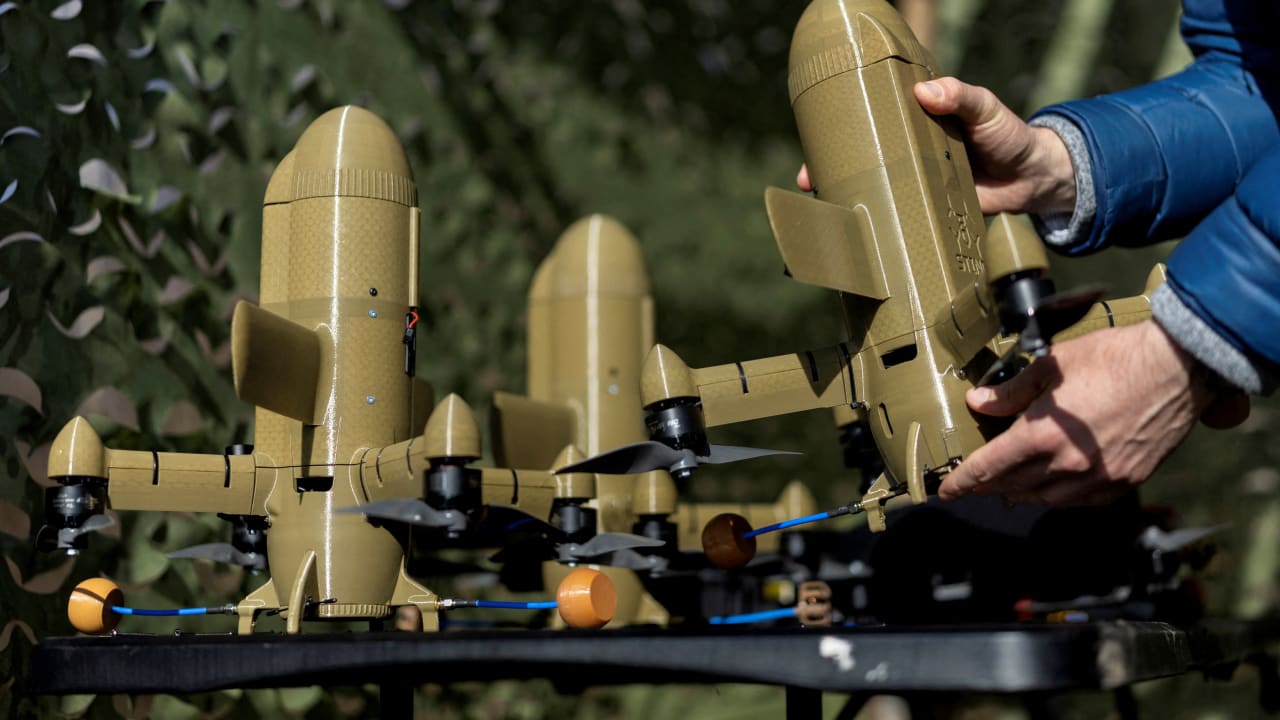
Around the strategic city in Sudan’s North Kordofan region, the militant group Rapid Support Forces (RSF) has tightened their grip through drone attacks. Humanitarian agencies warn of catastrophe while human rights organisations invoke memories of another city — El Fasher — where warning signs were ignored until they culminated in mass atrocities.
Advertisement – Scroll to continue
NDTV Exclusive | ‘Innocents Killed, Girls Raped’ – Inside Sudan’s Crisis
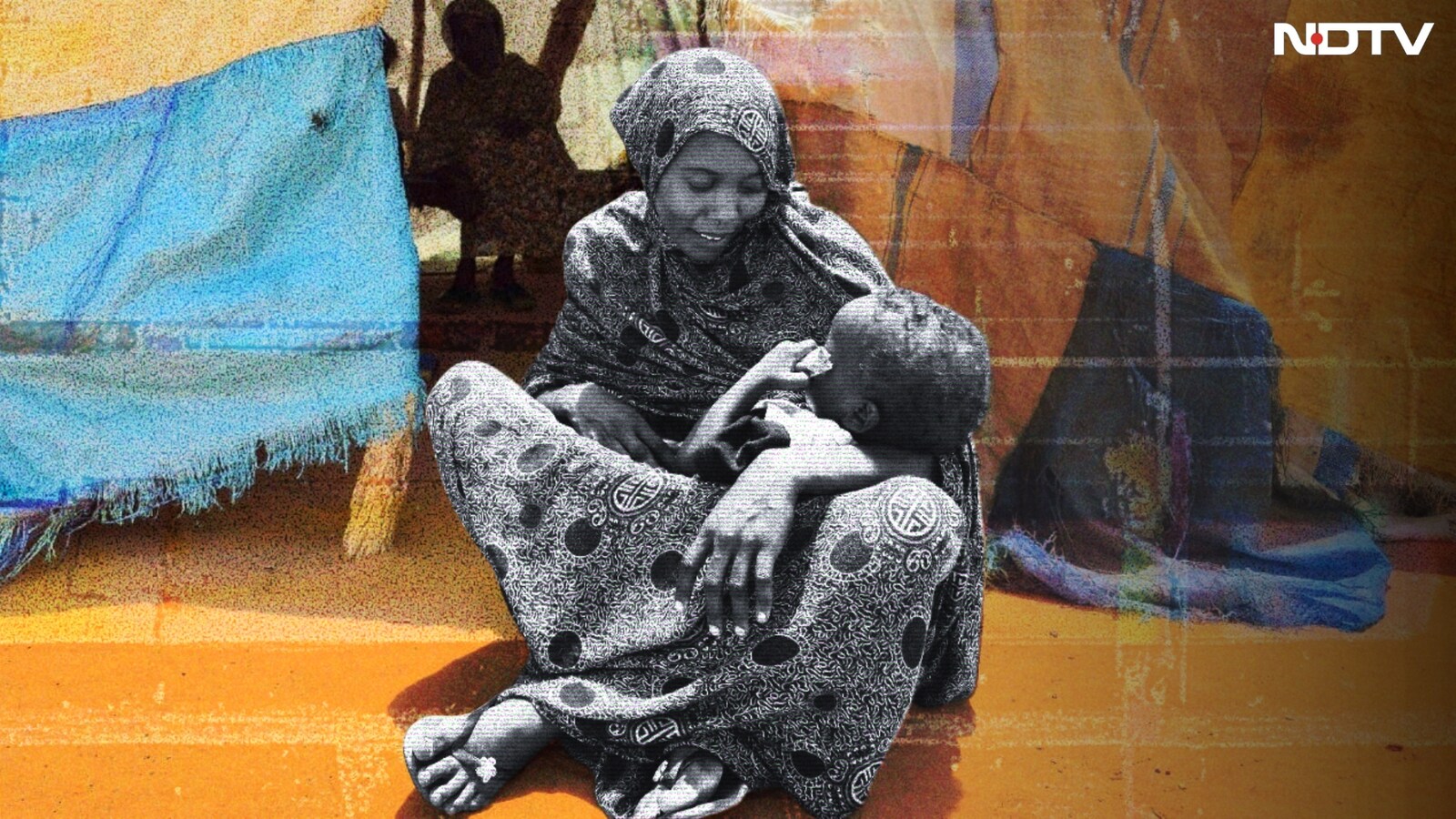
Nearly half a million civilians now wait in a city that many fear could become the next chapter in Sudan’s devastating war.
Since April 2023, Sudan has been engulfed in a brutal war between the Sudanese Armed Forces (SAF) and the RSF, a conflict that has killed tens of thousands of people, displaced more than 11 million from their homes and created what the United Nations describes as the world’s largest displacement and hunger crisis – even worse than the atrocities committed in the besieged Palestinian enclave of Gaza.
A Sudanese woman walks as she carries a plastic canister in al-Rahmaniyah camp for displaced people, near the city of El-Obeid in the southern Kordofan region. The Sudanese city of El-Obeid is only “weeks” away from a humanitarian disaster unless aid is urgently allowed in, a UN official told AFP, as fears grow of an imminent paramilitary offensive. A strategic hub in the southern Kordofan region, the city has been encircled for months by the Rapid Support Forces, the paramilitary group that has been fighting Sudan’s army for years.
For the past several months, El Obeid has remained encircled by RSF fighters. The city serves as a crucial transport and logistical hub linking central Sudan with Darfur and the Kordofan region. Losing it would carry military significance. But aid agencies and rights groups argue that the greater concern lies elsewhere — in the fate of civilians trapped inside.
Exclusive | “You Know SRK?” Sudan Rebels, Guns In Hand, Ask Kidnapped Indian
Few people have spoken more forcefully about that risk than Kenneth Roth, the former executive director of Human Rights Watch, who spent nearly three decades documenting atrocities across the world.
“Everyone is worried that the RSF will replicate the genocide it committed in El Fasher if it takes El Obeid,” Roth told NDTV.
“The RSF’s modus operandi has been not simply to take territory when it can but also to massacre civilians of Black African ethnic groups there whom it sees as opponents. Civilians are entirely vulnerable because they are not simply the unfortunate collateral victims of fighting but a deliberate target of the RSF.”
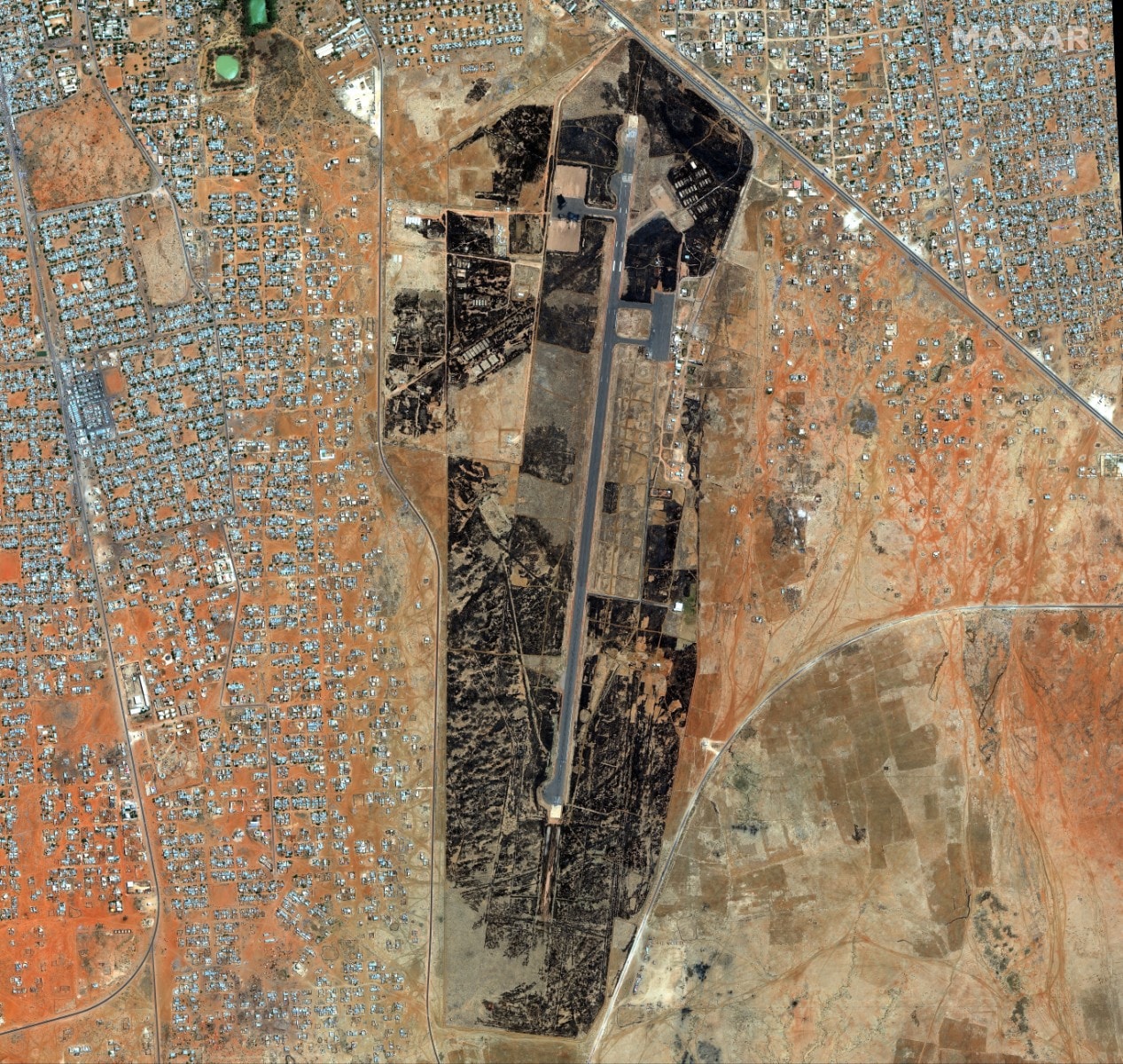
This handout satellite image courtesy of Maxar Technologies taken on April 18, 2023 shows an overview of El-Obeid airbase in Sudan. A weeks-long power struggle erupted into deadly violence on April 15 between the forces of two generals who seized power in a 2021 coup. (Photo by Satellite image ©2023 Maxar Technologies / AFP)
Photo Credit: AFP
The UN’s Independent International Fact-Finding Mission reached similarly grave conclusions in its findings on El Fasher. Investigators concluded that the RSF carried out ethnically targeted killings, widespread sexual violence and enforced disappearances during its takeover of the city. The mission found evidence supporting at least three underlying acts of genocide that are killing members of protected ethnic groups, causing serious bodily and mental harm, and deliberately creating conditions intended to destroy those communities in whole or in part.
NDTV Exclusive | A Catastrophe Captured By Satellites, Ignored By The World
“The scale, coordination, and public endorsement of the operation by senior RSF leadership demonstrate that the crimes committed in and around El Fasher were not random excesses of war,” Mohamed Chande Othman, who chairs the mission, said. “They formed part of a planned and organized operation that bears the defining characteristics of genocide.”
Satellite imagery published after the fall of El Fasher added another layer to the horror, showing large sections of the city littered with bodies. It is precisely that precedent that has prompted alarm over El Obeid.
Last week, dozens of international human rights organisations urged the UN Human Rights Council to convene an emergency debate or special session on Sudan, arguing that the city faces an imminent risk of atrocity crimes.
The appeal, signed by organisations including Amnesty International, Human Rights Watch, the Global Centre for the Responsibility to Protect and dozens of African human rights groups, warned that after eighteen months of siege-like conditions, El Obeid now faces the prospect of a major RSF ground offensive.
Exclusive | World’s Newest Country Is Without Medicine. And It’s Getting Worse
The organisations cited reports of troop build-ups, escalating drone strikes and artillery shelling. They recalled warnings issued by the UN High Commissioner for Human Rights, Volker Türk, who cautioned that a fresh offensive risked the commission of serious international crimes.
At the centre of that debate sits the United Arab Emirates.
“The international community’s passivity has been deplorable,” Roth told NDTV. “The main international actor has been the United Arab Emirates, which has sent the RSF arms and mercenaries as it was committing mass atrocities. The obvious way to get the RSF to stop its atrocities is to stop the UAE from aiding and abetting these crimes.”
Roth argues that governments have avoided confronting Abu Dhabi because of its political and economic influence.
“But the UAE is rich, so other governments are not calling out its complicity in genocide, let alone exerting any pressure on it to stop,” he told NDTV. “This is a classic case of sacrificing African people to make some money.”
The Human Rights Council appeal calls on member states to condemn external actors supporting Sudan’s warring parties, including the UAE, while also urging accountability for all foreign governments whose actions have enabled violations committed by either side in the conflict.
Washington has also begun tightening sanctions linked to Sudan’s war.
The US recently announced sanctions targeting individuals and companies accused of supplying weapons, explosives and foreign fighters to both the Sudanese army and the RSF. Among those sanctioned were affiliates of Sudan’s Defence Industries Systems, companies allegedly involved in importing military supplies and members of a transnational network accused of recruiting fighters for the RSF.
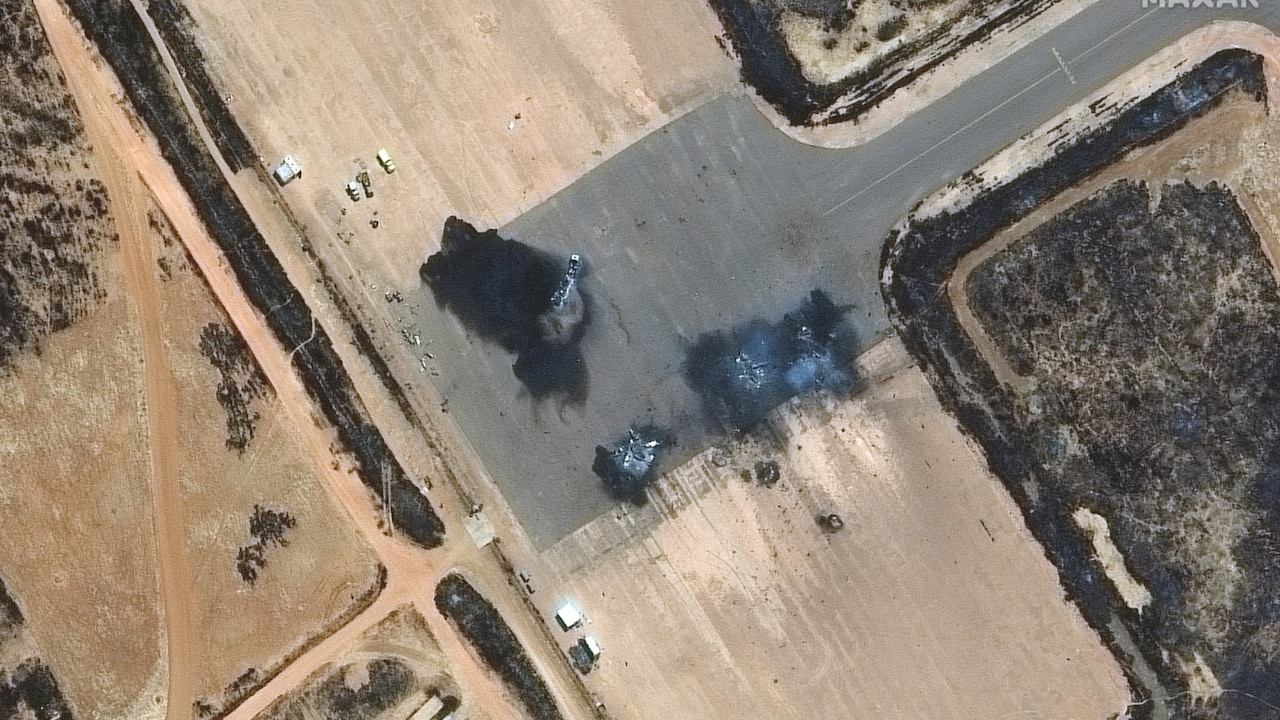
This handout satellite image courtesy of Maxar Technologies taken on April 18, 2023 shows a close-up view of destroyed Su-25 ground attack aircraft, at El-Obeid airbase in Sudan. A weeks-long power struggle erupted into deadly violence on April 15 between the forces of two generals who seized power in a 2021 coup. (Photo by Satellite image ©2023 Maxar Technologies / AFP)
Photo Credit: AFP
The RSF has emerged as the deadliest non-state armed group for civilian fatalities in 2025, according to ACLED data. In the first 11 months of the year, the Darfur-based paramilitary group, engaged in a prolonged conflict with the Sudanese army, was responsible for over 4,200 recorded civilian deaths in its attacks. This figure represents 11 per cent of all fatalities caused by non-state armed groups globally. The report highlighted that this tally is likely a significant undercount due to the RSF’s tactics, which include extrajudicial killings, shelling of residential areas, and ethnically motivated violence, potentially resulting in thousands of additional unreported deaths and raising concerns of genocide and ethnic cleansing targeting non-Arab populations in Darfur.
During the Darfur conflict in the early 2000s, former Sudanese President Omar al-Bashir armed Arab militias known as the Janjaweed to crush rebellion in the region. Those militias became synonymous with widespread atrocities against civilians.
Among their commanders was Mohamed Hamdan Dagalo, better known as Hemeti.
In 2013, Bashir formally reorganised the Janjaweed into the Rapid Support Forces, granting the force official status, financial autonomy and control over lucrative gold mines in Darfur. Over the following decade, the RSF transformed from a militia into one of Sudan’s most powerful military actors before turning its guns on the army in 2023.
The war that followed has devastated Sudan.
In comparison to other non-state armed groups, the RSF stands out as the single largest perpetrator of civilian killings worldwide during this period. Non-state armed groups and mobs collectively accounted for approximately two-thirds of all violence targeting civilians and 59 per cent of civilian fatalities in 2025. While the ACLED report does not provide exact figures for individual groups like the so-called Islamic State affiliates, al-Shabaab, or JNIM, it explicitly positions the RSF ahead of all others in raw civilian death counts among non-state actors.