Forty minutes outside of Kansas City sits the Lawrence DoubleTree hotel, an unremarkable concrete structure just off the freeway. It has three stars and four stories, a modest indoor pool and a small fitness center, and it’s situated in a town of just under 100,000 people.
When the Algerian World Cup team arrived on a Sunday night, they couldn’t have expected much.
What happened next has been well documented across social media: the residents of Lawrence gathered outside the hotel lobby with drums, flags and flares. When the team held their first practice the next morning, people sneaked up to the fences and held their kids up to see; they cheered for the players by name. The University of Kansas band learned the Algerian national anthem and played it as the team came out.
Artwork (optimistically titled ‘Within Your Grasp’) was gifted to the team from the city. An installation of a gigantic Algerian flag was planned and executed at the University of Kansas campus. At a celebration to mark its completion, there was a DJ playing Algerian music and students chanting: “1, 2, 3, viva l’Algerie!” The town was decorated with green, red and white flags.
It’s a story that started with a team on a budget and ended with a heartwarming reminder that Americans — despite the negativity of the news cycle — go hard when they decide to embrace outsiders.
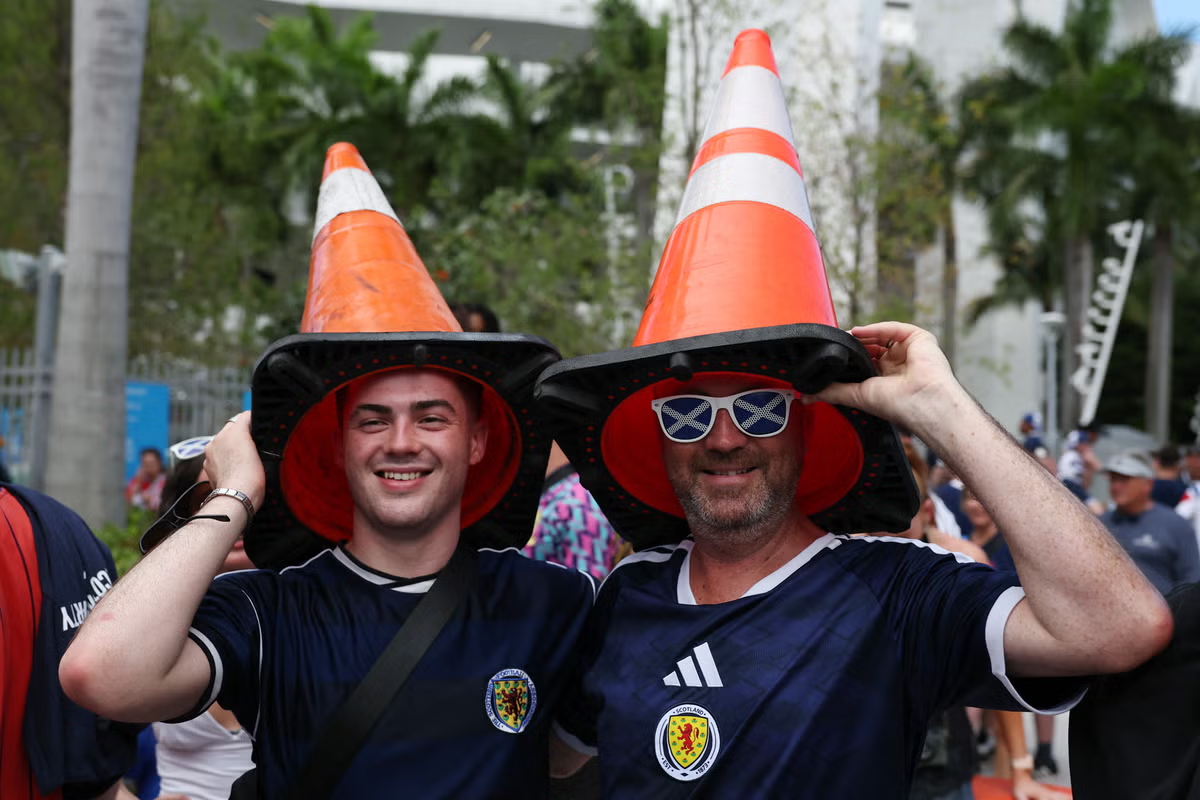
Meanwhile, in Boston, Massachusetts, where 50,000 bagpipe-playing Scotland supporters descended and promptly drank up all the beer, the locals were similarly charmed. Senator Ed Markey — a usually mild-mannered 79-year-old — tweeted “No Scotland, no party” with a video of himself with his arms around Scotland supporters in pubs and bars in the city. Even the Iraq fans found themselves dancing in the streets alongside their Scottish brethren.
State Sen. Paul Feeney published an emotional Instagram reel as the Scots left for New York, recalling the antics of the Tartan army — including leaving traffic cones on the heads of every statue — with misty-eyed nostalgia. The Boston Red Sox president even wrote a letter thanking the Tartan Army for its presence and energy to the Scotland Football Association, after Scottish fans turned up to cheer for them at Fenway Park. And Friday’s edition of The Boston Globe featured a full-page spread thanking the Tartan Army for “the laughter, the bagpipes, and the memories”.
At the end of it all, Mayor Michelle Wu, dressed in a pink Scotland jersey, announced an official partnership with Glasgow for years to come. Scottish supporters gathered behind her chanted, “No Wu, no party!” as she did so.
It seems that Scots aren’t quite as taken with New York. But other national teams have made the city work for them, principal among them a large group of Norwegian supporters who managed to temporarily convert a subway train into a makeshift longboat.
Pouring into the F train, they sat along the floor in pairs and performed synchronized rowing motions while chanting. Naturally, the one at the front was wearing a plastic horned Viking-style hat.
They repeated the routine in Times Square, joined by curious Americans and even the New Jersey Devils mascot. Groups in Oslo performed similar celebrations on the streets — and even in the Norwegian Parliament.
Needless to say, much of the joy of these videos lay in the reactions around them. New Yorkers, a people known for usually treating eye contact as a personal attack, are seen laughing and chatting in the circulating videos. And in another unlikely alliance, Korean and Mexican fans in Brooklyn found that they had so much in common they ended up standing side-by-side when their two countries played each other. Some even filmed themselves stating how sad they were to compete after falling in love with each others’ cultures.
Elsewhere, the Dutch fans found much to love in Dallas, where their stay culminated in a huge group rendition of (what else?) ‘Country Roads’. And, days after their triumphant win in their own sphere, the Knicks turned up to the France-Senegal game. Just down the road, an England fan’s delighted exclamations at New York phenomena he’d only ever seen in movies — “Oh my God, a hot dog stand! Chase bank, I’ve seen that on TikTok!” — as he emerged from a subway station in midtown Manhattan were widely circulated by equally amazed Americans.
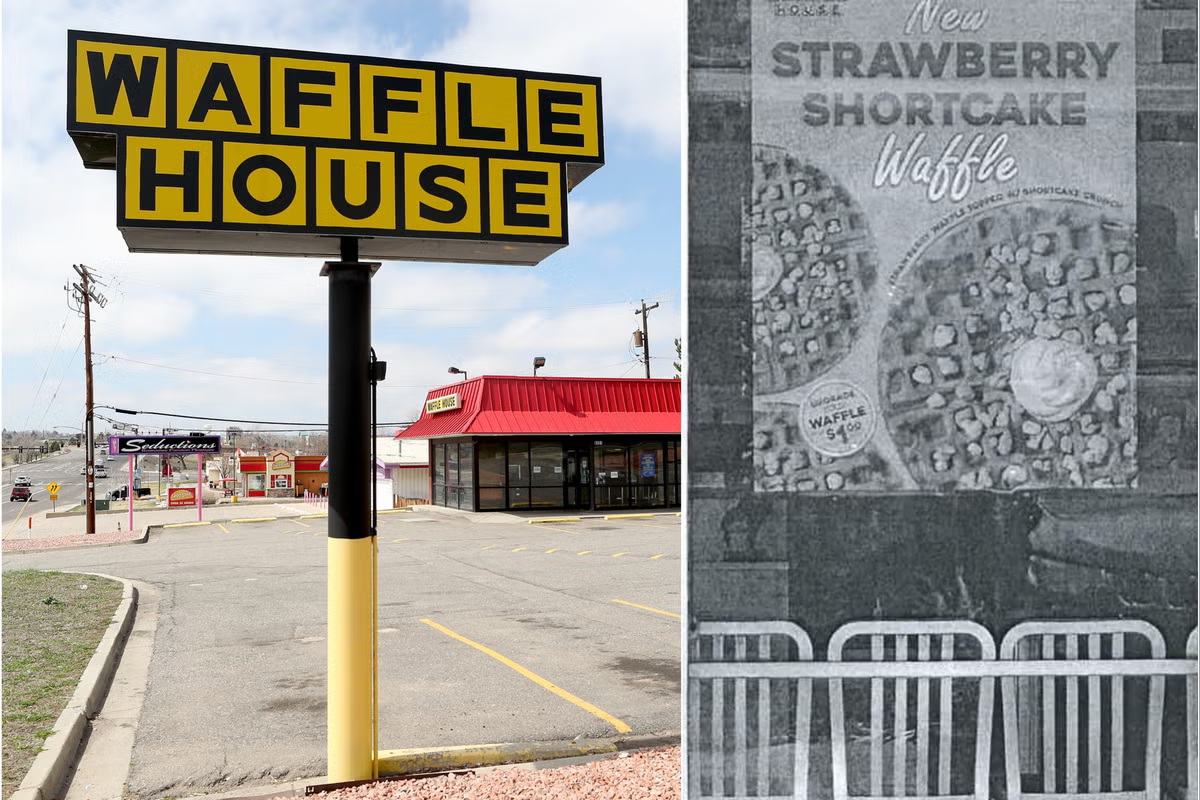
And then there’s Freddy (yes, he only goes by his first name). The German fan recently went viral for his live-tweeted adventures across America, during which he gave the Waffle House in Atlanta a 10/10 rating, expressed his surprise at finding a Bavarian-style village in northern Georgia, and filmed himself riding a rollercoaster in the town of Helen.
Freddy’s road trip across the US details delight after delight: he’s as enthusiastic about a Wendy’s or the abundance at Bucc-ee’s as he is about local architecture. When he got stranded at the airport in Dallas after hoping to fly to Canada for the weekend Germany match, airlines began bidding for his custom, and Utah Senator Spencer Cox even attempted to help out.
Freddy’s virality has come with its own twists and turns: an invitation to the White House; a “Where is Freddy?” following, complete with listed stops on his trip (“On July 7, they went to Walmart”) as if he’s a world-famous band on tour; online sleuths theorizing that he’s actually a paid influencer on a mysterious marketing campaign. Americans have fallen for his seemingly wide-eyed embrace of everything USA, from abundance at the grocery store to pancakes at 1a.m. to southern hospitality. Is it all fake? If so, it’s successfully captured hearts and minds.
For America — where soccer is not a hugely popular sport, and where basketball, baseball and NFL games will always draw more interest and audience — being a “bandwagon fan” who adopts a trending team has become a strange source of pride. In the official Lay’s World Cup commercial, featuring Will Ferrell as Anchorman’s Ron Burgundy literally driving a huge bandwagon through the United States with David Beckham along for the ride, Ferrell cheerily admits that the US is statistically extremely unlikely to win. Instead, he gathers in the back with a group of Americans wearing multicolored jerseys and cheers for another, undisclosed nation. When they lose, he shouts, “Don’t worry, just choose another team!” and they rip off their shirts in unison to reveal different jerseys underneath. This was the ideal host nation for a mass adoption of underdog teams.
But the competition has given rise to strange bedfellows before, even in places where soccer has a much more dedicated following.
In the 2006 World Cup, the small, alpine spa town of Baden Baden in Germany found itself in an unexpected spotlight when the wives and girlfriends of the England team chose to stay there while supporting their partners. This was the World Cup that gave birth to the term “WAGs,” and the commentary surrounding their raucous nights out, their quiet dinners, their apparent feuds, and their etiquette at the spa was intense. It was strongly suggested that the German town hosting the WAGs was fed up of them at the time — but by the 2024 Euros, some were looking back with rose-tinted glasses and claiming they “miss the WAGs” after all.
In 2014, while based in Mogi das Cruzes in Brazil, the Belgium team relied on local sentiment to boost their own local popularity.
It was a sentiment based less on altruism and more on local rivalries. “The Brazilians expect only one thing and that is that we beat the Argentinians,” said Belgium coach Mark Wilmots before heading into a tough game against Argentina. He encouraged as many locals as possible to support Belgium in the stands — and hundreds of them did. That’s perhaps unsurprising, considering that just a couple of weeks before, Brazilians had also turned up in droves to support Switzerland simply because they were playing against Argentina in the group stages.
This World Cup, social media has gifted us heartwarming stories, but they are not the only stories. The Iranian team — which was commuting to games from their base in Tijuana, Mexico, since new US immigration restrictions wouldn’t allow them to stay inside the country — left a poignant handwritten message in their Los Angeles locker room after their match with Belgium.
“We came to Los Angeles with pride, competed with honor, and leave with dignity,” it read, before thanking LA for its “hospitality”. The Iranian national anthem had been booed during the game hours before, and protesters against the Iran government had gathered outside as the team played. But they were given a friendly sendoff by their Mexican hosts as they departed Tijuana.
World Cup songs and chants from visiting fans haven’t always been affectionate: Australian fans chanting “Aussie boys are on a bender, Donald Trump’s a sex offender” (and other, even less publishable examples) at their latest match against Turkiye are a clear reminder of that. Quite evidently, not everything is beautiful in America. But in some small stories of compassion and joy, there remains a reminder that a great deal is — even if there’s still room for improvement.
The standout stars of a World Cup tournament rarely are the goalkeepers. They’re usually established celebrities in their home countries, strikers who are known for their daring attempts on goal at the other side of the pitch, and they usually come from nations expected to win the whole thing. They’re also usually rising stars in their late teens or early twenties with long careers ahead of them.