The ceasefire that ended the Iran-Israel-US war was supposed to reopen one of the world’s most important oil chokepoints almost overnight. Instead, the Strait of Hormuz is now facing a slower, stranger obstacle: Marine life.
Ocean’s traffic jam
JUST IN: Ship traffic in the Strait of Hormuz over the last 24 hours. pic.twitter.com/x3P3QODSVg
— Watcher.Guru (@WatcherGuru) June 23, 2026
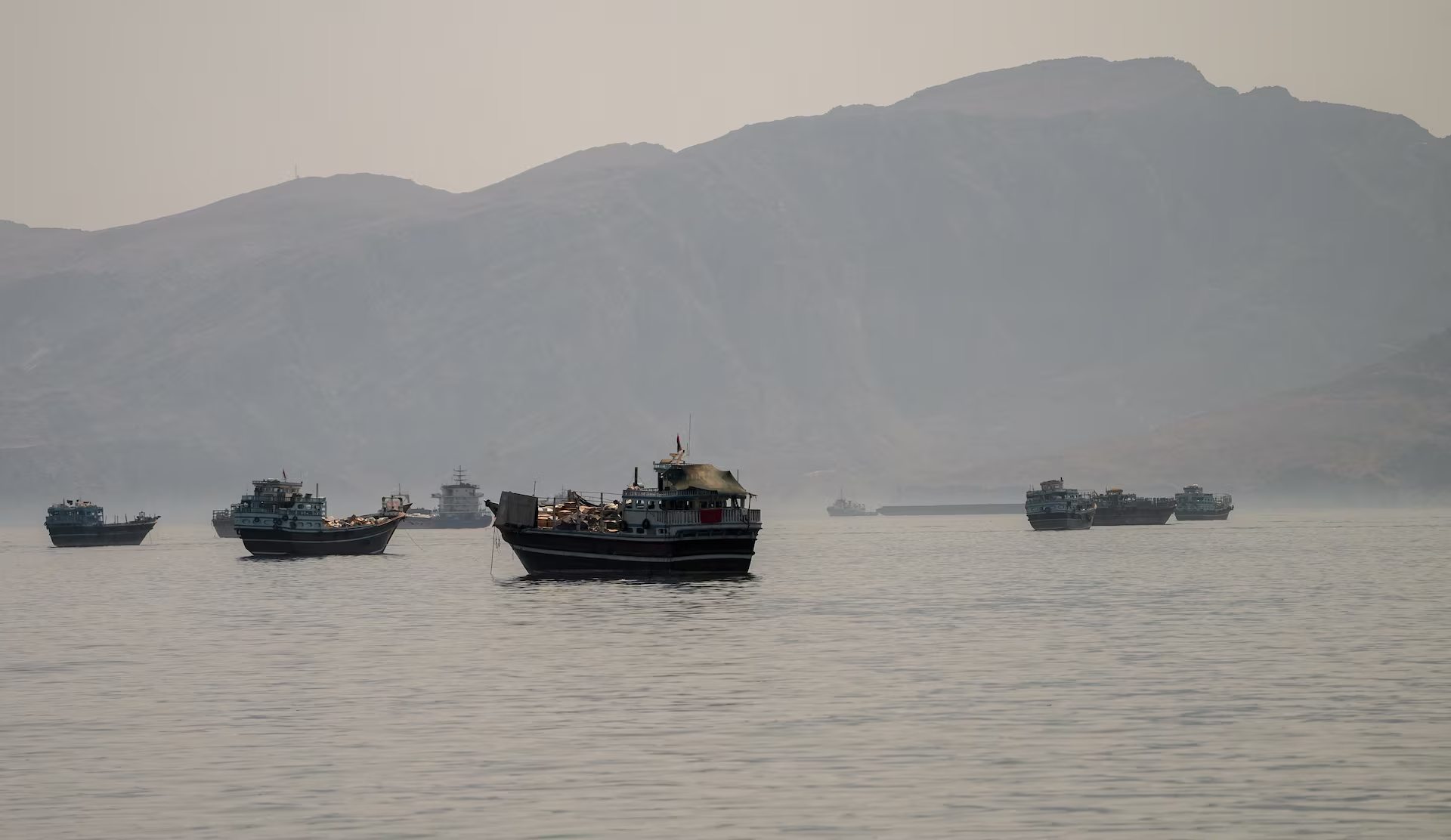
After months of conflict and shutdown of sailing through the strait, hundreds of tankers have sat anchored in the Persian Gulf and the Gulf of Oman, going nowhere. According to Saudi Aramco CEO Amin Nasser, more than 600 tankers were stuck inside the Persian Gulf as of mid-May 2026, with another 240 waiting just outside the strait.
The International Maritime Organization had earlier estimated that around 20,000 mariners and 2,000 ships of all kinds, including bulk and cargo, liquified petroleum, merchant, and various military ships, were stranded in the Gulf.
That long, motionless wait has created a problem only a few people expected to be a bottleneck for global oil: Barnacles.
Why the Gulf is a perfect breeding ground
The Persian Gulf is unusually shallow, averaging around 164 feet deep, and unusually warm, with average water temperatures near 30 degrees Celsius (86 degrees Fahrenheit) because so little freshwater flows in. Those conditions are ideal for barnacles, mussels, clams, tube worms, and algae, which reproduce quickly in warm seawater and readily attach themselves to anything that stops moving.
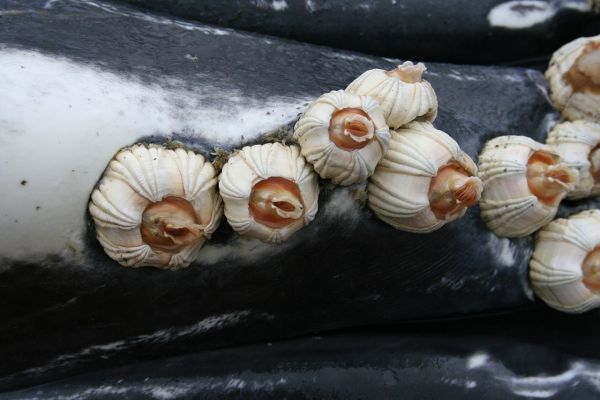 Barnacles cling to a marine surface using a powerful natural adhesive. (Photo: NOAA Photo Library)
Barnacles are small marine crustaceans that attach themselves permanently to hard surfaces such as rocks, piers, ship hulls, and even whales or turtles. Once they find a suitable surface, they secrete a strong natural adhesive and build a hard shell around themselves.
These conditions are exactly what these creatures need. Vessels that have been anchored for three months or more provide prime conditions for biofouling — the maritime industry’s term for the buildup of marine organisms on a hull. Depending on how bad the buildup gets, biofouling can increase a hull’s hydrodynamic drag by 10 per cent to 60 per cent.
Meet the “Bottom Cleaners”
Clearing that growth falls to crews of scuba divers with an unglamorous job title, “bottom cleaners”. Derek Hamm, a bottom cleaner with Obsessive Compulsive Divers in Marathon, Florida, put the scale of the problem bluntly: After four months at anchor, that’s “plenty of time for a lot of gross stuff to accumulate”.
Story continues below this ad
“The math on a single supertanker is staggering. Clearing one vessel typically takes a crew of five or six divers about four to five hours, working with hand scrapers and power washers. Multiply that across the roughly 600 ships anchored and waiting to clear the strait, and the labour adds up fast. As Brian McCauley, owner of McCauley Mooring and Diving, put it, the work itself “is straightforward and not complicated.” Still, the ships are too big for individual divers to handle alone.
Demand for these crews has spiked accordingly.
Barnacles Are Only One Hurdle
Even after a ship’s hull is scraped clean, biofouling is just the first item on a long checklist before oil can start flowing normally again. Iran has required shipping companies to register with the country before transiting the Strait. Minesweepers still need to clear the narrow channel of potential explosives before vessels can safely pass.
Safety officials are also urging caution. Jakob Larsen, chief safety and security officer at the Baltic and International Maritime Council (BIMCO), said the security situation “remains volatile” despite the ceasefire, warning that the central part of the strait is still mined and unnavigable, with only narrow inshore traffic zones near Oman and Iran reportedly clear.
Oil at Anchor
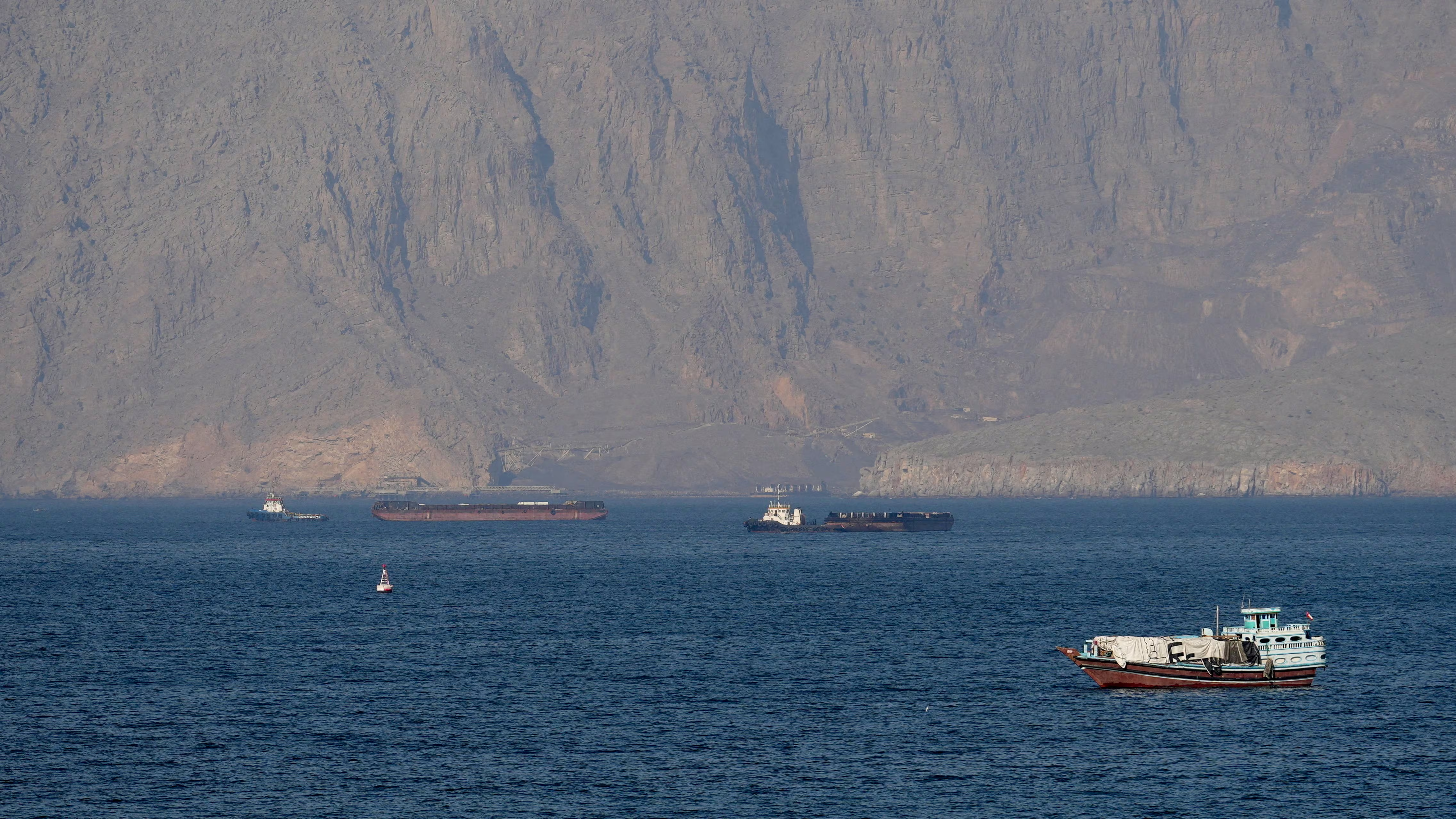 An oil tanker transits waters near the Strait of Hormuz. (Photo: Reuters)
Once ships start moving, the relief to the global oil supply still won’t be immediate. Out of the roughly 600 tankers stuck in the Gulf, only a couple of hundred are estimated to be large oil tankers carrying crude, and analysts caution that the oil aboard these ships represents a stockpile that has already been produced.
Story continues below this ad
Oil analyst Matt Smith noted on CNN that even as traffic ticked up briefly, it was “still not at the point where a ‘first mover’ is emerging” among shipping companies willing to test the waters.
The Bottom Line
Reopening the Strait of Hormuz was never going to be as simple as lifting a blockade. Between the registration requirements, the minesweeping, the insurance negotiations, and now an army of scuba divers scraping hundreds of thousands of square feet of barnacles off idle hulls, the restart of one of the world’s most important oil corridors is unfolding in slow motion — one barnacle at a time.