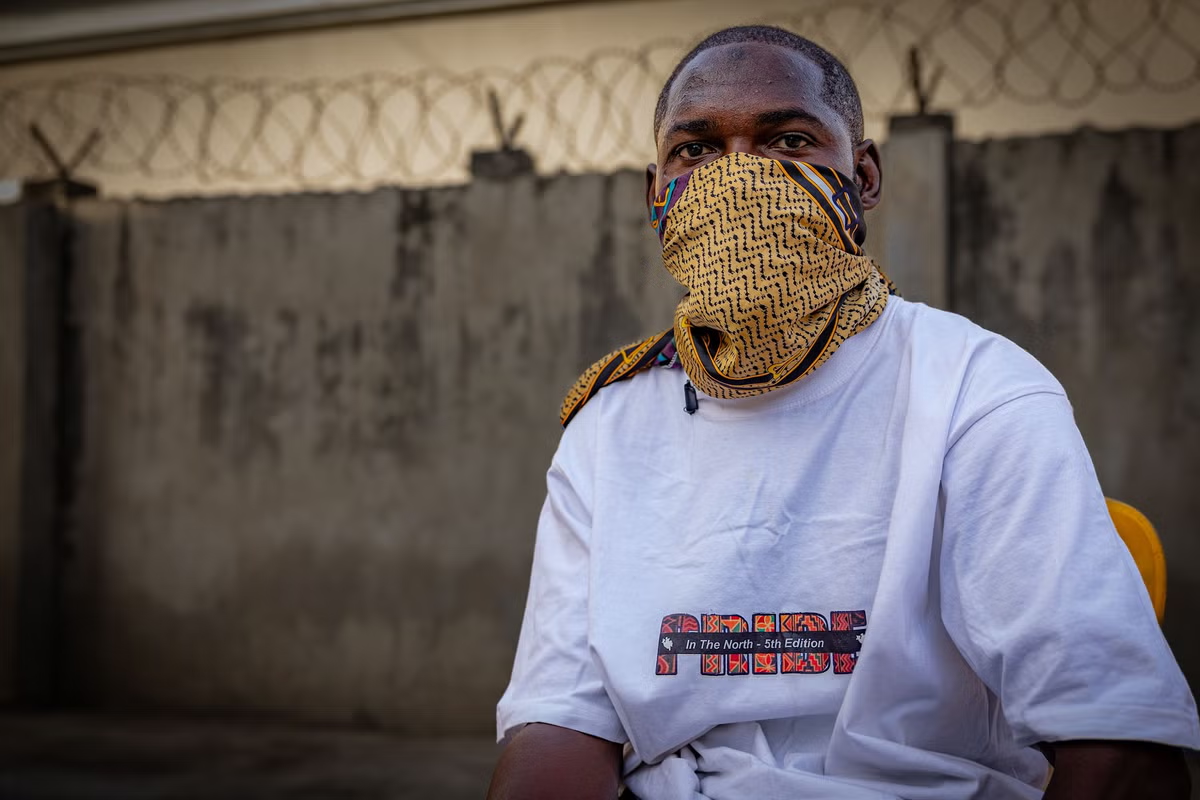
It started when Amed matched with a man online on a popular dating app. He thought they had friends in common and so, with his guard down, he agreed to meet.
The 36-year-old lives in Nigeria. It has some of the strictest laws against homosexuality in Africa. In the northern state of Kaduna, where he was living, same sex relationships are punishable by death under Islamic law.
And so it was not until he arrived at the meeting point that Amed realised he had made a potentially fatal mistake.
The man he was meeting had brought a gang of vigilantes, wielding sticks and makeshift weapons.
“He made me believe he meant me no harm. I trusted him,” explains Amed, terror etched across his face.
“When I got there, I realised he had actually plotted against me, just to extort money from me and ‘deal with me’. That was what he said.”
Stripped naked, Amed says his attackers filmed the torture they subject him to: “They were shouting, ‘Stone him to death, stone him to death’.
“It was brutal. They were beating me as if they wanted to kill me. I was so frightened I could not even speak. I thought I was going to die,” he recalls, his voice cracking.
“I gave them all the money I had in my bank account and yet they still posted the video online and sent it to my family.”
Amed, who is living with HIV and spoke to us anonymously from hiding, now realises he was the victim of a “kito” attack.
The term is Nigerian slang for entrapment and is used to describe a surge in violent, sometimes deadly, kidnap and blackmail attacks against members of the LGBTQ+ community.
Gangs catfish and target people online using dating apps and social media accounts. Victims are entrapped, tortured and filmed in order to extort ransoms. The videos are often shared with family members and then posted online, exposing victims’ sexuality and, in some cases, their HIV status, destroying their lives.
“They were shouting, ‘Kill him, kill him. He’s an abomination, an abomination’,” says Moussa, who was also assaulted by a gang of vigilantes and living at the same shelter.
He shared footage of the attack and in the video, he is seen stripped to his underwear, beaten with sticks and mocked as they hit him.
“I don’t know how I escaped being lynched that day,” he adds.
The Independent, which today is releasing its documentary Hunted about the attacks, contacted the Nigerian police about the scale of these assaults and efforts to combat them, but had not received a reply at the time of publication.
Under legislation introduced in Nigeria in 2014, same sex relationships are punishable by up to 10 years in prison and, in some northern states governed by Islamic law, the death penalty can be imposed.
This means many victims are too afraid to report attacks to the police, fearing they will be arrested for breaking these laws.
When Amed managed to escape the mob and flee home, instead of helping him, he says his father and brothers locked him up and assaulted him as punishment. He lost his job. He was eventually rescued and taken to a safe house.
“It’s not something I can explain,” he says, breaking down in tears. “I had nowhere to go.”
The stigma from these attacks can be huge, says Bethel Onyedikachi, head of the charity that runs the safe house where Amed and Moussa live.
The day before we arrived at the shelter, a member of the community, a gay pastor living with HIV whose sexuality and health status were exposed in a different kito attack, took his own life. Three years earlier, he had succumbed to societal pressure to marry and have children.
Some of these attacks have also resulted in murder.
In Lagos, in the south of the country, Yemi Ogunwa, who runs a similar shelter and support services to Bethel, says in one recent case, a 23-year-old man was tortured and thrown off the second floor of a hotel to his death.
“What made it even more painful was that during his funeral, there were community youths singing homophobic slurs around his family members while they were mourning,” Yemi continues, showing us a video of young men dancing and celebrating at the wake.