US President Donald Trump has predicted an approaching deal with Iran at least 37 times since March. Each time, no deal followed, CNN reported on Tuesday. On Monday (local time), he predicted it once more.
Trump’s pattern of imminent-deal predictions sits against a backdrop of actual negotiations that have included three rounds since April 2025 (in Muscat, Geneva and Rome), followed by Pakistan-mediated Islamabad Talks on April 11-12 2026.
While the negotiations have happened, the gap between actual diplomatic progress and Trump’s rhetorical timeline has widened. The war, which began on February 28, 2026, has killed more than 3,500 people in Lebanon, displaced over a million people, claimed 29 Israeli soldiers, and, according to US Democratic senators, could cost the United States between $630 billion and $1 trillion.
For India, the Strait of Hormuz — through which 65-70 per cent of Indian crude oil imports transit — has been a constant concern; a ceasefire that reopens the strait would substantially relieve Indian energy markets.
How it started
The predictions began on March 23, less than a month into the war. Speaking to reporters outside Air Force One, Trump said the two sides had reached “major points of agreement, I would say – almost all points of agreement.” Iran denied that any negotiations were taking place.
By the next day, Trump had settled into what would become a recurring refrain – that Iran was desperate to settle. “I think we’re going to end it,” he said. “I can’t tell you for sure.”
By March 25, Iran wanted to “make a deal so badly.” By March 26, at a Cabinet meeting, Iran was “begging to make a deal.” On March 29, asked by reporters on Air Force One whether he foresaw a deal within the week, Trump said: “I do see a deal in Iran, yeah,” according to CNN.
Story continues below this ad
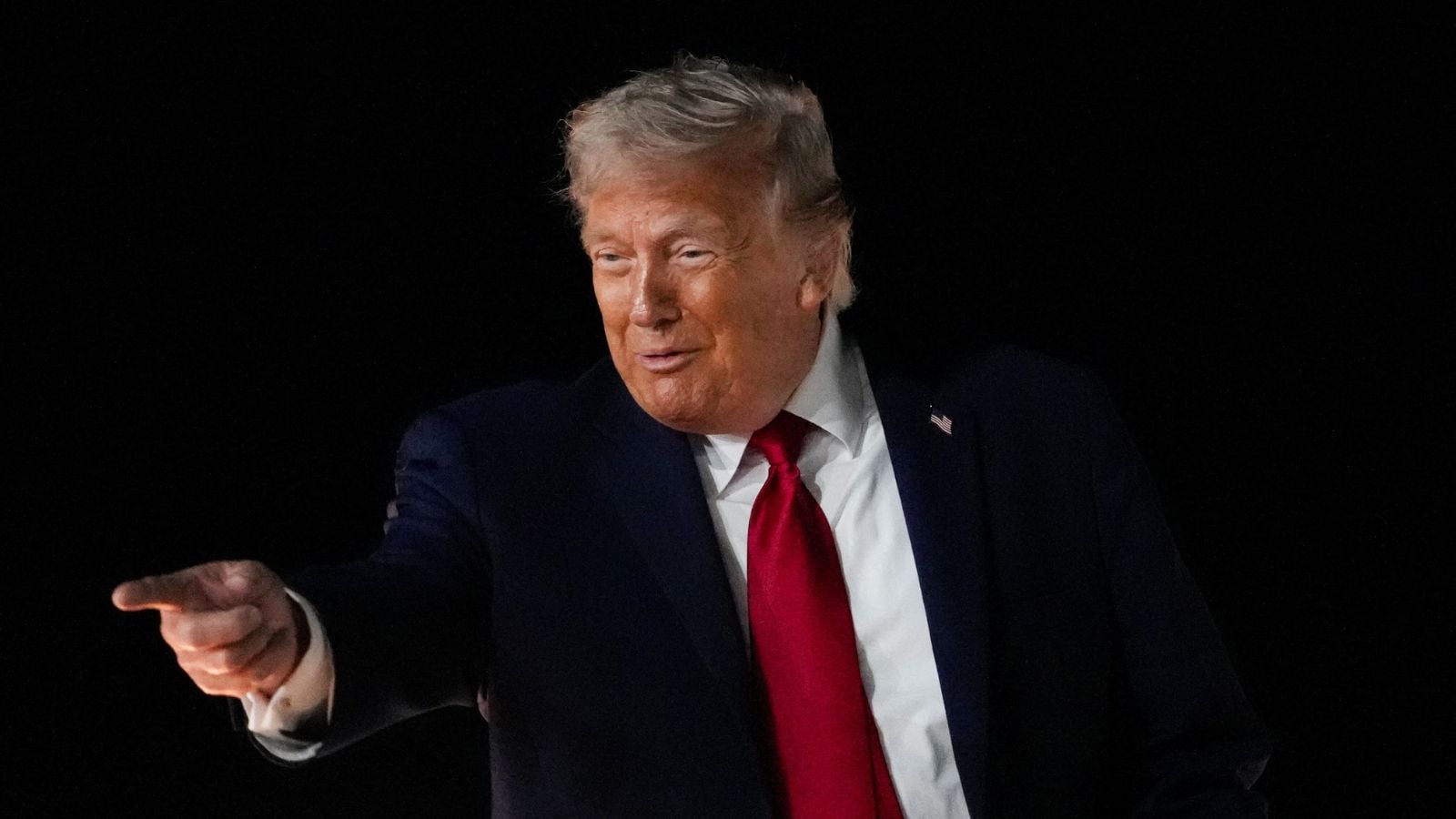
U.S. President Donald Trump salutes as he attends Game 3 of the NBA playoffs at Madison Square Garden in New York City, New York, U.S., June 8, 2026. (Photo: REUTERS)
The ceasefire and its unfulfilled promise
On April 6, Trump said the two sides had been “very close to a deal” before a setback. The following day, he announced a ceasefire – originally intended to last two weeks while both sides finalised an agreement.
On social media on April 7, Trump said they were “very far along” but needed two weeks for the Agreement to be finalised and consummated, adding that “it is an Honor to have this long-term problem close to resolution.”
No agreement followed. A week into the ceasefire, on April 15, Trump told Fox Business: “I think it’s close to over, I view it as very close to over. We’ll see what happens. I think they want to make a deal very badly.”
Days away, then days away again
The predictions grew more emphatic through mid-April. On April 16, Trump told reporters: “It’s looking very good that we’re going to make a deal with Iran, and it’s going to be a good deal.”
Story continues below this ad
On April 17, across three separate appearances, he said Iran had “agreed to everything,” that “I think we will get a deal in the next day or two,” and that “I don’t think there are too many significant differences.” On April 20, he posted on Truth Social: “It will all happen, relatively quickly!”
None of it did. Iran was still “dying to make a deal” on April 30. On May 1, Trump told reporters: “When the war ends, which shouldn’t be too long…”
May: Pattern continues
On May 18, Trump announced he was delaying military strikes for “two or three days” at the request of Middle Eastern countries, “because they think that they are getting very close to making a deal.”
He acknowledged, briefly, that the cycle had repeated itself. “We’ve had periods of time where we had – we thought pretty much getting close to making a deal, and it didn’t work out,” Trump said, before adding: “But this is a little bit different.”
Story continues below this ad
The next day, at a congressional picnic, he said: “We’re gonna end that war very quickly.”
By May 23, Trump said the deal was “largely negotiated, subject to finalisation,” that the administration was “getting a lot closer,” and that an announcement would come “shortly.” On May 28, in an interview with his daughter-in-law, Lara Trump, things were “close to a very good deal.”
Latest prediction: A deal within days
On Sunday, Trump told Axios: “We are very close to a final deal with Iran. It is going to be a good deal. I don’t want it to blow up because of what is happening now,” – a reference to fresh exchanges between Iran and Israel. It was at least the third time he had made such a claim to the outlet.
On Monday, at a tele-rally for Senator Lindsey Graham of South Carolina, Trump predicted “total victory” within two weeks. “We’re negotiating now; they want to make a very good deal,” he said, adding: “They’re willing to give us everything.”
Story continues below this ad
On Tuesday, in a post on X, Trump described his conversation with Israeli Prime Minister Benjamin Netanyahu: “He was hit (by Iran), and he hit back. I can’t blame him for that. Now they’ve called it quits. So they’re gonna leave each other alone for another week or something… They both agreed, through me, to stop. We’re in the final throes of a very good deal that will not allow in any way or form nuclear weapons. And the Strait will open up right away. It’ll open up immediately upon signing, which could be in two or three days.”
It was, by any count, far from the first time.
(Inputs from Reuters)