The shutdown of 13 oil flow stations in Delta State over the Warri ward delineation dispute threatens to cut Nigeria’s crude output by up to 400,000 barrels per day, raising fears of major revenue losses and a political crisis ahead of the 2027 elections.
Hundreds of protesters demanding implementation of a disputed ward delineation report have shut down 13 oil flow stations in Delta State, disrupting operations at major oil facilities and threatening as much as 400,000 barrels of Nigeria’s daily crude production, according to industry sources.
The shutdown, which began on Monday across communities in the Warri Federal Constituency, has raised concerns over the potential impact on Nigeria’s oil production targets, export commitments and government revenues if the standoff persists.
The affected facilities are operated by Renaissance Africa Energy Company, Chevron Nigeria Limited and Nestoil/Neconde.
Industry sources told PREMIUM TIMES that the 13 facilities collectively account for approximately 400,000 barrels of crude oil per day.
The affected flow stations are Odidi 1 and 2, Batan, Ogbanabou, Jones Creek, Otunana, Egwa 1 and 2, Abiteye, Makaraba, Olero Creek, Dibi Field and Opuekeba.
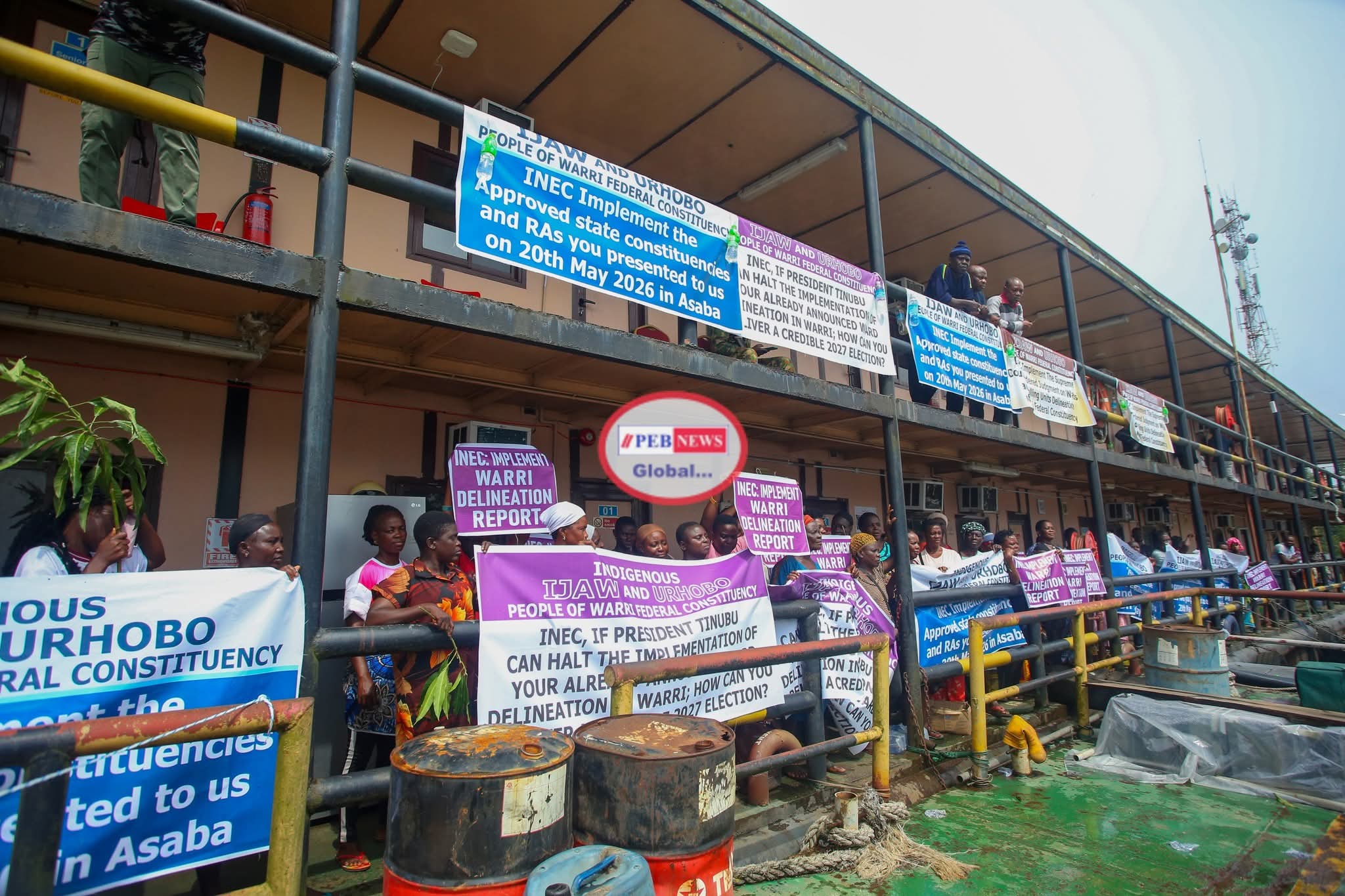
The protesters, mainly women and youths from Gbaramatu, Ogbe-Ijoh, Isaba, Egbema and Diebiri kingdoms in Warri South, Warri South-West and Warri North local government areas, occupied the facilities and prevented workers from accessing them, it was gathered.
Sources familiar with operations in the area said protesters also blocked the movement of logistics supplies through waterways serving the oil companies, further disrupting production activities.
The protest stems from growing tensions over the implementation of a ward delineation exercise conducted by the Independent National Electoral Commission (INEC) in compliance with a Supreme Court judgement.
The protesters insist that oil production will remain halted until INEC implements the final delineation report presented to stakeholders in Asaba on 20 May.
The action came less than 24 hours after PREMIUM TIMES reported that Ijaw and Urhobo groups in the constituency accused President Bola Tinubu of interfering in the delineation exercise.
From the photos posted online and reviewed by PREMIUM TIMES, demonstrators carried banners and placards bearing messages such as “INEC: Implement Warri Delineation Report,” “Court Ordered Judgement on Wards and Polling Units Delineation,” and “No Implementation, No Production.”
Others read, “INEC implement the approved state constituencies and RAs you presented to us on 20th May 2026 in Asaba”, “INEC if President Tinubu can halt the implementation of your already announced ward delineation in Warri, how can you deliver a credible 2027 election?”
Speaking for the protesters, Maria Ebike accused INEC of delaying implementation of a process she said had already been concluded.
“We have waited patiently for the authorities to do the right thing. Since they continue to ignore our voices, we have no option but to demand justice through peaceful protests. No implementation of the ward delineation, no oil production,” she said.
Other community representatives echoed the position, insisting that the delineation exercise had been completed and that implementation was the only outstanding issue.
The protesters argued that the exercise was intended to address longstanding concerns about political representation in the constituency and alleged that efforts were being made to frustrate its implementation.
The dispute can be traced to a 2022 Supreme Court judgement ordering a fresh delineation of electoral wards and polling units in Warri Federal Constituency.
Following consultations and fieldwork, INEC conducted the exercise and presented its final report to stakeholders in Delta State on 20 May.
However, the report has deepened tensions among Ijaw, Urhobo and Itsekiri groups, each of whom has a significant stake in the politically sensitive constituency.
Some Ijaw and Urhobo leaders have alleged that influential interests from Itsekiri where the President’s wife hails from are seeking to block implementation of the report, a claim PREMIUM TIMES could not independently verify.
The disruption occurs during a sensitive period for Nigeria’s oil sector as the federal government seeks to raise crude production by two million barrels per day by 2027 and boost foreign exchange earnings.
A prolonged shutdown could affect national production volumes and reduce government revenues from crude exports.
This newspaper had reported that in April crude oil output rose to 1.66 million barrels per day representing 99 per cent of the Organisation of Petroleum Exporting Countries quota.
PREMIUM TIMES contacted the Presidency for comments on the protesters’ allegations and the potential economic implications of the shutdown.
A message sent to the Special Adviser to the President on Information and Strategy, Bayo Onanuga, had not been responded to as of the time of filing this report.
The newspaper also sought comments from the Nigerian Upstream Petroleum Regulatory Commission on the number of affected facilities, estimated production losses and measures being taken to restore operations.
The commission’s Head of Media and Corporate Communications, Eniola Akinkuotu, had yet to respond an email from PREMIUM TIMES.
As of Tuesday morning, neither the affected oil companies nor the regulator had issued public statements on the scale of production losses arising from the shutdown.
The protesters said their action would continue until authorities take concrete steps towards implementing the ward delineation report ahead of preparations for the 2027 general elections.