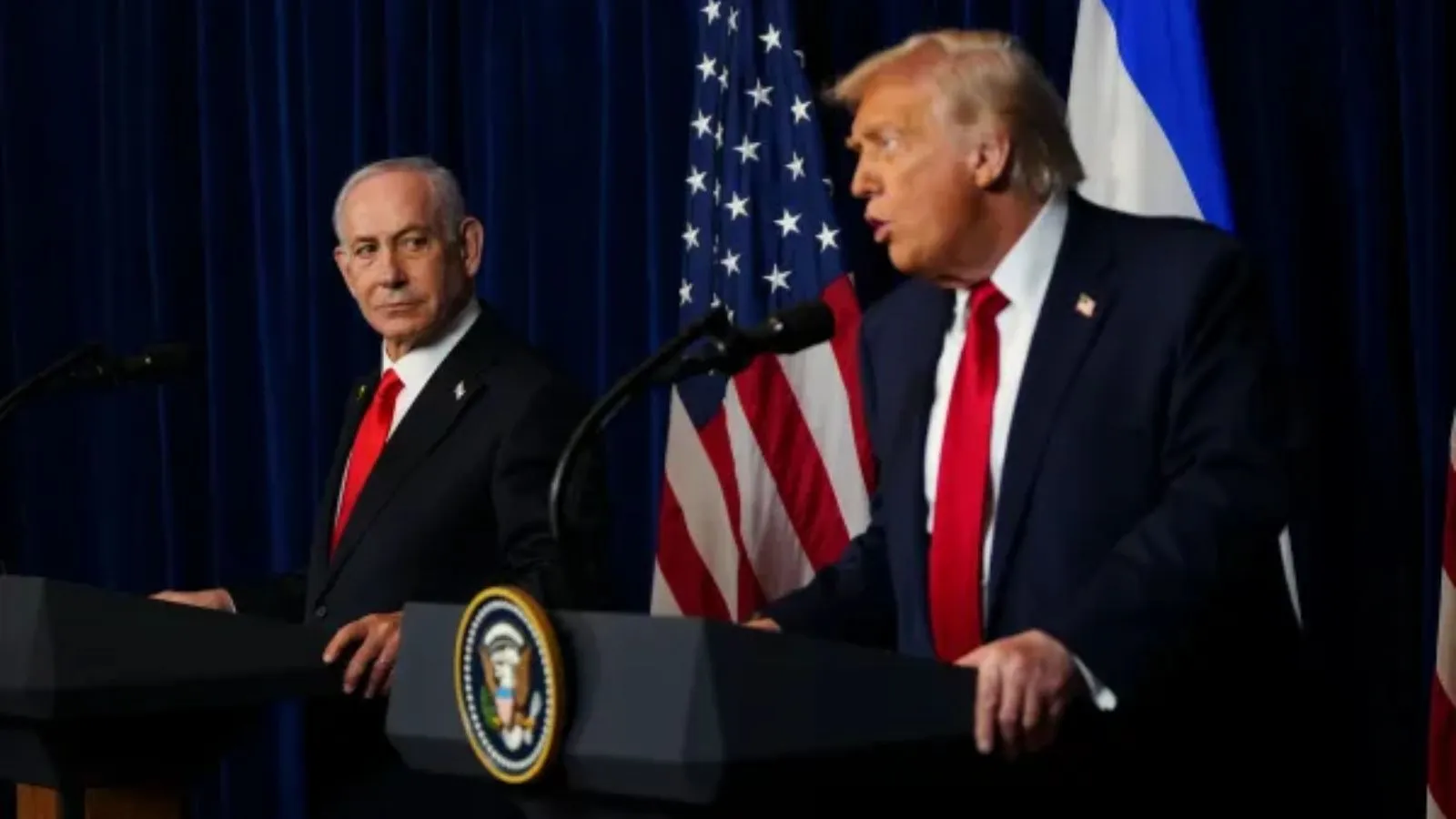
US President Donald Trump on Tuesday defended his relationship with Israeli Prime Minister Benjamin Netanyahu but publicly urged Israel to exercise greater restraint in Lebanon, amid apprehensions over how the emerging US-Iran agreement should reshape the conflict in the region.
Speaking on the sidelines of the G7 summit in France, Trump dismissed suggestions of a rift with the Israeli leader. “No, we have a great relationship,” news agency Reuters quoted him as saying, when asked if he was frustrated with Netanyahu. However, he added that Israel needed to be “more responsible” with regard to Lebanon and revealed that he had objected to an Israeli strike on Beirut.
“I told Israel that I did not like the attack on Beirut,” Trump said, suggesting that Syria should deal with Hezbollah rather than Israel launching further military operations in Lebanon.
Trump’s remarks came as conflicting accounts emerged over whether Lebanon forms part of the still-unpublished agreement aimed at ending months of conflict involving the United States and Iran.
Iran insists Lebanon part of deal
Iranian Foreign Minister Abbas Araghchi said any agreement ending hostilities with Washington would also require Israel to withdraw from Lebanese territory captured during the conflict, news agency Associated Press reported.
“The end of the war in Lebanon is an inseparable part of the complete end of the war,” Araghchi said in remarks to foreign diplomats aired on Iranian state television.
“Without the withdrawal of Israeli forces from the territories they occupied during this war, the war has not fully come to an end,” he added, warning that any further Israeli attacks on Lebanon would be viewed by Tehran as a violation of the memorandum of understanding.
Story continues below this ad
The comments appeared to contradict the position outlined by Israeli officials.
Netanyahu distances Israel from agreement
Israel is not a party to the US-Iran agreement currently being finalised. Prime Minister Benjamin Netanyahu said on Monday that the deal represented “President Trump’s decision” and stressed that Israel would continue to pursue its own security priorities.
He said Israeli forces would remain in the buffer zone in southern Lebanon “as long as necessary”. The differing interpretations have raised fresh questions about the scope of the proposed agreement and whether unresolved issues could undermine its implementation.
Questions remain over final terms
The agreement, expected to be formally signed later this week in Geneva, is intended to halt a conflict that has destabilised West Asia, disrupted shipping through the Strait of Hormuz and fuelled volatility in global energy markets.
Story continues below this ad
According to senior US officials, the framework provides for the immediate reopening of the Strait of Hormuz and the lifting of the US blockade on Iranian ports. It also envisages a 60-day period of negotiations over Iran’s nuclear programme.
Pakistani officials involved in mediation efforts have said the arrangement could eventually include phased sanctions relief, the release of frozen Iranian assets and economic assistance tied to Iranian compliance.
However, several key issues remain unresolved, including the future of Israel’s military presence in Lebanon and the fate of Iran’s stockpile of highly enriched uranium.
G7 leaders back diplomatic breakthrough
The Middle East dominated discussions at the G7 summit, where leaders from Egypt, Qatar and the United Arab Emirates joined talks focused on regional stability.
Story continues below this ad
Ahead of the meetings, the leaders of Britain, France, Germany and Italy, joined by Canada, welcomed what they described as a “diplomatic breakthrough” and urged all parties to swiftly implement the agreement.
They stressed the importance of reopening the Strait of Hormuz and pursuing detailed negotiations to secure a lasting peace.
Trump’s public appeal for Israeli restraint underscored the delicate balancing act facing Washington as it seeks to translate a tentative diplomatic breakthrough with Iran into a broader regional settlement, even as some of America’s closest allies remain unconvinced about its terms.
(With inputs from Reuters, AP)