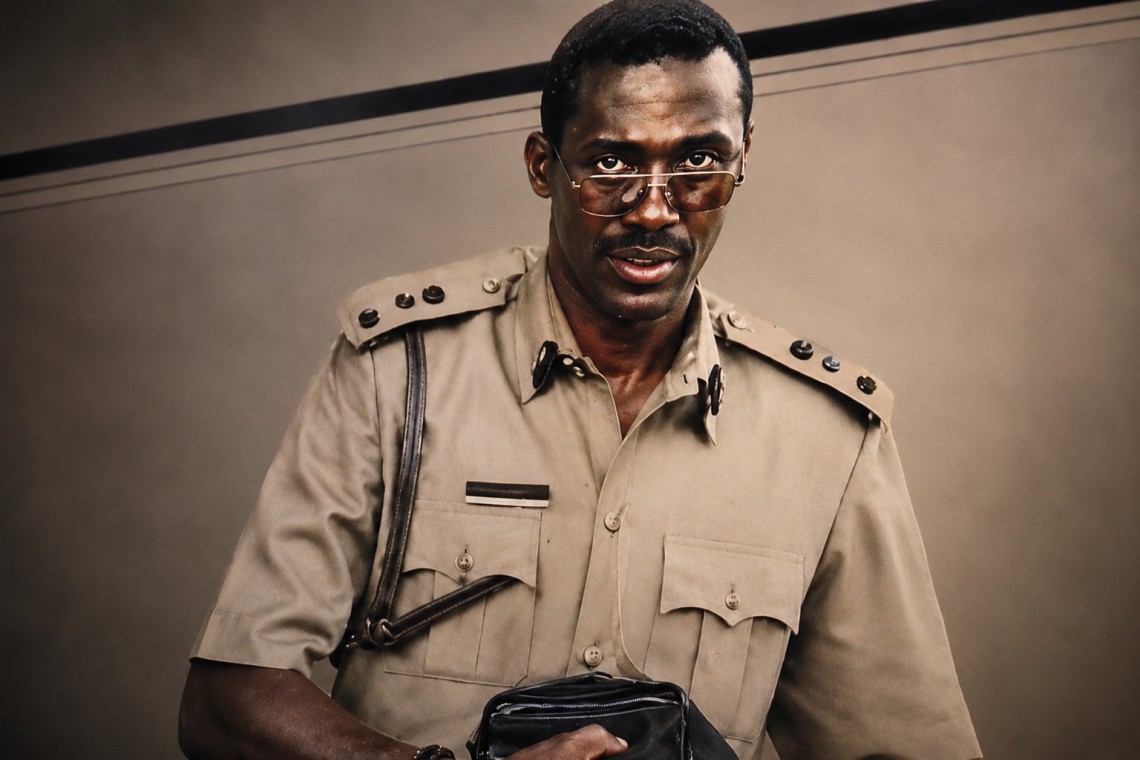
A former commander of the Directorate of Military Intelligence Security Group under the late military ruler, Gen. Sani Abacha, retired Col. Frank Omenka, has broken more than three decades of silence, insisting he has no regrets over his role during one of Nigeria’s most controversial military eras.
Speaking during his first public interview on Thursday, Omenka dismissed long-standing allegations of torture, intimidation and other human rights abuses levelled against him, maintaining that he merely carried out his constitutional responsibilities as an investigator.
“I have nothing to apologise for because I committed no offence,” the retired military officer declared. “I did my job professionally. I didn’t kill anybody. I didn’t touch anybody.”
The virtual interview, organised by Experiential Leadership in Africa in partnership with PREMIUM TIMES, featured questions from journalists and former detainees who challenged Omenka over his role in the investigations that followed the alleged 1995 coup plot against the Abacha regime.
For years, Omenka has been one of the most controversial figures associated with the military government’s security apparatus, with several former political detainees accusing him of torture, intimidation and psychological abuse during interrogations.
Many of the allegations surfaced during the Human Rights Violations Investigation Commission, popularly known as the Oputa Panel, where victims recounted their experiences under military detention.
Omenka, who had relocated abroad before the panel commenced sittings, said his departure from Nigeria had nothing to do with escaping accountability but was to reunite with his children overseas.
Among those who confronted him during Thursday’s interview was former TheNews magazine editor, Kunle Ajibade, who was sentenced to life imprisonment by a military tribunal after the 1995 coup investigations before receiving a pardon.
Ajibade described Omenka as “a gangster, a sadist and a terrorist,” accusing him of deploying threats and intimidation during interrogations.
Former Sunday Concord editor and presidential spokesman, Olusegun Adeniyi, had also previously alleged that Omenka threatened to have his wife raped while he was in detention—an allegation that has remained one of the most disturbing accounts from the Abacha years.
Responding, Omenka acknowledged using harsh language during interrogations but argued that such methods were part of intelligence-gathering and should not be mistaken for personal cruelty.
“It had nothing to do with me as a human being. It had everything to do with me as a professional. All we wanted was to get to the truth,” he said.
He maintained that his investigative panel neither convicted nor sentenced suspects, stressing that military tribunals were solely responsible for determining guilt and imposing punishments.
“My panel was not a tribunal. It was an investigating team,” he stated.
When repeatedly asked whether he regretted the suffering endured by detainees and their families, Omenka remained unapologetic.
“You say people were taken to prison. My duty was to take them there. I didn’t judge them. I didn’t sentence them,” he added.
The retired intelligence officer’s remarks have reignited debates over accountability for alleged human rights violations committed during Nigeria’s military rule, particularly under the Abacha administration, which was widely criticised by local and international rights groups for arbitrary arrests, torture, prolonged detention without trial and suppression of political dissent.
Despite the renewed scrutiny, Omenka insisted history had unfairly portrayed his role and maintained that he simply discharged the responsibilities assigned to him as a military intelligence officer.
FOLLOW US