“Above all, if General Abubakar had not left the Nigerian Air Force to join the Nigerian Army, would he have become [Nigeria’s] Head of State and Commander-in-Chief of the Armed Forces? We do not have to wonder too much because clearly, there were divine forces at work in his life….”
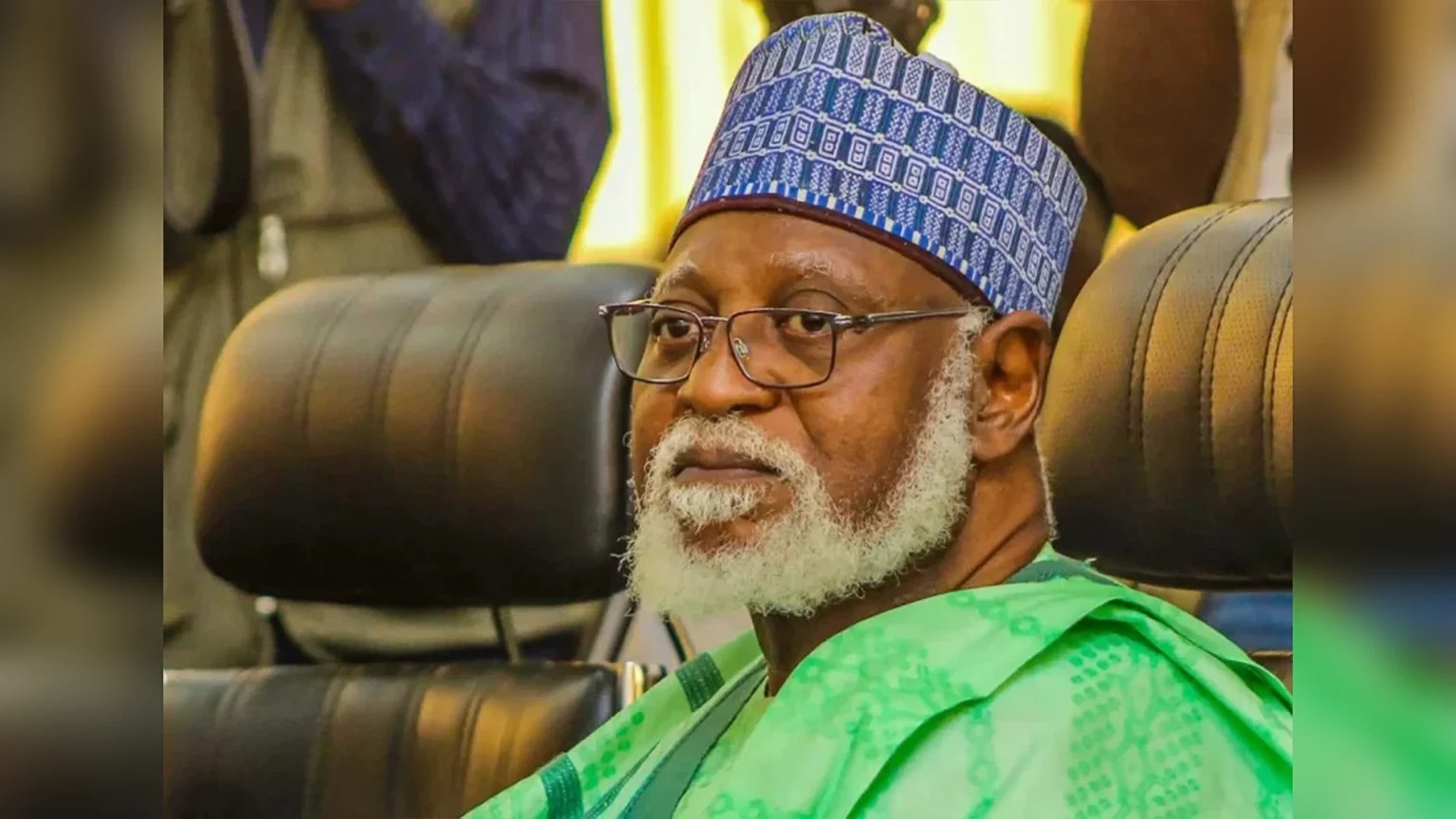
Abdulsalami Abubakar would likely never have become Nigeria’s head of state if he had not switched from the Nigerian Air Force (NAF) to the Nigerian Army (NA).
Former military president, Ibrahim Babangida, a retired general, stated this in the foreword to Abdulsalam’s autobiography, titled Call of Duty, launched on Saturday in Abuja.
“We do not have to wonder too much because clearly, there were divine forces at work in his life and those were further confirmed with the role he went on to play in restoring peace to the polity after a serious political storm usually experienced in developing countries,” Mr Babangida wrote in the book’s foreword.
Abubakar, a retired army general, became head of state in June 1998 after the sudden death of Sani Abacha, then a serving general, who had ruled from 1993 to 1998.
IBB recalled that Abubakar had transferred from NAF to the Army in 1966 after his flying training in West Germany was cut short. He was subsequently commissioned as a second lieutenant in October 1967.
Since independence, no NAF officer has served as Nigeria’s head of state or military president. Virtually all military rulers were from the Nigerian Army, which has historically been the largest and most politically influential branch of the armed forces.
The army played the dominant role in the coups and counter-coups that shaped Nigeria’s political trajectory from 1966 until its return to democratic rule in 1999. As a result, army officers occupied the centre of power and succession arrangements during successive military administrations.
Since its independence in 1960, Nigeria has had eight military leaders, all drawn from the army.
They are Johnson Aguiyi-Ironsi (January 1966 – July 1966), Yakubu Gowon (1966 – 1975), Murtala Muhammed (1975 – 1976), Olusegun Obasanjo (1976 – 1979), Muhammadu Buhari (1983 – 1985), Ibrahim Babangida (1985 – 1993), Sani Abacha (1993 – 1998), and Abdulsalami (1998 – 1999).
NAF, by contrast, was established only in 1964 and remained considerably smaller than the army.
During periods of military rule, officers who commanded troops on the ground and controlled strategic military formations wielded the greatest political influence. Consequently, army officers were more likely to emerge as key actors in power struggles and leadership transitions.
By transferring from the Nigerian Air Force to the Nigerian Army in 1966, Abdulsalam unknowingly positioned himself within the institution that would dominate Nigeria’s political leadership for more than three decades. His eventual emergence as head of state in 1998, therefore, lends considerable weight to Mr Babangida’s argument that Abubakar’s switch fundamentally altered the course of his life.
Indeed, had he remained in NAF, he would have belonged to a service branch that has never produced a head of state. His transfer to the army not only changed the trajectory of his military career but also placed him on the path that ultimately led him to become Nigeria’s military ruler and oversee the country’s transition to democratic governance in 1999.