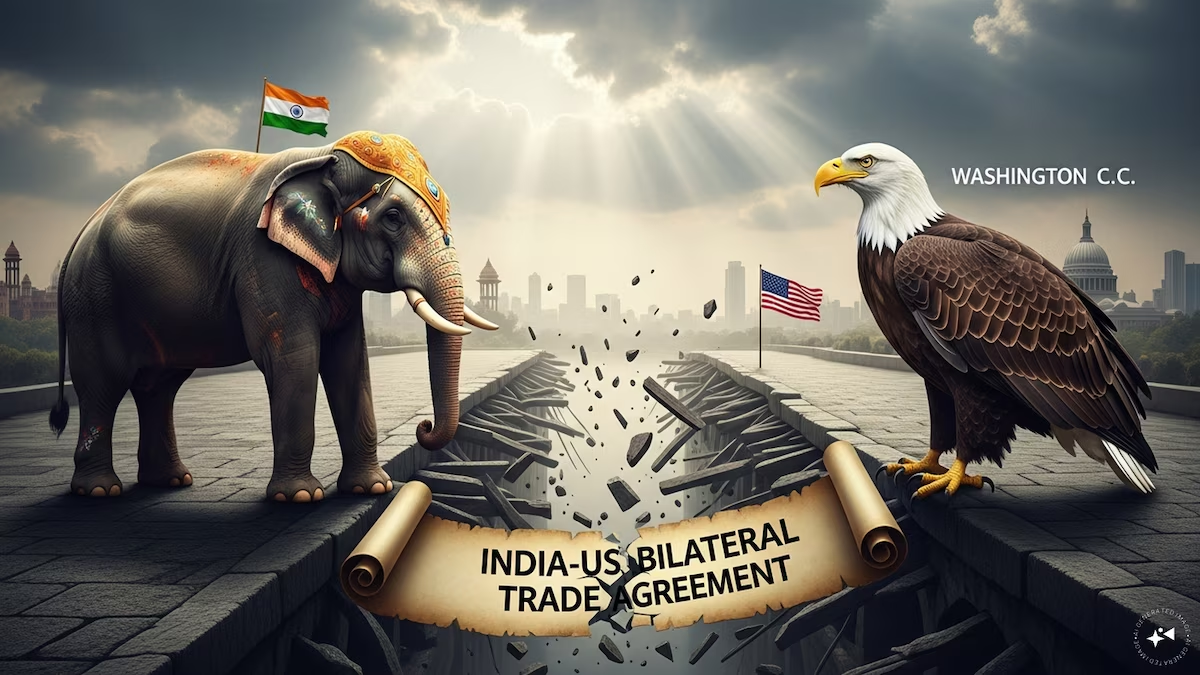
In a report titled “Why India Is Stepping Back from the US Trade Deal”, the think tank said expectations were high after US Ambassador Sergio Gor stated on May 30 that the deal was “99% ready”. However, it argued that negotiations have since stalled because the original framework outlined in the India-US Joint Statement of February 7, 2026, has effectively broken down.
GTRI said the February framework involved the US offering reductions in reciprocal tariffs on Indian exports from 25% to 18%, in return for wide-ranging concessions from India across sectors including agriculture, energy, defence, aircraft, digital services and advanced technologies.
Ajay Srivastava, Founder of GTRI, said a subsequent US Supreme Court ruling on February 20 invalidated the reciprocal tariff regime, removing what he described as the key US concession in the proposed deal. He said the US is now seeking negotiations “on the basis of benefits it can no longer legally deliver”.
From India’s perspective, Srivastava said the BTA is increasingly resembling a “one-way market access agreement” rather than a balanced trade pact, with India being asked to take on long-term commitments without comparable certainty in return.
He added that even if signed, the agreement may not shield India from future US trade actions, pointing out that Washington has previously initiated Section 301 investigations and imposed trade restrictions even on countries with existing trade agreements.
Srivastava further said the proposed BTA appears less like a framework for mutual economic gain and more like a mechanism to secure preferential access for US exports and strategic interests.
He said India may view delaying or reconsidering the agreement as a more prudent option than entering into commitments that could impose higher long-term costs than the tariff relief on offer.