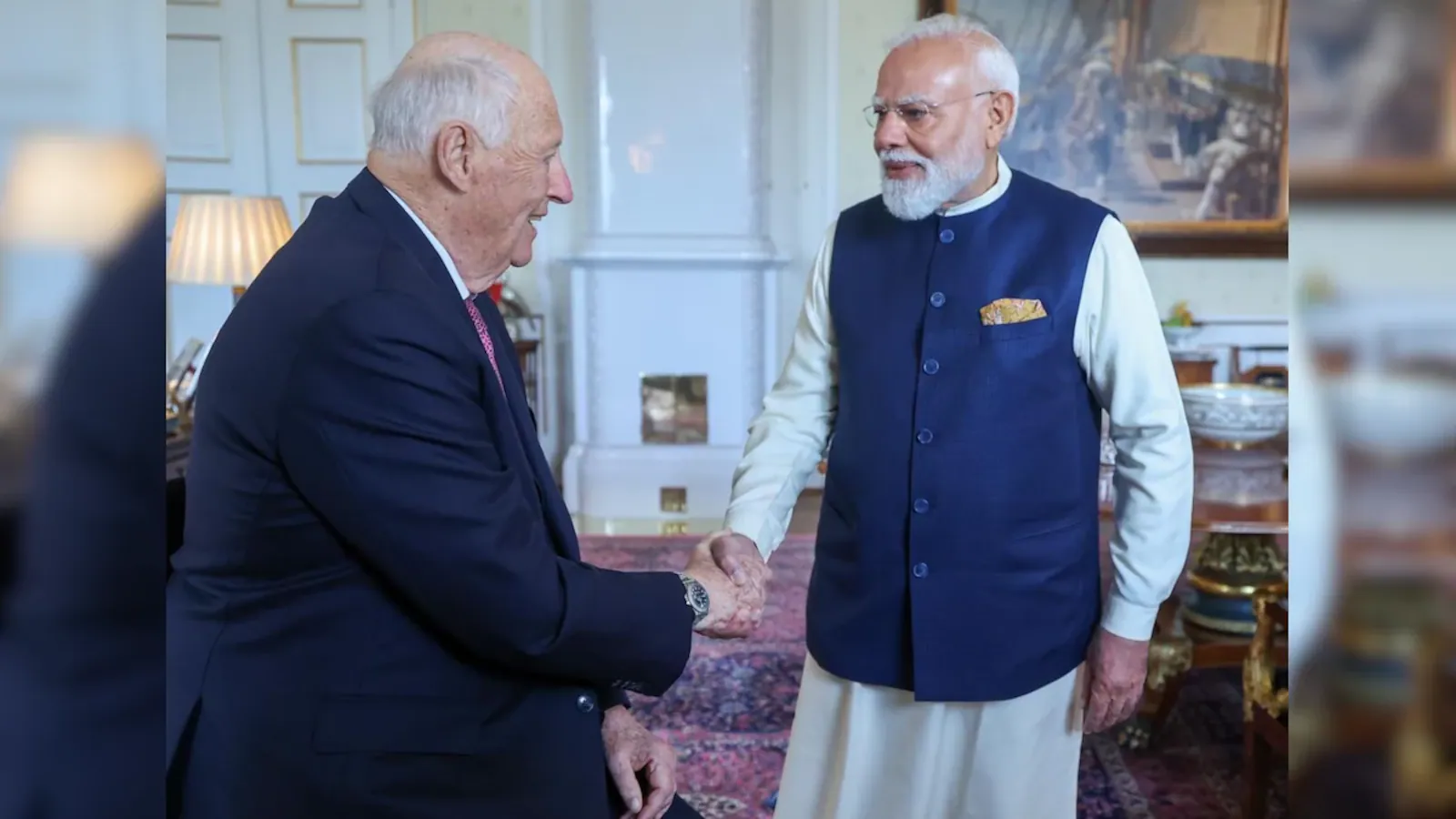
Prime Minister Narendra Modi’s first-ever visit to Norway, the first by an Indian prime minister in 43 years, has marked a decisive turning point in bilateral relations, producing a landmark green strategic partnership, over 30 signed agreements, and a reinvigorated India-Nordic alliance built around clean energy, maritime cooperation, and technology.
In an exclusive interview to NDTV, Norway’s Ambassador to India, May-Elin Stener, called the visit “very successful” and pointed to a sweep of concrete outcomes that she said would define the partnership for years to come.
“We now have a good framework for cooperation in the future. It has been thoroughly strengthened and we are very happy about that,” Ambassador Stener said during the exclusive interaction.
A Green Partnership With Real Teeth
At the heart of the visit was the signing of a Green Strategic Partnership, an agreement that goes beyond rhetoric and plugs into Norway’s decades-long experience as an energy superpower now navigating its own transition toward cleaner fuels.
Ambassador Stener was candid about Norway’s dual role. “We have been an energy superpower since we found oil and gas in the early 70s, and now we are transitioning, trying to do a responsible transition, not too abruptly, precisely because there are needs in this world still for oil and gas,” she said.
That experience, she argued, gives Norway cutting-edge solutions directly relevant to India’s green ambitions. Carbon Capture and Storage, or CCS, was cited as a flagship example. India’s Minister for Oil and Gas, Hardeep Singh Puri, had visited Norway last year to examine a new CCS facility that stores carbon underwater, technology that Norway is keen to share with India.
“This new green strategic partnership will elevate this cooperation and take it into the future,” she added.
Trade Gets A Boost As EFTA Agreement Takes Hold
The visit also came at a significant moment for trade. The Trade and Economic Partnership Agreement between India and the four-nation EFTA bloc, which includes Norway, Switzerland, Iceland and Liechtenstein, entered into force on October 1 last year, giving bilateral commerce a formal structural backbone.
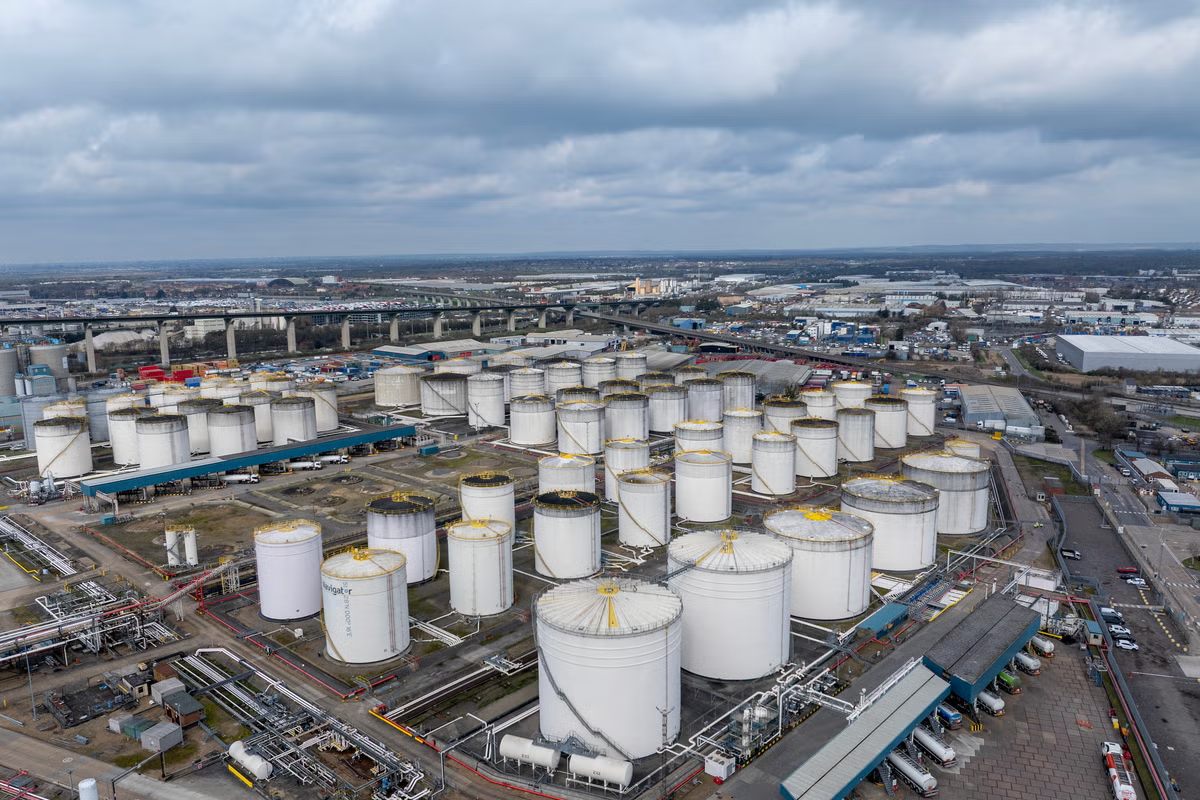
Ambassador Stener pointed to a telling early signal of the agreement’s potential: Norwegian energy company Equinor completed its first-ever LNG delivery to India in May, just weeks before the summit, as part of a 15-year supply deal with Deepak Fertilisers.
“This will help energy delivery into India at the same time as Deepak Fertilisers will be able to provide fertilisers in a better way. It’s an example of better trade deals and very good follow-up of the trade and economic partnership agreement,” she said.
The number of Norwegian companies operating in India – now around 160 – has doubled over the last decade, a trajectory she expects will accelerate further in the summit’s wake.
Maritime Sector: The Quiet Powerhouse
While energy grabs headlines, the Ambassador was emphatic that maritime cooperation may be the most consequential pillar of the relationship right now.
“Maybe the most important part for Norway at this point, where we cooperate more with India on the business side than in any other sector, is the maritime sector,” she said. “We are both big maritime powers.”
Norway is already sending approximately 10% of its ships to be built in Indian shipyards. With India’s Sagarmala Programme and its Vision 2047 ambitions for green shipbuilding and a sustainable blue economy, the Ambassador sees significant room for further convergence. “Norwegian shipbuilders are looking to India to build more ships as part of India’s ambitions to have more shipbuilding here,” she noted.
The India-Nordic Summit: More Than A Sideshow
The third India-Nordic Summit, which brought together the prime ministers of all five Nordic nations alongside PM Modi, was described by the Ambassador as a central component of the visit – not a peripheral one. The summit elevated ties to a Green Technology and Innovation Strategic Partnership, reflecting a shared commitment to rules-based international order among democracies.
“For all five Nordic Prime Ministers, it was a very good opportunity to sit down with the leader of the most populous country in the world,” she said. Beyond energy and trade, discussions ranged from geopolitical instability to the conflict in Ukraine, with the Ambassador acknowledging that India’s perspective on Russia looks different from Oslo’s vantage point, while underscoring the value of continued dialogue.
What Comes Next
With six ministerial exchanges already completed in the year leading up to the summit, Ambassador Stener signalled that high-level engagement is set to intensify, with new cooperation frameworks now also taking shape in health technology and artificial intelligence.
“There are so many more issues to discuss,” she said. “We will definitely want high-level engagements to continue.”
The visit has also earned PM Modi Norway’s highest civilian honour – a symbolic capstone to what both sides are framing as the dawn of a genuinely strategic relationship.