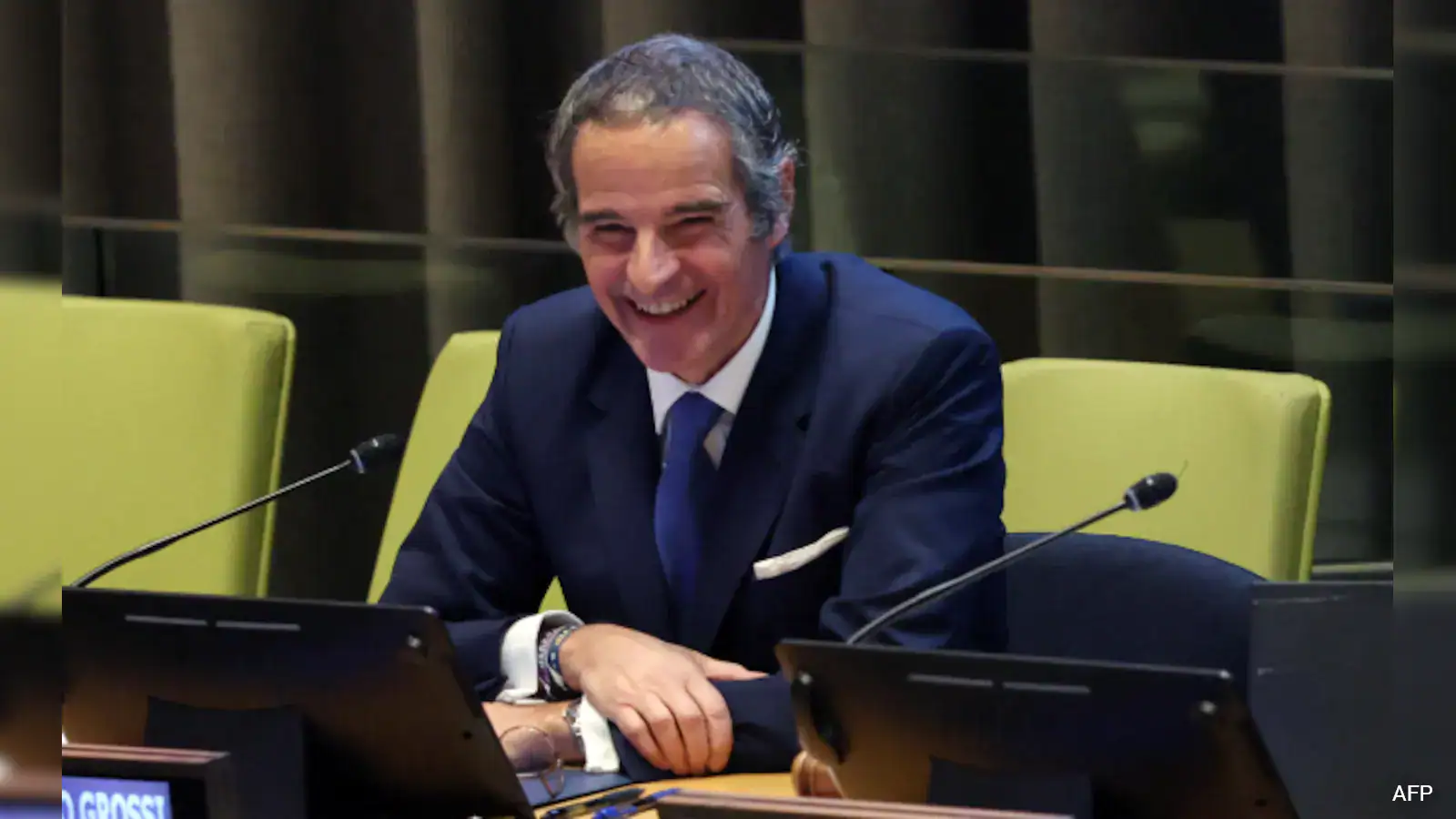
In a significant diplomatic signal at a time of churn in global geopolitics, Rafael Mariano Grossi, the Director General of the International Atomic Energy Agency (IAEA) and a leading contender for the next United Nations Secretary General, has said it is “only logical” that India should aspire to be on a permanent seat on the UN Security Council.
Speaking to NDTV’s Science Editor Pallava Bagla in Vienna, Grossi’s remarks carry particular weight not only because of the ongoing race to succeed the current UN chief, but also because of his stature as the head of the world’s top nuclear watchdog and a seasoned global diplomat. His comments effectively amount to a strong endorsement of India’s case for an expanded Security Council.
“I think it’s only logical that countries like India, and there are others, have this aspiration,” Grossi said. He stressed that this demand reflects the changing global order, adding that “the world of 2026 is not the world of 1945.” In doing so, he underlined a core argument long made by India and other emerging powers that the present UN architecture is outdated and in urgent need of reform.
Grossi, widely regarded as a frontrunner in the race for the UN’s top job, however, struck a careful diplomatic balance. While acknowledging India’s claim, he underscored the institutional limits of the Secretary General’s role. “The Secretary General is not the one with the magic wand deciding which formula,” he said, pointing out that decisions on the composition of the Security Council must emerge from broad consensus among member states.
Yet, even as he exercised restraint, his broader message was clear. India’s global weight, he said, is already undeniable regardless of formal membership. “Irrespective of a seat at the Security Council, India’s influence and weight in the world is there,” he noted, reflecting the country’s growing geopolitical and economic clout.
Perhaps more importantly, Grossi used the opportunity to call for reform of the United Nations system itself. While he avoided prescribing specific changes, he made it clear that change is inevitable. “Reform will happen at some point,” he said, even as he shifted focus to the immediate challenge of making existing institutions work. “What worries me is what is happening now. What do we do with the world we have? What do we do with the Security Council we have?”
His remarks come as the race to succeed the current UN Secretary General Antonio Guterres gathers pace. Guterres, who has been in office since 1 January 2017, completes his second term on 31 December 2026, after which a new Secretary General will take charge from January 2027.
The contest has already drawn global attention, not least because for the first time there is strong momentum for a woman to lead the UN. Among the candidates currently in the fray are multiple women leaders, including former Chilean President Michelle Bachelet and senior UN official Rebeca Grynspan. This reflects a broader push within the international community for gender balance at the highest level of multilateral leadership.
Grossi, however, stands out in the field because of his deep experience in navigating some of the world’s most sensitive crises. As head of the IAEA since 2019, he has been at the centre of high stakes negotiations on Iran’s nuclear programme, consistently urging dialogue and engagement. He has repeatedly emphasized that diplomacy remains “the only path toward a durable solution” in the Iran crisis.
At the same time, his handling of the Ukraine conflict has drawn attention. Grossi has played a key mediating role in ensuring nuclear safety around Ukrainian facilities, including negotiating arrangements to allow repairs at the Zaporizhzhya nuclear plant during the conflict. His ability to maintain dialogue even under extreme geopolitical tension is seen as a major strength in his candidacy.
Equally relevant from India’s perspective is Grossi’s consistent support for the country’s nuclear programme and strategic rise. In multiple interactions with NDTV, he has described India’s nuclear journey as “logical” and well structured, endorsing its policy choices and long term vision. He has also backed India’s nuclear expansion plans and policy reforms, describing the country as an important global player in the atomic energy domain.
This long record of engagement makes his remarks on India’s place in global governance particularly significant. By characterizing India’s claim to a permanent Security Council seat as logical, Grossi has aligned himself, at least in principle, with the argument that the UN must evolve to reflect contemporary realities.
At the same time, he emphasised that effective multilateralism will depend less on institutional restructuring alone and more on how existing bodies function in a divided world. “Working with India, very closely with India, as I have done in the IAEA, will be indispensable,” he said, highlighting the country’s central role in addressing global challenges.
As the UN approaches a critical leadership transition amid wars, climate crises and shifting power dynamics, Grossi’s comments signal both continuity and change. They reflect a recognition that the legitimacy of the United Nations will increasingly depend on how well it adapts to the geopolitical realities of the 21st century, with India firmly at the centre of that conversation.