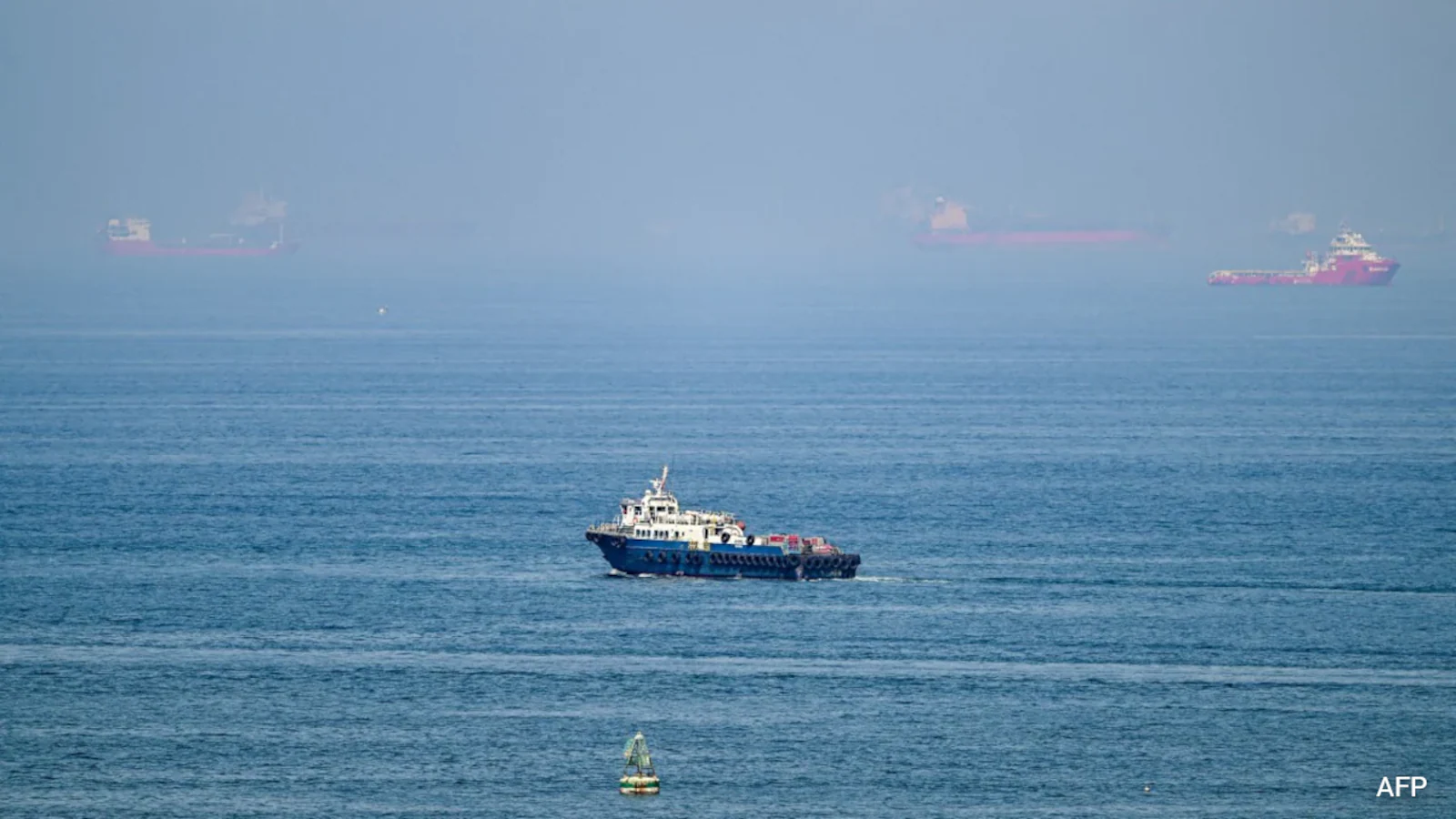
Iran is planning to introduce charges for ships passing through the Strait of Hormuz, saying the move could generate up to $40 billion (around Rs 3.77 lakh crore) a year.
Tehran wants ships to pay for services such as security, safety and environmental protection while crossing the strategic waterway, according to a report by the Wall Street Journal (WSJ).
Iran has reportedly discussed the proposal with Gulf countries and China after the recent US-Iran agreement that ended hostilities and reopened the Strait.
Tehran says that if the plan goes ahead, other Gulf countries should also be part of the agreement and receive a share of the money collected from ships.
The Strait of Hormuz is one of the world’s most important shipping routes, with nearly a fifth of global oil supplies passing through it every day. Any new charges could increase shipping costs and affect global trade.
The report says that around 70 ships crossed the Strait of Hormuz on Wednesday, the highest number since the conflict began, as compared to about 130 oil tankers that passed through the Strait every day on average before the war.
“Everyone needs to know that management of the strait will never return to the way it was before,” said Iran’s chief negotiator, Mohammad Bagher Ghalibaf, on his visit to Oman.
US Secretary of State Marco Rubio warned that allowing any country to charge ships for using an international waterway would lead to “total chaos” and set a dangerous global precedent.
“The reality is that no country on earth has the right to charge for the use of international waterways, and that will never be an acceptable condition of any deal,” Rubio said while speaking during a visit to Bahrain.
He warned that if Iran starts charging ships, then other countries could also do the same in key sea routes. “If in fact we accepted that you can charge money to use an international waterway because it happens to be near your territorial space, well then this will spread throughout the world like a contagion,” he stated.
“International waterways do not belong to any nation-state. This is a foundational principle in the world today, without which the world would be in total chaos,” Rubio added.
He further said that Gulf countries do not support Iran’s proposal to impose fees. Oman, which shares the Strait of Hormuz with Iran, also rejected imposing fees on ships, saying the waterway should remain open for international navigation without transit charges.
Rubio said there was “zero support” among Gulf countries for charging ships to cross the Strait of Hormuz. Oman’s Foreign Minister, Badr Albusaidi, also rejected Iran’s proposal to charge ships for using the Strait. He said future arrangements for the waterway will not include any transit fees.
“I mean, ultimately there’s not going to be any fees or tolls. They (Oman) were there in the meeting today and they said that they are not in favour of the tolling system,” Rubio said.
After the recent US-Iran conflict, both sides agreed to a 60-day deal to ceasefire and reopen the Strait of Hormuz.
Iran says its proposal is similar to how Turkey manages the Dardanelles, another important international waterway, which connects the Black Sea to the Mediterranean Sea. Turkey is allowed to collect this money because of a special international agreement signed in 1936, known as the Montreux Convention. The fee covers services such as lighthouses, sanitary and safety services.