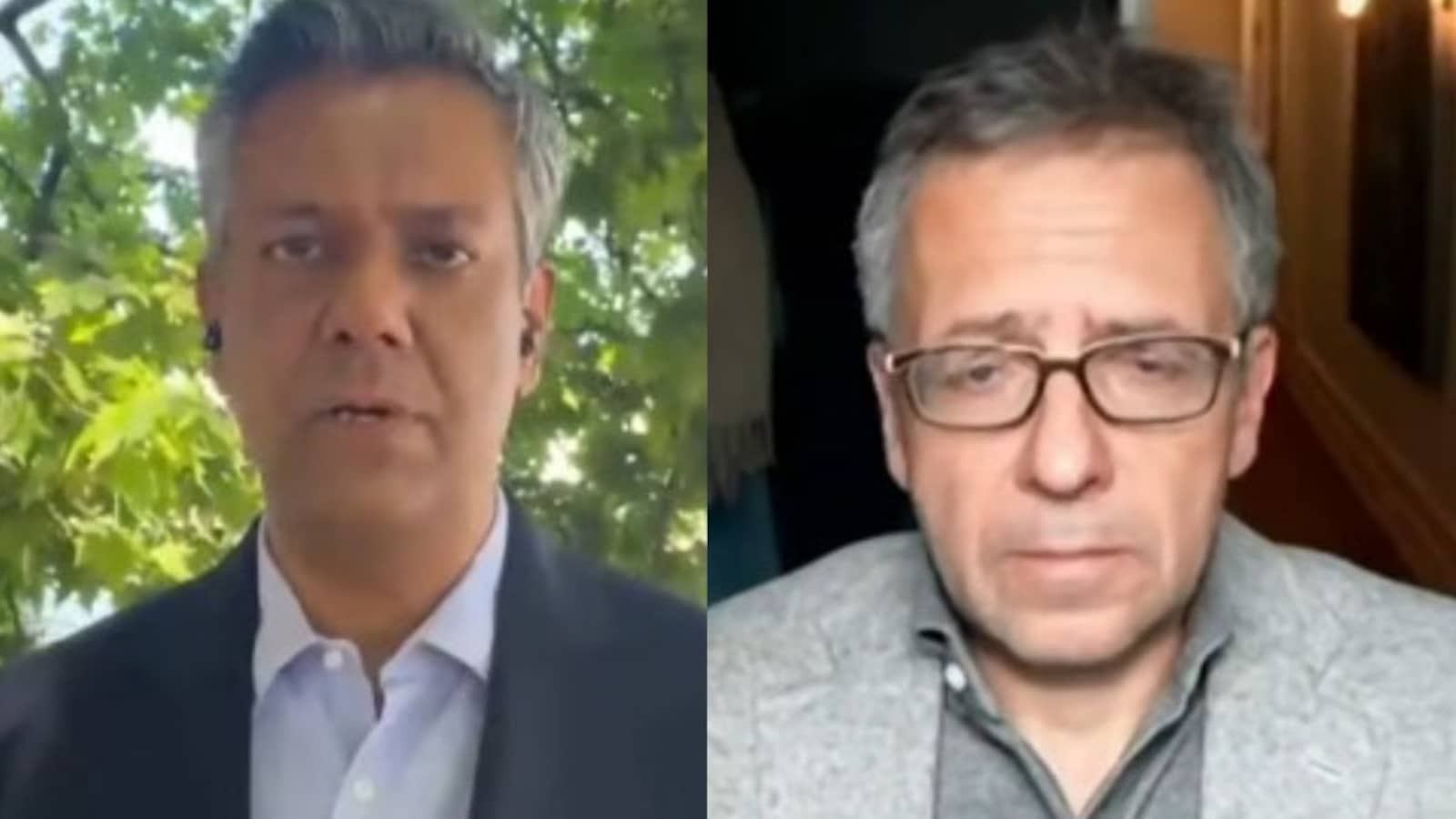
Global markets are relieved that the United States and Iran have signed the critical interim agreement to end the war. The situation, however, remains fragile, as the Israel-Hezbollah war is not entirely governed by the agreement, political scientist Ian Bremmer told NDTV on Thursday.
“The Iranians do have a level of direct control over whether or not Hezbollah engages in military strikes across the border at northern Israel. And for now, the Iranians have no interest in breaching this agreement. But that could change in a week. It could change in a month,” he said.
Trump’s Foreign Policy Failure
For Trump, the details of the peace agreement are politically embarrassing because they suggest a softer approach toward Iran than the administration previously promoted, Bremmer explained. According to him, Trump is likely to shift attention to other issues such as the economy, Cuba and domestic politics rather than continue focusing on Iran.
“He (Trump) said that help is on the way. He said that the Americans were going to rescue the Iranian people. And neither of those things is remotely on the agenda. In fact, over the last 48 hours, what we’ve seen from Trump is an effort to normalise the Iranian regime,” Bremmer said, explaining the new US approach towards the issue.
Bremmer argued that the US is now likely to portray Iran as more pragmatic and reasonable. He said that Trump’s recent comments suggest Washington may be willing to accept Iran having ballistic missiles, similar to other countries in the region. The US may also allow limited uranium enrichment for civilian purposes.
“And this is just a complete 180 by President Trump, because he has to find a way to cover for what is clearly the biggest foreign policy failure of either of his administrations, by a long margin,” he further said.
US Diplomatic Position Weakened
Bremmer also compared Iran’s response to the US with China’s response during the trade dispute. When Trump announced Liberation Day tariffs, China was able to push back and used its control over critical minerals and rare earth supplies as leverage. As a result, the US softened its position without achieving its original goals.
“No, you’d say the Americans had to back down. They didn’t win. They failed in their objectives. And I think in the same way that China forced the Americans to back down, Iran has now forced the Americans to back down, which is embarrassing. And it also weakens America’s diplomatic position with its allies around the world,” he said.
Gulf and regional leaders will now be more likely to question the value of the US bases. Bremmer explained that countries in the region became more vulnerable because they were affected by a war initiated by the US and Israel without having any role in it.
“And now they’re in a position where they’re going to have to do individual deals with the Iranians for their own security and access to Hormuz. So, I mean, if having American bases makes you more vulnerable, I think there are a lot of countries in the region that are going to question that,” he said.
On $300 billion in funding for Iran, Bremmer explained that this reconstruction fund is unlikely to materialise soon. He noted that the funding would come from countries that are not signatories to the agreement and depend on a final deal that has not been reached.