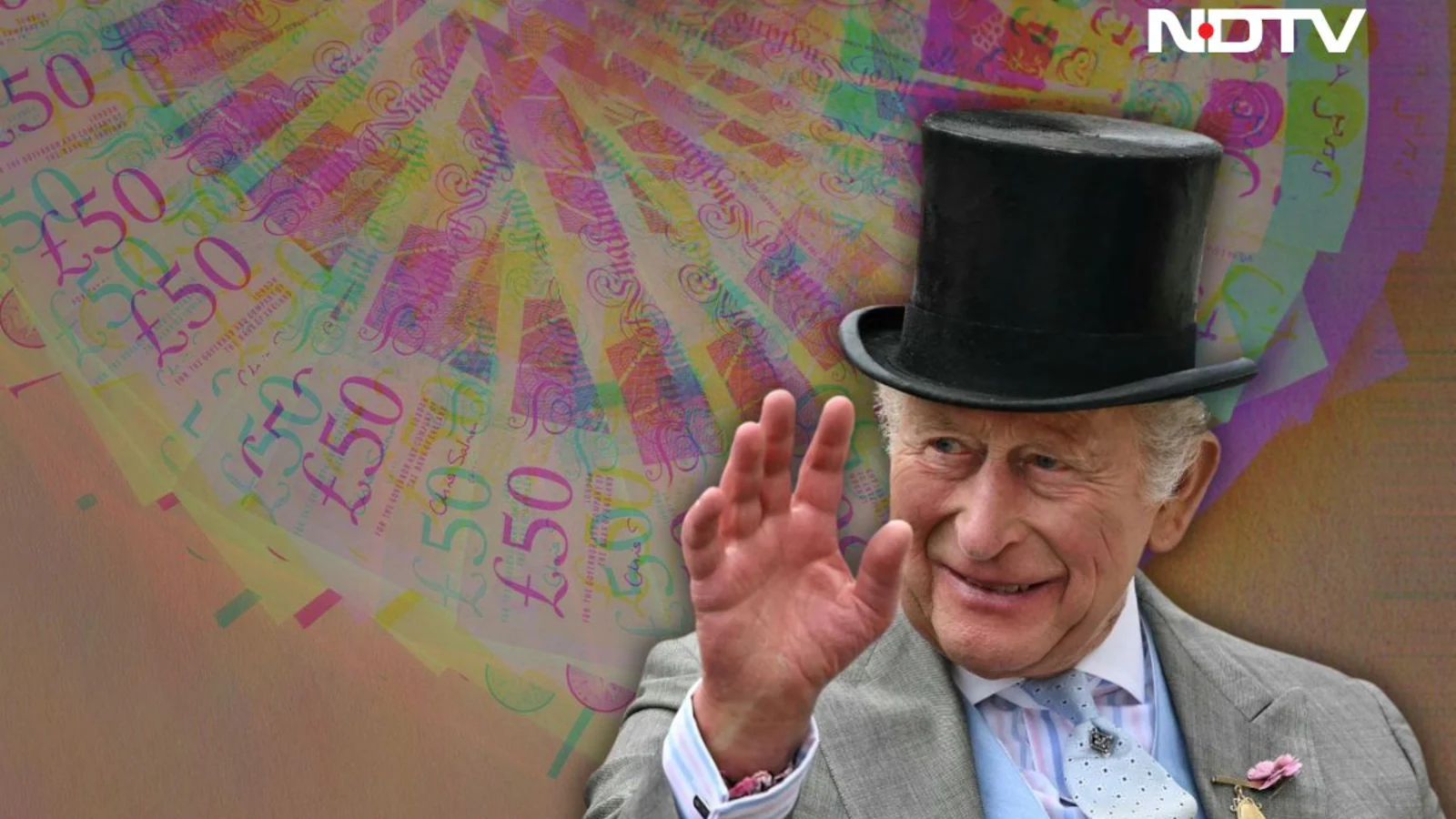
King Charles III has paid over 30 million pound ($39.61 million) in taxes since becoming the monarch in September 2022, Buckingham Palace announced Thursday in a first-of-its-kind disclosure. With this, the 77-year-old monarch ranks among Britain’s top 100 taxpayers.
According to the law, the British king is not obliged to pay income, capital gains or inheritance tax. However, Charles has chosen to follow in the footsteps of his mother, who began paying taxes voluntarily in 1993. King Charles’s mother, Queen Elizabeth II, never disclosed the amount she paid as tax on her private income.
James Chalmers, the king’s treasurer, confirmed the monarch paid 11.7 million pound ($15.45 million) in personal taxes in 2023-24 and 12.9 million pound ($17.04 million) in 2024-25.
Charles’s eldest son and heir, Prince William, also for the first time revealed his personal tax information. He has paid more than 20 million pound in taxes since inheriting the title of Prince of Wales.
Prince William paid 7.76 million pound in taxes in 2024-25 and 8.34 million pound in 2023-24. He also instructed that 1.5 million pound in rent from a closed prison go to the local community, his office said.
King Charles’ Many Sources Of Income
Duchy of Lancaster Estate: A portfolio of private estates spread over 18,400 hectares across England and Wales, the Duchy of Lancaster is a source of income for Charles. It provides the King with an annual income which stood at 25.2 million pound in 2025-26.
The Crown Estate: A portfolio of property and land belongs to the reigning monarch but is run as an independent business. According to a report by BBC, the Crown Estate owns billions of pounds worth of properties in London, and half the beaches and immediate shoreline and seabed around England, Wales and Northern Ireland. The profits from the Crown Estate are counted as public money and go to the treasury. A portion of the profit then goes to the Royal family to fund official duties such as staff costs, official visits and maintenance of occupied royal palaces.
Sovereign Grant: Charles receives money from the government, known as the Sovereign Grant, to pay for staff, royal palaces and travel. That amount will be 137.9 million pound in 2026-27. In a first, the grant would be reduced to 100 million pound in 2027-28 and will remain flat until 2031-32. This, according to Chalmers, is “in line with his majesty’s clear wishes.”
Personal Wealth: The monarch owns other assets and properties which count as his private income. He also manages an investment portfolio, including the Sandringham and Balmoral estates, inherited from his mother, the BBC reported.
Meet King Charles III
Born at Buckingham Palace on 14 November 1948, King Charles III became the UK’s monarch at the age of 73 and was crowned at Westminster Abbey on 6 May 2023.
Charles is the head of the Commonwealth, an association of 56 independent countries and 2.5 billion people. For 14 of these countries, as well as the UK, the King is head of state.
These countries, known as the Commonwealth realms, are: Australia, Antigua and Barbuda, the Bahamas, Belize, Canada, Grenada, Jamaica, Papua New Guinea, St Christopher and Nevis, St Lucia, St Vincent and the Grenadines, New Zealand, Solomon Islands, Tuvalu.