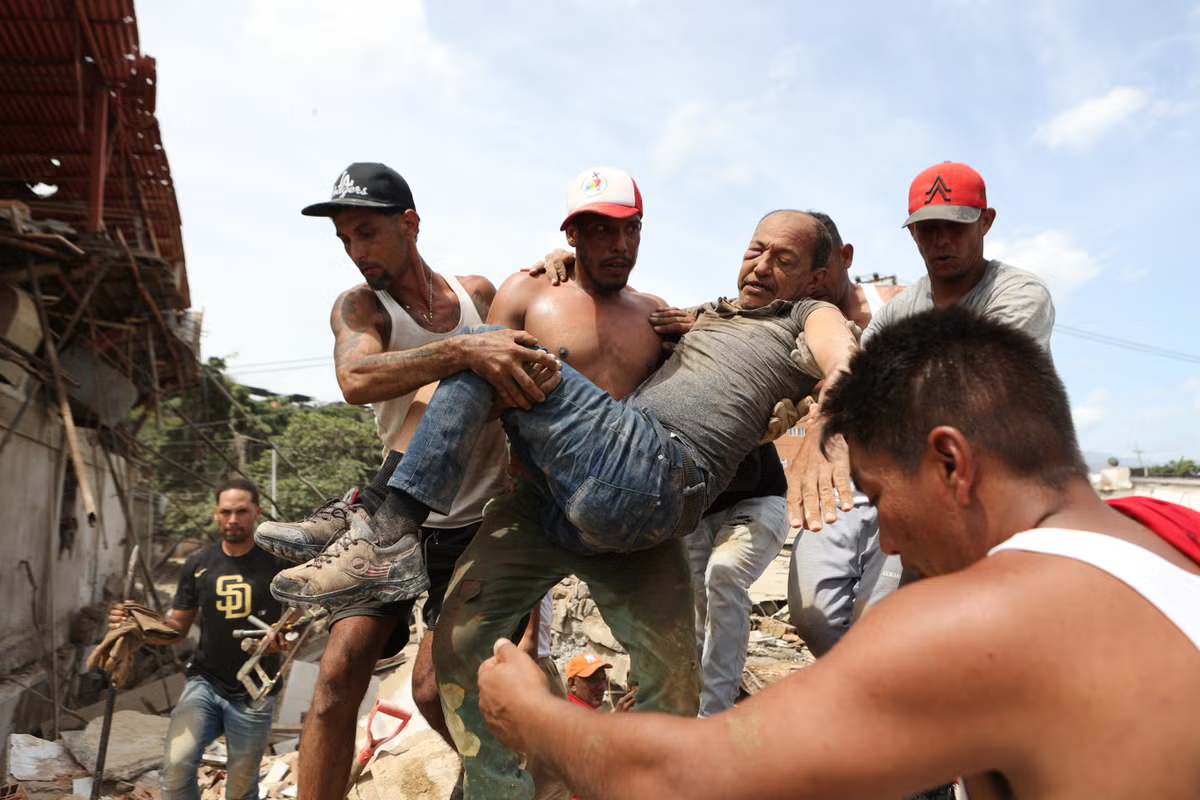
In cities across northern Venezuela, neighbors helped each other dig through rubble to search for loved ones on Thursday after back-to-back earthquakes that officials say killed more than 230 people and left thousands injured the night before.
The official death toll rose to around 235 late Thursday, with at least 4,300 people injured, Venezuela Health Minister Carlos Alvarado told state media. The number of casualties is expected to climb with thousands reported missing and frantic rescue efforts continuing.
The 7.2- and 7.5-magnitude earthquakes that struck Wednesday evening was among the strongest in Venezuela in more than a century and was felt throughout the region.
The injured were pulled out covered in dust and blood, among them children and animals. Venezuelan state TV showed dramatic images of rescues, including a woman who was trapped under a cement slab with only a bare foot poking out before rescuers slid her out alive. But few government search teams were initially seen outside Caracas.
The coastal region of La Guaira, north of the capital Caracas, suffered some of the heaviest damage and casualties. The country’s main airport is there and was closed due to damage, complicating aid efforts.
Venezuelans reeling from quakes
Many were stunned Thursday morning as they saw buildings reduced to skeletons, furniture hanging out of windows and helicopters circling overhead. Buildings were flattened and streets cracked open.
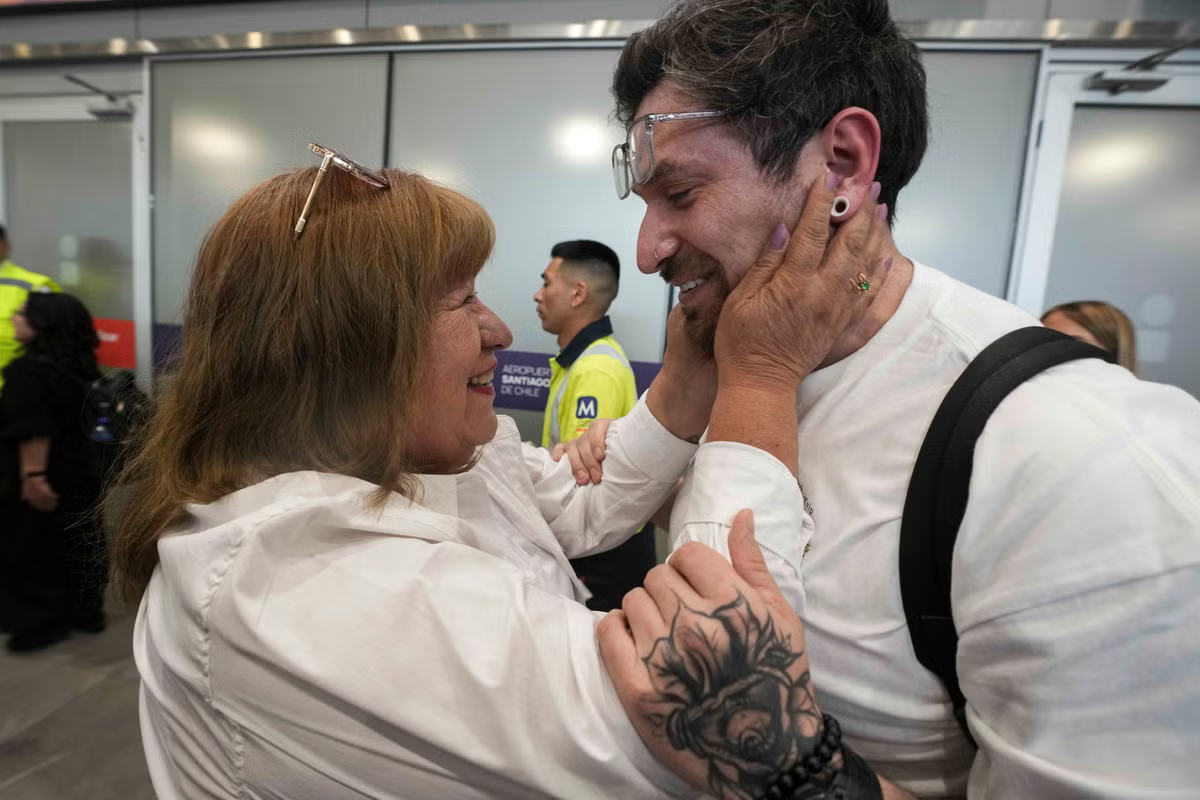
Families posted missing-person flyers with photos of loved ones while others shared handwritten lists of names as they searched. Venezuelans abroad struggled to make contact with relatives due to interrupted phone service in the country.
In downtown Caracas, hundreds spent the night huddled in parks, parking lots and other open spaces.
Mother of three Dayana Delgado asked where the heavy machinery was that government officials had promised and said residents were the ones digging through crumpled buildings.
“I want to know where my child is, if he’s trapped or in a shelter,” she said of her missing 8-year-old son.
One mother sobbed and collapsed in grief as the bodies of her 3- and 10-year-old children were wrapped in blankets and carried away. Others screamed the names of the missing. Some stood in silent shock.
Venezuelan authorities said they were diverting rescue teams from other parts of the country to La Guaira, which is no stranger to natural disasters: a 1999 mudslide killed thousands and is considered one of the country’s worst natural disasters.
In La Guaira, Cristian Carreño stared at his charred apartment building tilting precariously to one side.
“I lost everything,” he said. “There are people still inside, I imagine, that couldn’t get out. It’s incredibly devastating.”
Retired schoolteacher Juan Alberto Mendaño climbed through wreckage in La Guaira and past a dead body when he spotted a woman who was trapped and signaling with her hand for help.
“May God rescue her as quickly as possible,” Mendaño said. “When we heard the scream, there was nothing we could do.”
Government and rescuers face huge challenges
The natural disaster is the latest challenge for acting President Delcy Rodríguez, the former vice president who took office in January after Maduro’s capture. Venezuela has been facing economic disarray for more than a decade, and many people reject the legitimacy of the political movement Rodríguez represents.
Rodríguez declared a state of emergency in an address to the nation late Wednesday. She said the government was creating a $200 million reconstruction fund for damaged hospitals and homes.
She appealed to businesses Thursday to make heavy construction equipment available for rescue operations.
“We hope to rescue as many living people as possible,” Rodríguez said.
While Venezuela sits near multiple fault lines, its position straddling the South American and Caribbean plates makes strong earthquakes much less common than in other parts of Latin America.
The U.S. Geological Survey said both earthquakes were centered near Moron on the Caribbean coast, about 170 kilometers (105 miles) west of Caracas.
The one-two punch of the quakes, combined with the shallow seismic movements, amplified the destruction, said Marcos Ferreira, a geophysicist and researcher at the Geological Survey of Brazil.