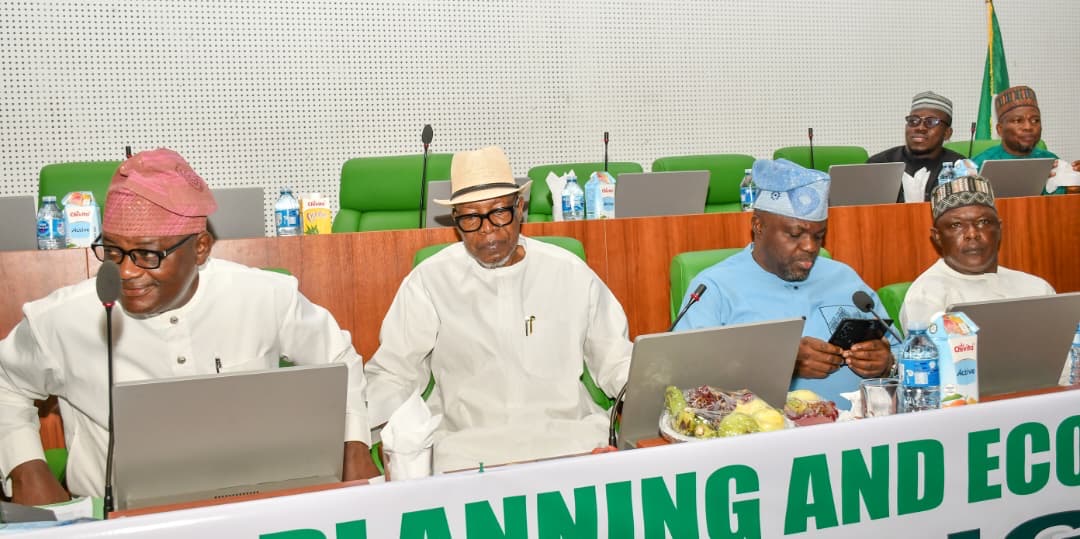
The speaker says reliable statistics remain the foundation of effective governance, economic planning and investment decisions.
The Speaker of the House of Representatives, Abbas Tajudeen, has said Nigeria’s aspiration to build a $1 trillion economy will remain difficult to achieve without a robust, credible and modern statistical system capable of providing accurate data for decision-making.
Mr Tajudeen stated this on Monday at a public hearing on the Statistics Bill, 2025, held at the National Assembly in Abuja.
The hearing comes as the National Assembly begins consultations on a proposed legislation aimed at overhauling Nigeria’s statistical framework and replacing the nearly two-decade-old Statistics Act of 2007.
The public hearing was organised by the House Committee on National Planning and Economic Development and attracted representatives of ministries, departments and agencies, researchers, civil society groups and other stakeholders.
Represented by the House Leader, Julius Ihonvbere, the speaker said reliable statistics remain the foundation of effective governance, economic planning and investment decisions.
“To plan without accurate data is to build a house on quicksand. For Nigeria to achieve its goal of becoming a $1 trillion economy, every policy decision, budget allocation and infrastructural investment must be guided by data that is accurate, timely and beyond reproach,” he said.
The proposed law, titled “A Bill for an Act to Repeal the Statistics Act No. 9, 2007 and Enact the Statistics Bill, 2025,” seeks to strengthen the National Bureau of Statistics (NBS), improve coordination among data-producing agencies, enhance data quality assurance, institutionalise digital data collection and provide a more sustainable funding framework for the country’s statistical system.
Mr Tajudeen said the existing law was enacted under circumstances that no longer reflect the realities of modern governance, noting that technological advancements have transformed the role of data in policymaking and economic management.
According to him, when the current legislation was introduced in 2007, technologies such as Artificial Intelligence, cloud computing, digital platforms and big data analytics had not assumed the central role they now play in governance and development planning.
He described the proposed legislation as a far-reaching reform rather than a routine amendment, saying it is designed to reposition Nigeria’s statistical institutions to meet contemporary demands.
The speaker stressed that reliable data has become indispensable for economic planning, poverty reduction initiatives, budget implementation, monitoring and evaluation of government programmes, and tracking progress towards the Sustainable Development Goals.
He also argued that a more coordinated statistical system would eliminate duplication among government agencies, reduce the burden of repeated surveys on citizens and businesses, and enhance confidence in official figures.
“We need a system that inspires absolute trust, whether an investor looks at our numbers in Abuja, London or New York,” he added.
The bill is being considered at a time when countries across the world are investing heavily in digital statistical infrastructure to support evidence-based policymaking and improve economic governance.
Mr Tajudeen said the proposed legislation seeks to address these challenges by creating a more integrated national statistical system capable of producing timely, high-frequency and disaggregated data while adhering to international standards of transparency and credibility.
He also reiterated the National Assembly’s commitment to participatory lawmaking and called on stakeholders from government institutions, academia, civil society organisations, development partners and the private sector to scrutinise the bill and offer recommendations.
According to him, broad stakeholder engagement is essential to developing a legal framework that can respond not only to the present challenges but also to emerging issues in data governance.
PREMIUM TIMES reports that Nigeria’s National Bureau of Statistics remains the country’s primary source of official socio-economic data, including inflation reports, unemployment figures, gross domestic product estimates and household surveys. However, concerns have persisted over funding limitations, inconsistencies in data management and weak coordination among institutions responsible for generating official statistics.
If enacted, the Statistics Bill, 2025, is expected to introduce the most extensive reforms to Nigeria’s official statistical system since the current legal framework came into force in 2007.