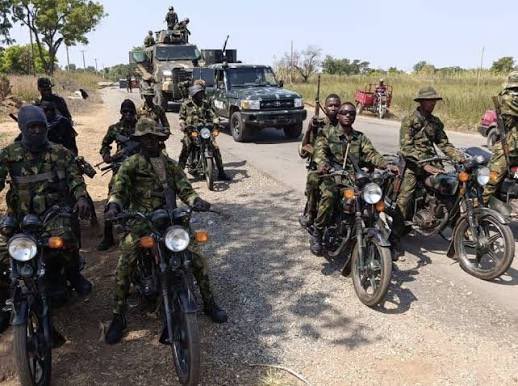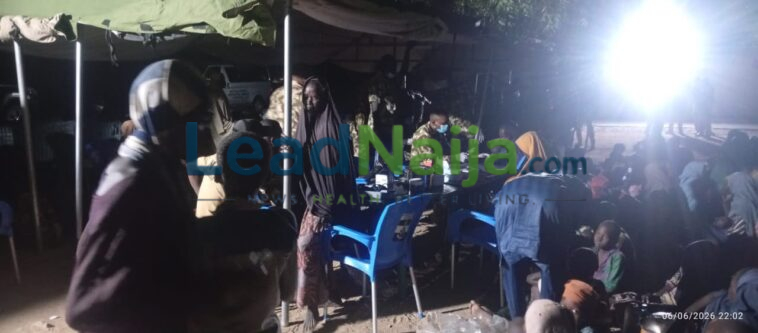
Troops of the Joint Task Force (North East), Operation Hadin Kai (OPHK), have rescued 360 abductees from a fortified Boko Haram enclave in the Mandara Mountains area of southern Borno State in what military authorities described as one of the most significant hostage rescue operations in the North-East in recent times.
The military said the operation, carried out by Special Forces and troops of Sector 1, followed weeks of intelligence gathering, surveillance, reconnaissance and operational planning aimed at locating and securing the release of victims held by insurgents.
According to military authorities, the rescued victims comprised men, women and children who had been abducted from several communities, particularly within the Ngoshe axis, and held under harsh conditions in the insurgents’ stronghold.
A statement on the operation indicated that the mission was launched after security agencies received credible intelligence from multiple sources on the location of the hostages and the activities of an insurgent support network operating within the area.
The military explained that intelligence operatives conducted an extensive target development process involving the integration of Human Intelligence (HUMINT), Signals Intelligence (SIGINT), and Intelligence, Surveillance and Reconnaissance (ISR) assets, including unmanned aerial systems and long-range reconnaissance patrols.
According to the statement, the intelligence effort enabled commanders to gain detailed knowledge of the terrain, insurgents’ defensive positions, movement patterns and the condition of the abductees before the commencement of the rescue mission.
Military authorities further disclosed that a major breakthrough was achieved through the successful penetration of the terrorist network by intelligence assets working under the supervision of Operation Hadin Kai personnel.
The intelligence reportedly provided real-time information on the location of the hostages, the disposition of insurgent commanders, security arrangements within the enclave and possible relocation routes being considered by the terrorists.
The military also said coordinated information and psychological operations contributed to creating confusion within the insurgent ranks, weakening their command structure and disrupting their operational activities ahead of the assault.
Authorities described the operation as a demonstration of the growing intelligence capabilities and operational effectiveness of troops in the ongoing counter-insurgency campaign in the North-East.